

Short Quiz on GRAND TEST ANESTHESIA – 3
Instruction
2. There is 1 Mark for each correct Answer
A 40 year old man who met with a motor vehicle catastrophe came to the casualty hospital in an hour with severe maxillofacial trauma. His Pulse rate was 120/min, BP was 100/70 mm Hg, SpO2 -80% with oxygen. What would be the immediate management
Orotracheal intubation
- Patients with severe maxillofacial trauma and with low Sp02 even on oxygen suggest severe airway compromise or obstruction.
- In these cases emergency airway management is essential.
- The patient requires immediate oxygen.
– These patients need to be intubated immediately.
– But an important point to note is that severe maxillofacial trauma makes intubation very difficult.
-Some believe that nasotracheal intubation is contraindicated in patients with severe maxillofacial injury because nasotracheal intubation in these patients can result in nasocranial intubation or severe nasal hemorrhage.
– Nasotracheal intubation is absolutely contraindicated in patients with midfacial injury and CSF rhinorrhoea.
Orotracheal intubation in patients with severe maxillofacial injury
- In patients with severe maxillofacial injuries, orotracheal intubation is also difficult.
- The presence of blood clots, fractures make the passage of the tube quite difficult.
- Moreover, when the surgeons perform an operation for mandibular or maxillary fractures they wire both these together.
- If surgery is required with severe maxillofacial injury surgeons usually prefer nasotracheal intubation or tracheostomy.
Tracheostomy in a patient with severe maxillofacial injury :
- Tracheostomy does not have much role in “emergency airways management”.
– Tracheostomy is a time taking procedure compared to intubation.
– If the airways of the patient are severely compromised and he requires immediate oxygenation, tracheostomy has no role.
– Immediate oxygenation can only be delivered by rapid intubation.
- In case, intubation is impossible, cricothyroidotomy is an alternative.
–In emergency management of the airway, cricothyroidotomy is done if intubation is not possible.
- Tracheostomy is only done when immediate oxygen requirements are taken care of and a surgical procedure is planned.
- In the question, the Sp02 of the patient is 80% when on oxygen. He requires immediate emergency management of the airway which can be achieved through intubation, If intubation is impossible, cricothyroidotomy is an alternative.
The better option of intubation in this patient is orotracheal intubation.
- The ideal management in this patient is cricothyroidotomy.
- Since that is not mentioned in the question intubation is the next best option. “Orotracheal intubation would be preferred over nasotracheal intubation in these cases”
Tracheal intubation is best achieved in the classic “sniffing the morning air” position
in which the neck is flexed and there is extension at the cranio-cervical (atlanto-axial) junction.
This aligns the structures of the upper airway in the optimum position for laryngoscopy and
permits the best view of the larynx when using a curved blade laryngoscope.
Abnormalities of the bony structures and the soft tissues of the upper airway will result in difficult intubation.
Signs of difficult intubation:
- Thyromental distance < 7cms
- Mallampatti grade III or IV
- Micrognathia
- Macroglossia
- High arched palate with narrow dental arch
- TMJ limitation
- Limited cervical vertebrae extension
- Miller sign
- Growth in oral cavity
The modified Mallampati, thyromental distance, ability to protrude the mandible and craniocervical movement are probably the most reliable.
A 40 year old male with history of bronchial asthma underwent a surgery under general anaesthesia. During the recovery phase patient developed profound analgesia, immobility, and feeling of dissociation from his own body.
Patient is showing features of dissociative anaesthesia induced by ketamine an anaesthetic agent preferred in asthmatics.
Patients on recovery from anaesthesia shows prolonged analgesic effect, immobility,
amnesia with light sleep and feeling of dissociation from ones own body.
Dissociative anaesthesia occur due to the selective interruption of associative pathways of the brain before producing somesthetic sensory blockade.
Reason: When given continuously it suppress the release of steroids from adrenals.
- Etomidate when used as a continuous infusion or in repeated doses decreases the synthesis of adrenal hormones especially cortisol.
- It is the commonly used sedative-hypnotic in critical patients.
- It causes less hypotension and tachycardia and is suitable for use in sepsis and patients with compromised cardiac function.
Ref: Essentials of Medical Pharmacology by K D Tripathi, 5th Edition, Page 343
You are about to perform surgery on a patient with an ASA score of 3 (American society of Anaesthesiologists). What does the score of 3 mean?
ASA score:
Emergence Delirium is characteristic of:
Ans. is ‘b’ i.e., Ketamine.
- A short-acting, nonbarbiturate anesthetic
- Ketamine interacts with the N-methyl D-aspartate receptor.
- Causes profound analgesia, dissociative anesthesia, and catatonia.
- Complete anesthesia as it induces analgesia, amnesia & unconsciousness.
- It is the anesthesia of choice in shock.
- It is associated with emergence psychotomimetic side effects’DISSOCIATIVE ANESTHESIA’’ (delirium, illusions, hallucinations) it is less common in children and pretreatment with lorazepam (drug of choice).
- Can be used as an adjunct in regional anesthesia.
- Ketamine produces an emergence reaction during awakening from anesthesia → vivid dreaming, illusions, extracorporeal experiences, excitement, confusion, fear, and euphoria → contraindicated in psychiatric illness like schizophrenia.
A i.e. Desflurane vapourizer is heated to 39°C
Rotameter is constant pressure, variable orifice (area) flow meter for gases and liquid bothQ.
– Halothane vaporizes at 50.2°C (ie boiling point)
-O2 sensor can be attached both on expiratory and inspiratory limb of circle system’s breathing circuit but not into the fresh gas line of machineQ.
Desflurane’s vaporizer are externally heated to 39°C to compensate for significant heat loss a/w desflurane vaporization. It also increases the vapour pressure (to 1300 mmHg), preventing the possibility of boiling in warm rooms.
Tech 6 vaporizer is used only with desflurane. Desflurane is heated to 39°C (102°F)Q, which is well above its boiling point (22.8°C), by two heaters in the base. An external heating is needed, because the potency of desflurane requires that large amount be vaporized. And also because the boiling point of desflurane is near room temperature and depending on ambient temperature would make the output unpredictable. These factors make thermo compensation using the usual mechanical devices impossible.
True about the instrument given in the pic is:

C i.e. The height to which bobbin rises indicates the flow rate.
- The instrument is Rotameter.
-
Flow meter sub-assembly in anesthetic machine:
- This consists of the tube through which the gas flows, the indicator or bobbin or float, a stop at the top of the tube and the scale which indicates the flow.
- Indicator also called as rota meter or bobbin or float is present within the flow meter tube which moves up and rotates as the gas flows into the tube. The bobbin is made of aluminum and has an upper rim which is wider than the body.
- The upper rim contains slanted flutes, which makes the bobbin rotate as the gas strikes the flutes.
- There is a fluorescent dot over the bobbin making its rotation to be observed easily.
- The flow tubes and floats are assembled and calibrated together for each specific gas.
- Therefore if the flow tube breaks, the entire flow meter assembly including the float should be replaced.
B i.e. Pin is present on machine, C i.e. Not effective if wrong gas is filled in cylinder
Pin Index safety system (PISS) consists of 2 holes on the cylinder valve that mate with corresponding pins on the yolk or pressure regulator of anesthesia machine. PISS is a safety feature adopted in anesthesia machine to prevent incorrect gas cylinder attachment. But this becomes ineffective if the cylinder is filled with wrong gas, yolk pins are damaged or extra sealing washers are used.
Pin Index of entonox is (7); N2 (1,4); air (1, 5); CO > 7.5% (1, 6); He < 80.5% (2, 4); 02 (2, 5); CO2 < 7.5% (2, 6); N20 (3, 5); cyclopropane (3, 6); and He > 80.5% is (4, 6).
True about d-TC is all except:
D i.e. Effect lasts for 2-3 hours.
- In Oxford, in 1935, King examined the constituents of museum specimens and was able to identify and characterise the first samples of (+)-tubocurarine (still called d-tubocurarine in the U.S.A.). C. tomentosum is a rich source of (+)-tubocurarine.
- Tubocurarine Chloride is the chloride salt form of tubocurarine, a naturally occurring curare alkaloid isolated from the bark and stem of Chondodendron tomentosum with a muscle relaxant property.
- Tubocurarine chloride competes with acetylcholine for the nicotinic receptors at the neuromuscular junction of skeletal muscles, thereby inhibiting the action of acetylcholine and blocking the neural transmission without depolarizing the postsynaptic membrane.
- This may lead to skeletal muscle relaxation and paralysis.
- Maximum Histamine release.
- Sensitive to Myasthenic patients.
- Maximum propensity to cause ganglion bloackage.
Neuromuscular Nondepolarizing Agents
Drugs that bind to nicotinic cholinergic receptors (RECEPTORS, NICOTINIC) and block the actions of acetylcholine or cholinergic agonists. Nicotinic antagonists block synaptic transmission at autonomic ganglia, the skeletal neuromuscular junction, and at central nervous system nicotinic synapses.
C i.e. Decreased (lowered) cerebral metabolism
- Barbiturates (thiopental), primarily decreases cerebral metabolism resulting in a dose related depression of cerebral metabolic oxygen consumption (CMRO2).
- Reduced CMRO2 causes progressive slowing of EEG, a reduction in rate of ATP consumption, cerebral vasoconstriction (reducing cerebral blood flow and intracranial tension) and protection from incomplete cerebral ischemia.
Thiopentone Sodium
- Thiopentone is a yellow coloured powder used as 2.5 % solution at 5 mg/kg dose for smooth induction.
- It is ultrashort acting due to rapid redistribution.
- It is contraindicated in porphyria.
All of the following factors decrease the Minimum Alveolar Concentration (MAC) of an inhalation anaesthetic agent except.
C i.e. Hypocalcemia
Factor affecting MAC
- Age: – Young age increases and old age decreases MAC.
- Alcohol: – Chronic intoxication increases and acute intoxication decreases MAC.
- Temperature: – Both hypothermia and hyperthermia decrease MAC.
- Electrolyte: – Hypercalcemia, Hypermagnesemia & Hyponatremia decrease MAC; Whereas hypernatremia increases MAC.
- Anemia: – Decrease.
- Hypoxia (pO2 < 40), and hypercarbia (pCO2 > 95) decrease MAC.
- Pregnancy; – Decreases MAC
- Drugs: –
- Decreasing MAC – Local anesthetics (except cocaine) Opioids, Ketamine, Barbiturates, Benzodiazepines, Verapamil, Lithium, Sympatholytics (Methyldopa, reserpine, Clonidine).
- Increasing MAC – Acute amphetamine intake, Cocaine, ephedrine.
At the end of anaesthesia after discontinuation of nitrous oxide and removal of endotracheal tube, 100% oxygen is administered to the patient to prevent:
Answer- A Diffusion Hypoxia
Diffusion Hypoxia (Fink Effect)
Towards the end of surgery when nitrous oxide delivery is stopped, the gradient reverses and the nitrous oxide from blood gushes in alveoli replacing the oxygen from there causing hypoxia.
This is called diffusion hypoxia. To avoid this diffusion hypoxia 100% oxygen should be given for 5-10 minutes after discontinuing nitrous oxide
A 5-year-old boy suffering from Duchenne muscular dystrophy has to undergo tendon lengthening procedure. The most appropriate anesthetic would be:
A i.e. Induction with intravenous thiopentone and N2O; and halothane for maintenance
- In this boy with Duchenne muscular dystrophy, there is high risk of malignant hyperthermia.
- The earliest signs of malignant hyperthermia are masseter muscle rigidity (MMR), tachycardia, and hypercarbia due to increased CO2 production.
A child is posted for operative repair of exstrophy of the bladder with renal failure. Which anesthetic should be preferred?
C i.e. Atracurium
- In pediatric patients, the choice of nondepolarizing muscle relaxant depends on side effects and duration of action.
- The method of excretion of atracurium and cisatracurium (Hofman elimination and ester hydrolysis) makes these relaxants particularly useful in newborns and children with liver or renal disease.
- If tachycardia is desired (eg with fentanyl anesthesia), pancuronium would be an appropriate choice.
- Vecuronium, atracurium, rocuronium & cisatracurium are useful for shorter procedures.
- Rocuronium offers the advantage that it can be administered intramuscularly (like Sch) preferably in deltoid however, the duration of action is – 1 hour, which could be a distinct disadvantage for a brief procedure.
- Vecuronium is valuable because no histamine is released; however, its duration of action is prolonged in newborns, which makes it similar to pancuronium
- Intramuscular, intralingual (Submental) use is indicated for children with difficult intravenous access when control of airway is deemed essential.
- Mivacurium is an alternative to Sch when a profound neuromuscular block of short duration is required but rapid onset of action is unnecessary.
- Antagonism of neuromuscular blockade in all neonates & small infants is recommended, even if they have recovered clinically, because any increase in work of breathing may cause fatigue and respiratory failure.
- Sugammadex, a cyclodextrin whose endoskeleton forms a water-soluble complex with an exoskeleton of rocuronium, is designed to antagonize the effects of rocuronium.
- As it is made of sugars and antagonize by covalent bonding the side effects are minimal.
B i.e. Preoxygenation is mandatory.
- Rapid-sequence intubation is the preferred method to secure airway in patients who are at risk for aspiration because it results in rapid unconsciousness (induction) and neuromuscular blockade (paralysis).
- In clinical practice, it is generally understood that RSI is used when tracheal intubation must be performed in a patient who is suspected of having a full stomach or is at risk for pulmonary aspiration of gastric contents.
The procedure involves three objectives:
-
Preventing hypoxia during the induction-intubation sequence;
-
Minimizing the time between induction and tracheal intubation, when the airway is unprotected by the patient’s reflexes or by the cuffed tracheal tube;
-
Applying measures to decrease the chances of pulmonary aspiration of gastric contents.
- The first objectives is routinely accomplished by pre-oxygenation, typically 100% oxygen for 3-5 min before induction of anesthesia, allowing the patient to sustain apnea for a period of 5-8 min without hypoxia.
- The second objective involves minimization of the induction-intubation interval, suggesting that a fast-acting hypnotic agent should be administered along with a rapid onset neuromuscular blocking agent.
- Finally, measures to decrease the chance of aspiration include applying cricoid pressure (CP), refraining from positive pressure ventilation before tracheal intubation is accomplished, and waiting until neuromuscular blockade is complete to perform laryngoscopy and tracheal intubation.
Current mode of analgesia best for intrapartum pain relief‑
Ans. is ‘a’ i.e., Epidural Analgesia
- Currently, epidural anesthesia is widely used for analgesia in women in labor and during vaginal delivery.
- Cesarean delivery is most commonly performed under spinal or epidural anesthesia.
- Both blocks allow a mother to remain awake and experience the birth of her child.
Ans. is ‘a’ i.e., Age < 3 years
Postoperative nausea and vomiting (PONY) following strabismus surgery
- It can cause post-op wound dehiscence, hematoma, orbital hemorrhage and aspiration.
- 30 % of all procedures are associated with PONV.
- Major risk factors are:
- Age > 3years
- Duration of anesthesia > 30 mins
- Personal or family history of post-op nausea and vomiting
- Personal or family history of motion sickness
- Medical management of PONV includes: dimenhydrinate, metoclopramide, droperidol, dexamethasone, ondansetron
Use of dexmedetomidine ‑
Ans. is ‘b’ i.e., Sedative agent for intubated patients
Dexmedetomidine
- It is a centrally acting alpha-2 adrenergic agonist
- It is approved by F.D.A. for short term
- Its use as an anesthetic agent is not recommended but it is useful in patients with brain injury and ongoing sedation needs
Ans. is D
- The dibucaine number (DN) is the percent of pseudocholinesterase (PChE) enzyme activity that is inhibited by dibucaine.
Ans. is ‘a’ i.e., Infrared absorption spectroscopy
- Measurements of variations in the respiratory cycle of expired carbon di oxide by displayed waveform and by absolute numerical values is defined as Capnography and Capnometry respectively.
- Measurement of the exhaled CO2 at the level of upper airway at the end of expiration (when CO2 is at its maximum) is referred to as end-tidal CO2 (EtCO2).
- Modern monitors used to measure EtCO2 in the exhaled air make use of infrared absorption spectroscopy
Ans. is ‘a’ i.e., Zoll AED – plus automatic external defibrillator
Monitor for chest compressions in cardio pulmonary resuscitation
- A novel monitor for the chest compressions is a device incorporated into the chest compression pad of the ZOLL AED – PLUS automatic external defeibrillator.
- The sternal compression pad located between the stick on defibrillating electrodes includes an accelerometer.
- The signal from this device is doubly integrated to produce a measure of compression depth monitored by the device.
- Auditory feedback can be provided to the rescuer if chest compression depth if the monitored falls outside the recommended range.
- Such technical aids improve the efficacy of external chest compressions and thus the rescue of patients.
FDA indications of inhaled NO is‑
Ans. is ‘b’ i.e., Pulmonary hypertension in newborn
- According to Goodman Gilman
“Inhaled nitric oxide has been approved by the FDA for use in newborns with persistent pulmonary hypertension and has become the first-line therapy for this disease. In this disease state NO inhalation has been shown to reduce, significantly, the necessity for extracorporeal oxygenation”
Regarding propofol, which one of the following is false‑
Ans. is ‘b’ i.e., It causes severe vomiting
Propofol
- Propofol is a milky white powder that is preservative-free; therefore, it must be used within 6 hours. It is an oil-based preparation, therefore injection is painful.
- Propofol is the most frequently used intravenous anesthetic today.→Miller 6thie – 318
- It can be used for both inductions as well as maintenance.
- It does not possess anticonvulsive action (unlike thiopentone).
- It causes a fall in BP and bradycardia.
- Like thiopental, it does not possess muscle relaxant action.
- Propofol possess significant antiemetic and antipruritic action.→Miller 6th/e – 324
- Propofol decreases polymorphonuclear leukocyte chemotaxis but not adherence, phagocytosis, and killing (Thiopentone blocks all these) → increased life-threatening infections.
- Propofol is particularly suitable for outpatient surgery.
- Intermittent injection or continuous infusion of propofol is frequently used for total Lv. anesthesia (TINA) when supplemented by fentanyl.
- It is the anesthetics of choice for intubation in ICU and for patients with malignant hyperthermia.
- Side effects – pain on injection, myoclonus, apnea, L BP, and rarely thrombophlebitis.
- Propofol infusion syndrome
- A lethal syndrome, associated with the infusion of propofol for 48 hours or longer.
- Occurs in children and the critically ill.
- It occurs as a result of the failure of free fatty acid metabolism and failure of the mitochondrial respiratory chain.
- Features are – cardiomyopathy with acute cardiac failure, metabolic acidosis, skeletal myopathy, hyperkalemia, hepatomegaly, and lipemia
Ans: D. Dexmedetomidine
- This case patient has bradycardia & hypotension.
- Hence, Dexmedetomidine is contraindicated in hypovolemia, hypotension, heart block and congestive heart failure.
Dexmedetomidine – Side effects:
- Similar to those with clonidine (hypotension, bradycardia & dry mouth ).
Contraindications:
- Hypovolemia.
- Hypotension
- Heart block.
- CHF prior to administration.
Ans. D. Genetic defect in calcium channel at sarcoplasmic reticulum of the skeletal muscle.
- Dantrolene has spasmolytic activity and reduces skeletal muscle strength by interfering with excitation-contraction coupling in the muscle fibers.
- It is used in the treatment of malignant hyperthermia, a rare heritable genetic disorder that can be triggered general anesthetics (eg, volatile anesthetics) and neuromuscular blocking drugs
Ans. D. Epinephrine in the local anesthetic.
Dentists usually add epinephrine to the local anesthetic to decrease the bleeding associated with the dental procedure.
- If any epinephrine gets access to the vascular system, it can cause transient tachycardia and hypertension that patient may describe as palpitations, flushing, and dizziness.
- If labeled as an allergic reaction, it may limit anesthetic options for the patient in the future. In an emergent situation where a spinal anesthetic could have been possible, one may have to utilize general anesthesia and risk airway complications.
- Serum testing is available.
- Skin testing is not indicated because of the risks involved.
- Most of the allergic reactions observed with local anesthetics are not due to the local anesthetic molecule but either to para-aminobenzoic acid, a metabolite of ester local anesthetics, or to methylparaben and metabisulphite, which are both preservatives.
- True type 1 allergic reaction with local anesthetic is extremely rare but will present as anaphylaxis with hypotension and respiratory symptoms.
- Vasovagal response usually manifests as pale skin with very low heart rate and blood pressure.
- Although this patient did have light-headedness, she also had flushing and palpitation which is not consistent with vasovagal reaction.
Ans. D. Ropivacaine is an S-enantiomer of bupivacaine.
- Ropivacaine is less lipid-soluble, and thus less potent than bupivacaine.
- For a given dose, the sensory block is more than the motor block.
- Part of the reason ropivacaine may be less cardio toxic than bupivacaine is that it causes vasoconstriction in the tissues, thus decreasing the rate of absorption into systemic circulation.
- Enantiomers are stereoisomers that exist as mirror images.
- Enantiomers have identical physical properties except for the direction of the rotation of the plane of the polarized light.
- Ropivacaine is an S-enantiomer of mepivacaine and bupivacaine.
Ans. C. Epinephrine.
- Spinal anesthesia is rarely associated with a dramatic drop in heart rate and blood pressure in young individuals.
- The mechanism is poorly understood.
- Proposed mechanism includes preexisting hypovolemia, unrecognized hypoxemia secondary to sedation, or a high spinal with inhibition of cardioacceleratory sympathetic nerves arising from T1 to T4 segments of the spinal cord.
- In the clinical scenario described, atropine in itself may not be able to correct the hemodynamics, and the situations call for initiation of measures required in advanced cardiac life support.
- If there is no pulse, chest compressions along with administration of epinephrine may be the best course of action.
The effect of gentamycin at the neuromuscular junction is
Ans. D.
- Gentamycin is an aminoglycoside antibiotic that enhances neuromuscular blockade action of muscle relaxants used in anesthesia.
- Magnesium in itself potentiates neuromuscular-blocking agents’ action and so acts synergistically to prolong the neuromuscular blockade.
- Anticholinesterases increase the amount of acetylcholine available at the neuromuscular junction by inhibiting the enzyme that metabolizes it.
- Succinylcholine-induced neuromuscular blockade enhances the weakness produced by aminoglycoside antibiotics.
- Proposed mechanism of action of these antibiotics in causing the potentiation of action of neuromuscular-blocking agents is the inhibition of release of acetylcholine at the prejunctional site.
- Calcium antagonizes this action of antibiotics, and at least temporarily reverses their effect on enhancement of neuromuscular-blocking action of these antibiotics.
- But since calcium also stabilizes the postjunctional membrane to the effect of acetylcholine, sometimes the effect of calcium on antagonism of antibiotic-induced enhancement of neuromuscular blockade produced by nondepolarizing neuromuscular-blocking agents is unpredictable.
Ans. D. An increased proportion of succinylcholine reaches the neuromuscular junction.
- Pseudocholinesterase metabolizes the injected succinylcholine before it reaches neuromuscular junction.
- This process is so fast that only 5% of injected succinylcholine reaches the neuromuscular junction.
- In the presence of atypical pseudocholinesterase, this metabolism is slow, and a greater quantity of succinylcholine reaches the neuromuscular junction, leading to prolonged apnea, following the standard dose of succinylcholine.
- Diffusion away from the neuromuscular junction stays the same whether the patient has a normal or atypical enzyme and does not contribute much to the cessation of action of succinylcholine.
- Succinylcholine is not metabolized in the liver, although pseudocholinesterase is produced in the liver.
- Liver disease has to be severe before decreases in plasma pseudocholinesterase production sufficient to prolong succinylcholine-induced neuromuscular block will occur because an increased proportion of succinylcholine reaches the neuromuscular junction.
Ans. A. Density.
- Helium-oxygen mixtures have a lower density than air, which promotes improved laminar gas flow across obstructed airways.
- The mixtures have a similar viscosity to air.
- Helium-oxygen mixtures do not have oxygen content lower than 21% (the oxygen content of air).
- Neither the mixtures nor the air contains nitrous oxide.
Ans. D. All of the Above
- Neuraxial block is a great alternative to general anesthesia for many surgical procedures below the diaphragm and an excellent choice for postoperative pain control.
- However, there are conditions where neuraxial block needs to be used with caution.
- Neuraxial blocks are associated with a sympathectomy and can therefore worsen existing hypotension and hypovolemia.
- Hypotension in combination with aortic and/or mitral valve stenosis may not be very well tolerated.
- Although spinal/epidural hematoma is rare yet possible, the risk of bleeding is significantly higher in patients with a known coagulopathy.
Ans. D. Both B and C.
- It is currently believed that body weight alone does not influence the level of an epidural block (although extreme obesity may).
- Patient height (vertebral levels covered decrease with height) and age (vertebral levels covered increase with age) along with local anesthetic volume (about 1 to 2 mL local anesthetic medication per segment) and patient position (theory of gravity) can play significant roles.
Ans. D. Ketamine.
- Propofol, barbiturates, and etomidate produce dose-dependent decreases in cerebral metabolic rate and CBF.
- Ketamine is the only induction agent that dilates the cerebral vasculature and thus increases CBF (50% to 60%).
Ans. B. Ability to lift the head off the bed for 5 seconds.
- In awake patients, clinical assessment of reversal of neuromuscular blockade is preferred to the application of painful train-of-four or tetanic stimulation.
- Clinical evaluation includes grip strength, tongue protrusion, the ability to lift the legs off the bed, and the ability to lift the head off the bed for a full 5 seconds.
- Of these manoeuvers, the 5-second sustained head lift is considered the gold standard because it reflects not only generalized motor strength but, more importantly, the patient’s ability to maintain and protect the airway.
Assertion: The first step includes CPAP + Propofol for breaking laryngospasm
Reason: Since providing her the jaw thrust + Succinylcholine will not be sufficient enough for the management.
Ans. D. Both Assertion & Reason is False.
- Laryngospasm refers to a sudden spasm of the vocal cords that completely occludes the laryngeal opening.
- Although it is most likely to occur in the operating room at the time of tracheal extubation, patients who arrive in the PACU asleep after general anesthesia are also at risk for laryngospasm.
- Jaw thrust with CPAP is often sufficient stimulation to “break” the laryngospasm.
- If jaw thrust and CPAP maneuvers fail, then administration of propofol and providing muscle relaxation with succinylcholine are effective treatments.
Ans. B. Patients with idiopathic thrombocytopenic purpura (ITP) for splenectomy
- Famotidine is known to cause thrombocytopenia (both quantitative and qualitative platelet dysfunction).
- Patients with ITP already have low platelets; thus, such premedication should be avoided.
- Warfarin does not affect platelet function or number, thus has no relation to perioperative bleeding due to platelet pathology; however, it is an independent risk factor for bleeding.
Hg, SpO2 is 68% on a non-rebreathing mask at 15 L/min of oxygen, and respirations are 42/min. On examination, he is unresponsive to commands and to sternal rub. The ICU team is deciding whether to initiate noninvasive positive-pressure ventilation (NIPPV) or to perform endotracheal intubation.
Assertion: NIPPV is indicated because the patient’s neurologic examination suggests that he is incapable of protecting his airway.
Reason: NIPPV can’t improve low oxygen saturation & there is risk of regurgitation & aspiration of stomach contents.
Ans. D. Both Assertion & Reason is False.
- Unresponsive patients are poor candidates for NIPPV because of the risk of regurgitation and aspiration of stomach contents.
- When considering NIPPV, one must consider whether the patient will be able to protect the airway.
- NIPPV can, in fact, improve significantly low oxygen saturation, particularly in cases of chronic obstructive pulmonary disease exacerbations or congestive heart failure.
- While it is difficult for patients with claustrophobia to tolerate NIPPV, modern devices that fit over the nose alone have alleviated this problem to some degree.
- The clinical scenario is suggestive of PE (trauma, long-bone fracture, status post-surgery), but patients with postoperative pulmonary edema and other etiologies of respiratory failure can present in a similar way. But it is not certain that the patient has suffered a PE.

Ans. B. Used in oxygen therapy.
- The instrument here is Hudson’s Mask.
- Hudson’s Mask is a non – rebreathing mask is a low flame (variable performance) equipment for oxygen delivery.
Which category is the instrument given below classified?
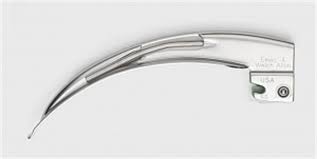
Ans. A. Direct Laryngoscope
- Macintosh Curved Blade laryngoscope is the most frequently used laryngoscope for direct Laryngoscopy & for tracheal intubation.
- A direct laryngoscopy allows visualization of the larynx.
- It is used during general anesthesia, surgical procedures around the larynx, and resuscitation.
- This tool is useful in multiple hospital settings, from the emergency department to the intensive care unit and the operating room.
- By visualizing the larynx, endotracheal intubation is facilitated.
- This is an important step for a range of patients who are unable to secure their own airway, including those with altered mental status and those who are undergoing a surgical procedure.
- Direct laryngoscopy to perform endotracheal intubation is indicated in the emergent setting in perioperative settings or the intensive care setting.
- Direct laryngoscopy has few absolute contraindications.
- Such absolute contraindications involve supraglottic and glottic lesions that would prohibit the advancement of the endotracheal tube (ETT) such as high-grade subglottic or glottic stenosis or complete obstruction by supraglottic or glottic tumors.
Ans. B. 25%
- Soda-lime is capable of absorbing up to 23 L of CO2 per 100 gm of soda-lime.
- Durasorb is used which is pink when fresh and becomes white when exhausted.
Ans. C. 30-40 mm Hg.
- Cuff pressure should not exceed 30 cm H2O (22 mm Hg) to prevent ischemic damage to tracheal mucosa.
- Endotracheal intubation is a procedure frequently necessary among severely ill patients, and may be performed by less-experienced physicians.
- In this setting, particularities of the procedure should be observed to avoid injuries while attempting to maintain the capillary pressure of the tracheal mucosa at around 30-40 mmHg.
- Exceeding tracheal cuff pressures will result in ischemic necrosis, which leads to confluent mucosal ulceration, deep stromal necrosis, and perichondritis within 96 hours, and the chondritis will subsequently favor cartilage necrosis.
- The healing process of the extensive ulcers will cause stenosis due to fibrous tissue.

Ans. A. Airway Injury.
The given picture depicts CVP line placement.
Complications of CVP are
- Air embolism
- Thromboembolism
- Cardiac Arrhythmias,
- Pneumothorax
- Hemothorax
- Chylothorax
- Cardiac Tamponade
- Sepsis
- Trauma to phrenic nerve
- Carotid Artery injury –> Pseudoaneurysm
- Brachial plexus injury
Fade on tetanic stimulation is a classical feature of non-depolarizing NM blockers.
Assertion: Succinylcholine has a low train of four ratios < 0.4-0.7.
Reason: Due to prolonged administration of Succinylcholine fade on tetanic stimulation is seen, as phase II block supervenes.
Ans. B. Both Assertion and Reason are true, and Reason is not the correct explanation for Assertion.
- Fade on tetanic stimulation is a feature of Non-depolarizing blockers.
- Succinylcholine characteristically produces a depolarizing neuromuscular block.
- A depolarizing neuromuscular blockade is characterized by no fade on the train of four or tetanic stimulation, no post-tetanic facilitation and a high train of four ratios>0.7 (>0.4).
- Fade on tetanic stimulation is a characteristic feature of a non-depolarizing blockage although it may be seen with prolonged administration of succinylcholine as phase II block supervenes.

Ans. A.
- Bupivacaine > 0.25% concentration in dose of 1 ml/kg.
- Ropivacaine > 0.2% concentration in dose of 1.2 ml/kg
Caudal Block:
- Epidural anesthesia is given in caudal space, i.e., sacral portion of epidural space.
- One of the most commonly used regional techniques in pediatric patient.
- It may also be used in anorectal surgery in adults.
- Two most commonly used local anaesthetics for caudal block in children are:
- Bupivacaine > 0.25% concentration in dose of 1 ml/kg.
- Ropivacaine > 0.2% concentration in dose of 1.2 ml/kg
On combining an epidural opioid & local anaesthesia, the total required dose of Local anaesthesia is decreased.
Assertion: This interaction is the cause for decreased effective analgesic effect in toto.
Reason: Opioids after diffusion through meninges reaches the spinal cord where they bind to opioid receptors present in substantia gelatinosa of dorsal horn cells.
Ans. B. Both Assertion and Reason are true, and Reason is not the correct explanation for Assertion.
Caudal Block:
- Epidural opioid infusion along with local anaesthetic decreases the dose of local anaesthetic required to produce effective analgesia.
- Opioids after diffusion through meninges reaches the spinal cord where they bind to opioid receptors present in substantia gelatinosa of dorsal horn cells.
- Opioids used for epidural analgesia are morphine, Fentanyl, Tramadol, Buprenorphine, alfentanil, Sulfentanil, Pentazocine.
- Advantages of epidural opioids are that only sensory block is produced and there is no sympathetic & motor block. Pain is relieved without motor paralysis.
- Disadvantages are respiratory depression, Urinary retention, pruritis, nausea & vomiting, and sedation.
Identify the major usage of this method depicted in the picture-

Ans. C. Identify the epidural space.
Methods to identify the epidural space:
- Loss of resistance – This is the most commonly used technique. There is a sudden loss of resistance as soon as the needle enters the epidural space (because it pierces ligament flavum.
- Hanging drop technique (Gutierrez’s sign) – If a drop of saline is placed on the hub of the needle it will be sucked in due to the negative pressure of epidural space.
- Mecintosh extradural space indicator.
- Movement of bubble on Odom’s indicator.
IVRA technique methodology can cause low oxygen tension.
Assertion: This technique is safer to be used in conditions like sickle cell anaemia also.
Reason: Intravenous regional anaesthesia involves exsanguination of the extremity by applying an arterial tourniquet to isolate it from circulation and inject the local anaesthetic into the extremitie’s in the venous system.
Ans. D. Assertion is false, but Reason is true.
IVRA & Sickle cell anemia
The basic idea in intravenous regional anaesthesia is to exsanguinate the extremity by applying an arterial tourniquet to isolate it form circulation and inject a local anaesthetic into the extremities in the venous system.
This technique of intravenous regional anaesthesia makes it dangerous for application in sickle cell anemia because:-
i) Children with sickle cell anemia are prone to develop massive hemolysis in case of low oxygen tension, or in cases where blood flow slow’s down.
ii) During tourniquet application in intravenous regional anaesthesia, blood flow slows down and can precipitate an acute hemolytic crisis in a patient with sickle cell anemia.
Therefore, IVRA is contraindicated in sickle cell anemia.
