

LACTATION
COMPOSITION OF THE COLOSTRUM:
- Deep yellow serous fluid, alkaline
- High specific gravity
Components:
- IgA
- Complements
- Macrophages
- Lymphocytes
- Lactoferrin
- Lactoperoxidase
| Protein | Fat | Carbohydrate | Water | |
| Colostrum | 8.6 | 2.3 | 3.2 | 86 |
| Breast milk | 1.2 | 3.2 | 7.5 | 87 |
REQUIREMENTS DURING PREGNANCY:
- Additional protein:25 gm
- Additional Calcium600 mg
- Folic acid:150 microgram/day
- Required more during lactation as compared to pregnancy : Energy, Vitamin A, thiamin, riboflavin, Vitamin C, niacin, and Vitamin B12.
- Same requirment in pregnancy and lactation : Fat, calcium, zinc, magnesium, and vitamin B6.
PHYSIOLOGY OF LACTATION:
Mammogenesis:
- Pregnancy is associated with remarkable growth of both ductal and lobuloalveolar systems.
Lactogenesis:
- Milk secretion actually starts on 3rd or 4th postpartum day
- Steroids — estrogen and progesterone circulating during pregnancy make the breast tissues unresponsive to prolactin
- Prolactin begins its milk secretory activity when estrogen and progesterone withdrawn following delivery
- Prolactin, insulin, growth hormone and glucocorticoids
- Prolactin is Highest during pregnancy and fall during lactation
Galactokinesis:
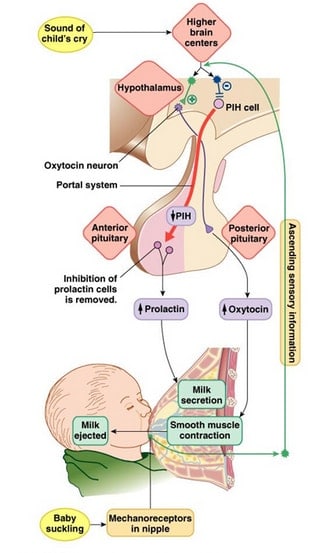
- Oxytocin is the major galactokinetic hormone
- FATORS:
- Suckling
- Contractile mechanism
- DURING SUCKLING, A CONDITIONED REFLEX IS SET:
Nipple and areola
↓
Thoracic sensory (4, 5 and 6) afferent neural arc
↓
Ascending tackle impulses
↓
Paraventricular and supraoptic nuclei of hypothalamus
↓
Synthesize and transport oxytocin
↓
Posterior pituitary
↓
Released (efferent arc via blood)
↓
Myoepithelial cells of alveoli & ducts contraction
↓
Milk ejection
↓
Forced down into ampulla of lactiferous ducts

MILK EJECTION REFLEX INHIBITORS:
- Pain
- Anxiety
- Breast engorgement or adverse psychic condition (depression).
Galactopoiesis:
- Prolactin:galactopoietic hormone.
- Frequency of suckling (>8/24 hours) is essential
MILK PRODUCTION:
- 500–800 mL of milk/ day using 700 Kcal/day
STIMULATION OF LACTATION:
- Put the baby to the breast at 2–3 hours interval from the 1st day
- Plenty of fluids to drink
- Avoid breast engorgement
- Early (½ – 1 hour) and exclusive breastfeeding in correct position
INADEQUATE MILK PRODUCTION:
- Endogenous suppression of prolactin:
- Ergot preparation
- Pyridoxin
- Diuretics or retained placental
- Infrequent suckling
Galactogogues:
- Sulpiride (dopamine antagonist)
- Domperidone
- Intranasal oxytocin
Lactation suppression:
Methods:
- Stop breastfeeding
- Avoid pumping or milk expression
- Wear breast support
- Ice packs to prevent engorgement
- Analgesics (aspirin) to relieve pain
- Tight compression bandage is applied for 2–3 days
Exam Important
- The hormone responsible for lactation is Prolactin
- Initiation of lactation is affected by Progesterone, Prolactin & HPL
- Strongest stimulus of lactation is by Suckling
- Galactokinesis means Ejection of milk
- Prolactin is Highest during pregnancy and fall during lactation
- Most common immunoglobulin secreted by mother in milk and colostrum is IgA
- Colostrum is rich in Proteins as compared to breast milk
- Daily additional requirement of protein in lactation is 25 gm
- Folic acid requirement during lactation is 150 microgram/day
- Calcium requirement above the normal during the first six month of lactation is 600mg/day
- Daily additional requirement of protein in lactation is 25 gm
Don’t Forget to Solve all the previous Year Question asked on LACTATION
Click Here to Start Quiz
Click Here to Start Quiz

