

Question
A 21-year-old woman is brought into an outpatient clinic by her mother, who complains that her daughter has been demonstrating unusual eating patterns for 6 months. Her mother observes her eat large amounts of food, such as desserts, when she is alone, often finding food wrappers hidden in her daughter’s room. She is worried that her daughter may be engaging in vomiting after these episodes of heavy eating. She often isolates herself in the bathroom for 10-20 minutes after a large meal.
When the patient was asked about her eating habits, she admitted to a “loss of control.” She described feeling deep remorse when she eats more than she would like.On examination, she presents with bilateral parotid swelling,normal body weight and dental condition as shown in the picture below. What is the most probable diagnosis?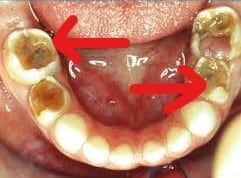
When the patient was asked about her eating habits, she admitted to a “loss of control.” She described feeling deep remorse when she eats more than she would like.On examination, she presents with bilateral parotid swelling,normal body weight and dental condition as shown in the picture below. What is the most probable diagnosis?

| A. |
Adjustment disorder. |
| B. |
Bulimia Nervosa |
| C. |
Anorexia Nervosa. |
| D. |
Conversion reaction. |
Show Answer


|
Correct Answer � B Explanation |
 |

Ans: B- Bulimia Nervosa
Common eating disorders:
- Bulimia Nervosa
- Anorexia nervosa
- Binge-eating disorder
Bulimia Nervosa:
- Bulimia nervosa is characterized by recurrent and frequent episodes of eating unusually large amounts of food and feeling a lack of control over these episodes.
- I.e., Episodes of uncontrollable excessive eating (binge-eating)
- Followed by behavior that compensates for the overeating (vigorous weight-reducing measures) such as forced vomiting, excessive use of laxatives or diuretics, fasting, excessive exercise, or a combination of these behaviors.
- Episodes of binge eating occur relatively frequently (twice a week or more) for at least 3 months
- Many patients are within the normal weight range.
Clinical Presentations:
- In patients with significant self-induced vomiting, erosions of the lingual surface of the teeth, loss of enamel, periodontal disease, and extensive dental caries may be observed.
- Sometimes internal bleeding due to vomiting.
- Bilateral parotid enlargement, largely consequent to noninflammatory stimulation of the salivary glands, may be seen.
Differences between bulimia nervosa & anorexia nervosa:
- As in anorexia nervosa, there is an extreme preoccupation with the shape and weight of the body.
However, bulimia nervosa differs from anorexia nervosa by,
- Patients of bulimia are slightly older than those with anorexia i.e., Late adolescence.
- Most of the patients with bulimia nervosa have a weight within their normal weight range
- Amenorrhea is usually not present and most are sexually active, compared with anorexia nervosa patients.
- Peculiar behavior about the food of anorexia nervosa is absent.
- Depressive symptoms are more common – Post-binge anguish.