

Question

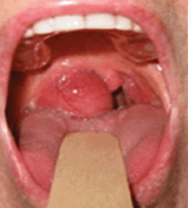
| A. | Associated with Hot potato voice |
| B. |
Tip of the uvula points towards the normal side |
| C. |
Ipsilateral ear ache occurs due to referred pain from 10th CN |
| D. |
Trismus occurs due to spasm of Pterygoid muscles |


|
Correct Answer � C Explanation |
 |

Ans: C, Ipsilateral ear ache occurs due to referred pain from 10th CN .
PERITONSILLAR ABSCESS (QUINSY):
-
It is a collection of pus between the fibrous capsule of the tonsil, and the superior constrictor muscle of the pharynx.
-
Commonest site: Upper pole of tonsil.
-
Etiology: Generally occurs as a complication of acute tonsillitis, but may arise de novo without a preceding history of tonsillitis. y It is generally unilateral. y Age group: Young adults between 20 and 39 years of age.
-
Children are rarely affected.
-
Organisms: Mixed flora (anaerobes and aerobes)/Group A beta-hemolytic streptococcus.
Clinical Features:
-
High-grade fever with chills and rigor.
-
Unilateral throat pain.
-
Hot potato voice.
-
Ipsilateral earache (referred pain via IXth cranial nerve)
-
Foul breath
-
Trismus (due to spasm of pterygoid muscles which are in close proximity to superior constrictor muscle) y Painful swallowing (odynophagia).
On Examination
– Tonsils, pillars and soft palate are congested and swollen on the involved side.
– The tonsils are pushed medially.
– Uvula is swollen and pushed to the opposite side by the tonsil.
– Bulging of soft palate (due to collection of pus)
– Mucopus covering tonsillar area
– Cervical lymph nodes are enlarged
– Torticollis: patient keeps neck tilted to side of abscess.
Treatment:
Hospitalization
-
IV fluids, antibiotics analgesics
-
I and D: If there is bulging of soft palate or if adequate response is not seen within 24 hours of the antibiotic therapy.
-
Interval Tonsillectomy (after 6 weeks).