

Question
| A. | Flat |
| B. |
As curve |
| C. |
Ad curve |
| D. |
C type |


|
Correct Answer � A Explanation |
 |

Ans:a, Flat
-
In perforation of tympanic membrane, tympanometry cannot be done.
-
So a flat curve is obtained on tympanometry.
Type A – Normal pressure and normal compliance in the normal ear.


Type As
– Reduced compliance (‘s’ means stiffness leading to reduced compliance) and normal pressure.
Seen in:
-
Otosclerosis or other ossicular fixation
-
Tympanosclerosis
-
Tumors of middle ear


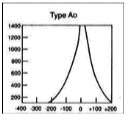
Type Ad
– Increased compliance (‘d’ means discontinuity leading to increased mobility) and normal pressure.
Seen in
-
Ossicular discontinuity
-
Post stapedectomy
-
Monometric eardrum

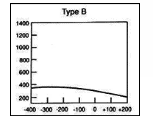
Type B :
– Flat or dome-shaped graph i.e. reduced compliance.
Seen in case of
-
Serous otitis media
Note:
-
Flat curve is a type of B type curve seen in case of perforated tympanic membrane.
-
The volume measurement that is simultaneously performed with tympanometry helps to differentiate between a flat tympanogram suggesting an intact eardrum with middle ear effusion versus a perforated eardrum or ear with a patent ventilating tube.

Type C:
Normal compliance but negative pressure due to eustachian tube obstruction.
Seen in case of:
-
Retracted tympanic membrane,
-
Early stages before collection of fluid in the middle ear.

