

Question
| A. | Osteopetrosis |
| B. |
Osteopetrosis |
| C. |
Osteomalacia |
| D. |
Paget’s disease |


|
Correct Answer � B Explanation |
 |

Answer B) Osteoporosis
A postmenopausal woman presenting with a fracture of radius after a trivial trauma; the most likely diagnosis is Osteoporosis.
Osteoporosis
Osteoporosis is a metabolic bone disease characterized by decreased bone mass and skeletal fragility.
The World Health Organization (WHO) operationally defines osteoporosis as a bone mineral density T-score less than -2.5 SD (more than 2.5 standard deviations under the young-adult mean), which is measured by dual-energy x-ray absorptiometry (DEXA), in postmenopausal women and men at least 50 years old.
The reference standard site of bone mineral density analysis is the femoral neck, but other sites such as lumbar spine can be used.
A clinical diagnosis of osteoporosis may also be established without bone mineral density measurement by the presence of a fragility fracture, particularly at typical sites (spine, hip, pelvis, wrist, humerus, or rib).

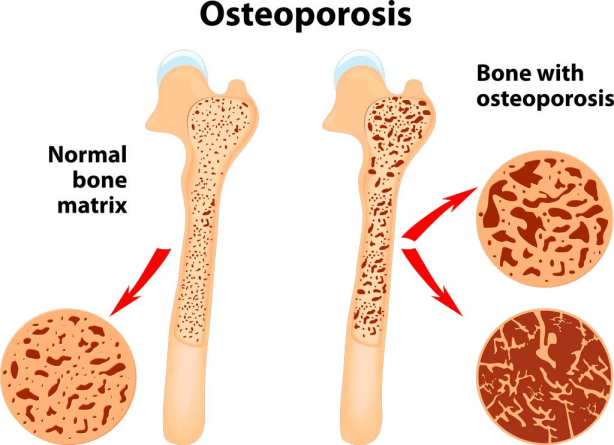
Osteoporosis can be localized or diffuse and be divided into:
-
primary: no cause is identifiable
postmenopausal (type 1): occurs in 50-65-year-olds females; disproportionate loss of cancellous bone as compared to cortical bone resulting in more involvement of cancellous bone-rich areas, like vertebrae and ends of long bones
senile (type 2): occurs in the elderly; proportionate loss of cortical and cancellous bones affecting long bones
idiopathic juvenile osteoporosis
-
secondary (type 3): occurs due to a range of causes including
endocrine disease (e.g. Cushing syndrome, hyperthyroidism, hyperparathyroidism, diabetes mellitus)
chronic illness (e.g. COPD, chronic liver disease, multiple sclerosis, celiac disease)
inflammation
medications (e.g. steroids, phenytoin)
thalassemia major