

Question

| A. | A |
| B. |
B |
| C. |
C |
| D. |
D |


|
Correct Answer � B Explanation |
 |

Ans-B-B
A
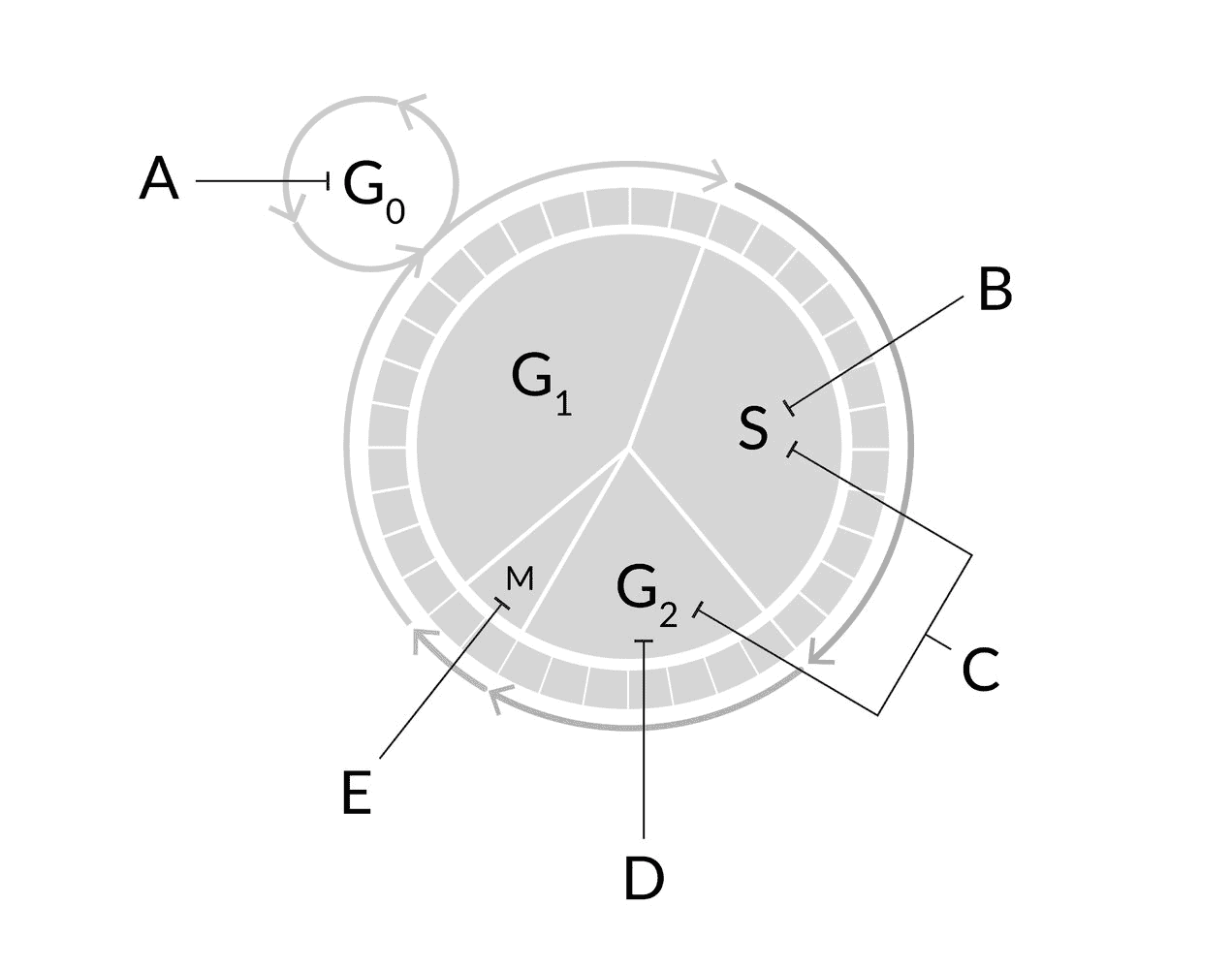
The G0 phase is the resting phase of the cell cycle. Cell cycle independent drugs such as platinum derivatives (e.g., cisplatin) and alkylating agents (e.g., busulfan, cyclophosphamide, carmustine) act on all phases of the cell cycle including the G0 phase. 5-Fluorouracil acts specifically on a different stage.
B
In the S phase of the cell cycle, DNA replication occurs. Pyrimidine analogs (e.g., 5-fluorouracil, capecitabine, cytarabine), purine analogs (e.g., azathioprine, cladribine), folate analogs (e.g., methotrexate), and hydroxyurea act specifically during this stage of the cell cycle and inhibit DNA synthesis.


C
Topoisomerase inhibitors (e.g., etoposide, irinotecan) act both at the S phase and G2 phase of the cell cycle. 5-Fluorouracil does not act on both stages.
D
In the G2 phase of the cell cycle, DNA proofreading occurs in preparation for mitosis. Bleomycin, which induces breaks in the DNA via free-radical damage, acts specifically during this stage of the cell cycle. 5-Fluorouracil acts on a different stage.