

Question

| A. | Inhibition of dihydropteroate synthase |
| B. |
Binding to 50S ribosomal subunit |
| C. |
Inhibition of bacterial RNA polymerase |
| D. |
Inhibition of mycolic acid synthesis |


|
Correct Answer � D Explanation |
 |

Ans-D-Inhibition of mycolic acid synthesis
Inhibition of dihydropteroate synthase
As a competitive antagonist of para-aminobenzoic acid, dapsone inhibits dihydropteroate synthase and disrupts bacterial nucleotide synthesis. Side effects include methemoglobinemia, hemolytic anemia in patients with G6PD, and peripheral neuropathy. However, dapsone is used to treat M. leprae, not M. tuberculosis infection.
Binding to 50S ribosomal subunit
Macrolides bind the 50S subunit of bacterial ribosomes to inhibit bacterial protein synthesis. Side effects of macrolides include QT prolongation, cholestatic hepatitis, and CYP450 inhibition. Macrolides can be used in the treatment and prophylaxis of M. avium, but are ineffective against M. tuberculosis.
Inhibition of bacterial RNA polymerase
Rifamycins (e.g., rifampin) bind bacterial DNA-dependent RNA polymerase to prevent the elongation of bacterial RNA and inhibit bacterial growth. Rifamycins are also used for the treatment of latent tuberculosis infection and side effects include hepatotoxicity, red-orange discoloration of bodily fluids (e.g., urine, tears), and CYP450 induction. However, rifampin is not associated with sideroblastic anemia, as is seen here.
Inhibition of mycolic acid synthesis
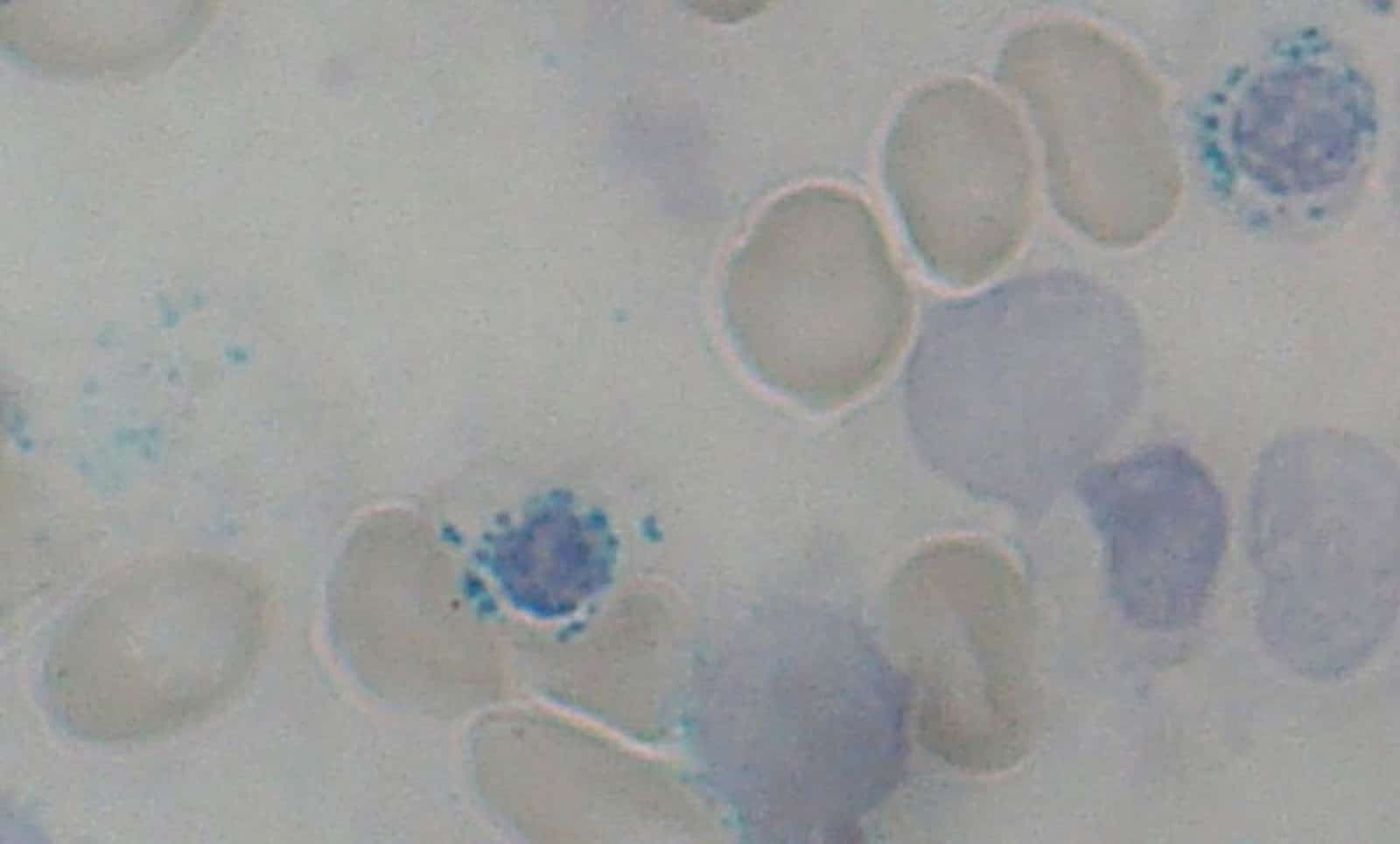
Isoniazid inhibits the production of mycolic acid, an essential fatty acid found in the cell wall of M. tuberculosis. Isoniazid is the first-line agent used for monotherapy of latent and active TB. Common adverse effects include hepatotoxicity (as seen here) and effects related to isoniazid-induced vitamin B6 deficiency (e.g., sideroblastic anemia, peripheral neuropathy, optic neuropathy). Pyridoxine is usually co-administered with isoniazid to prevent vitamin B6 deficiency but does not play a role in the development of hepatotoxicity. The risk of hepatitis is age-related and usually occurs within the first 3 months of treatment with isoniazid.