

Question
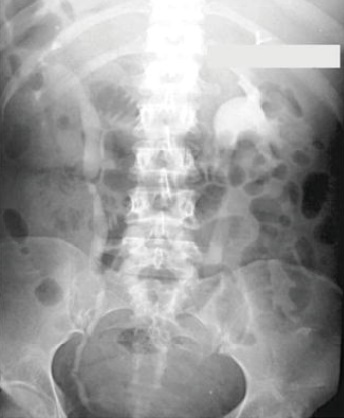
What is the likely diagnosis for a patient who came to the hospital with a complaint of more frequent urination and was found to have a pale ureteric orifice during cystoscopy? The patient’s KUB x-ray is provided for reference.

| A. |
Bladder carcinoma |
| B. | Schistosomiasis |
| C. |
Bladder tuberculosis |
| D. |
Papilloma of urinary bladder |
Show Answer


|
Correct Answer » C Explanation |
 |

- The X-ray shows irregular calcifications in the region of the urinary tract.
- There is suggestion of ureteric irregularity and possible calcified lesions.
- These findings are characteristic of chronic inflammatory pathology rather than a focal tumor.
- Key clue: Pale ureteric orifice on cystoscopy
- This is a classic finding in genitourinary tuberculosis
- Tuberculosis causes ischemia, fibrosis, and narrowing → leads to pale, stenosed ureteric orifice
Bladder tuberculosis
- Causes: Spread from renal tuberculosis
- Cystoscopy findings:
- Pale ureteric orifice
- Reduced bladder capacity (thimble bladder in late stage)
- Radiology:
- Calcification
- Irregular ureter (“pipe stem ureter”)
- Symptoms: Frequency, urgency, dysuria
Explanation why other options are incorrect
Option A. Bladder carcinoma
- Usually presents with hematuria
- Cystoscopy shows mass/ulcer, not pale orifice
Option B. Schistosomiasis
- Causes calcified bladder wall (“sandy patch”)
- Does not typically cause pale ureteric orifice
- More common in endemic regions
Option D. Papilloma of urinary bladder
- Benign tumor
- Appears as papillary growth on cystoscopy
- No ureteric orifice pallor