

Question
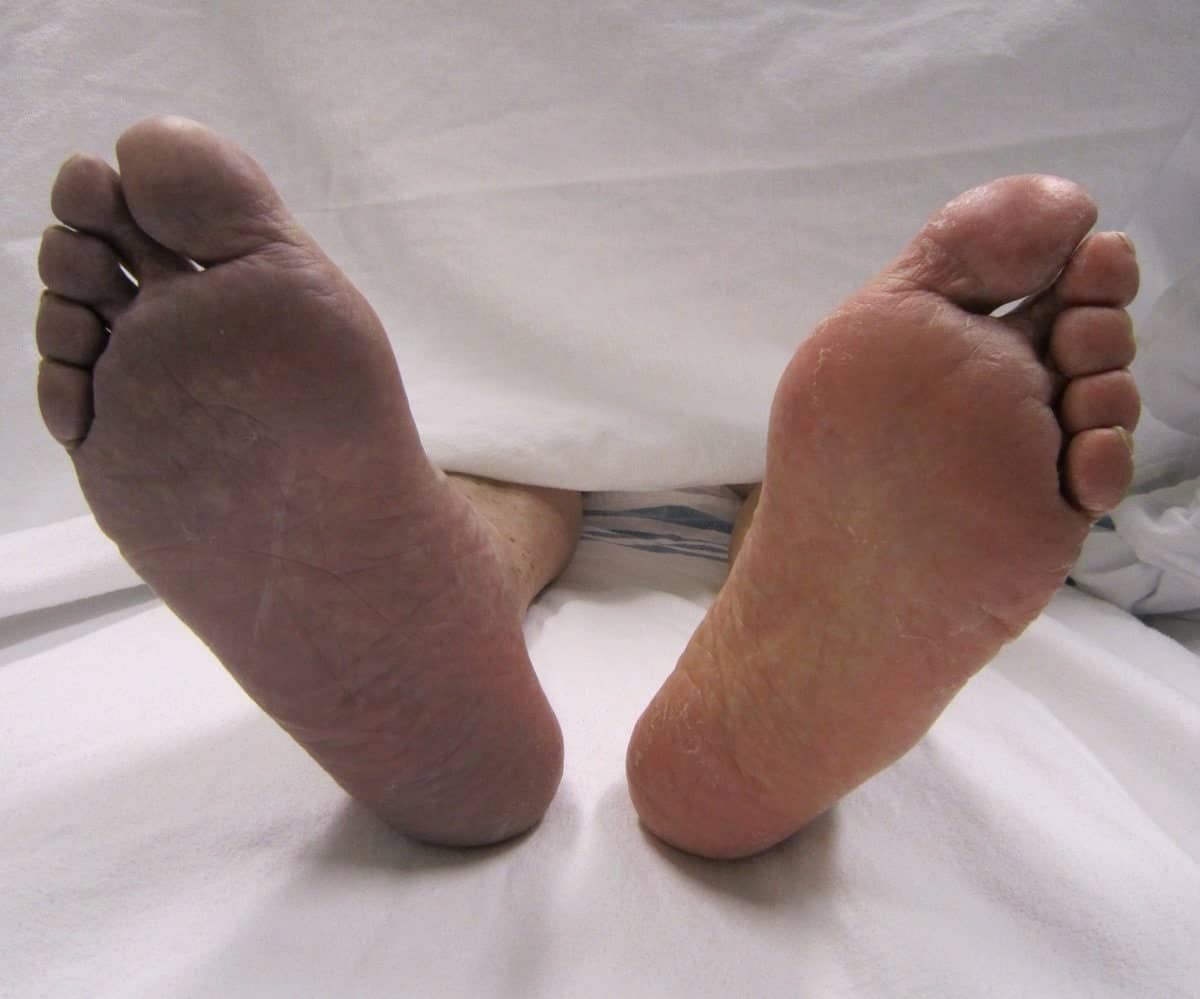
A 72-year-old man comes to the emergency department because of severe, acute, right leg pain for 2 hours. The patient’s symptoms started suddenly while he was doing household chores. He has no history of leg pain at rest or with exertion. Yesterday, he returned home after a 6-hour bus ride from his grandson’s home. He has hypertension treated with ramipril. He appears uncomfortable. His temperature is 37.4°C (99.3°F), the pulse is 105/min and irregular, and blood pressure is 146/92 mm Hg. The right lower extremity is cool and tender to the touch. A photograph of the limb is shown. Femoral pulses are palpable bilaterally; popliteal and pedal pulses are decreased on the right side. Sensation to pinprick and light touch and muscle strength are decreased in the right lower extremity. Which of the following is most likely to confirm the underlying source of this patient’s condition?

| A. |
Gadolinium-enhanced MRA of the legs |
| B. |
Doppler ultrasonography of the legs |
| C. |
Digital subtraction angiography |
| D. |
Echocardiography |
Show Answer


|
Correct Answer � D Explanation |
 |

Ans.D. Echocardiography
Pain, pallor, pulselessness, paralysis, and paresthesia are hallmarks of acute limb ischemia.
- Echocardiography is useful for diagnosing a cardiogenic etiology of arterial embolisms, which most often arise as a result of atrial fibrillation. Acute limb ischemia is most commonly caused by thrombotic arterial occlusion secondary to the rupture of an atherosclerotic plaque or thrombosis in a diseased arterial segment. However, this patient’s irregular pulse and the absence of pre-existing claudication pain make atrial fibrillation the most likely underlying cause. Echocardiography should, therefore, be performed to confirm the etiology of acute limb ischemia in this patient.
- Gadolinium-enhanced MRA of the legs-It would not help to confirm the most likely underlying source of this patient’s acute limb ischemia.
- Doppler ultrasonography of the legs is the best initial test for detecting arterial and venous thrombosis and assessing the severity of acute limb ischemia. It would not, however, help to confirm the most likely underlying source of this patient’s acute limb ischemia.