

Question
Nerve roots involved in Clinical condition shown in Photograph is

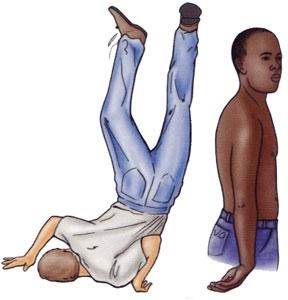
A. C5 C6
B. C7 C8
C. C8 T1
D. T5 T6
Show Answer


|
Correct Answer » A Explanation |
 |

Ans: A. C5 C6
Condition shown: Erb’s paralysis
Erb’s palsy or Erb–Duchenne palsy
- It is a paralysis of the arm caused by injury to the upper group of the arm’s main nerves, specifically the severing of the upper trunk C5–C6 nerves.
Cause:
- The most common cause of Erb’s palsy is dystocia, an abnormal or difficult childbirth or labor.
- Trauma to the head and shoulder, which cause the nerves of the plexus to violently stretch, with the upper trunk of the plexus sustaining the greatest injury.
- Direct violence, including gunshot wounds and traction on the arm, or attempting to diminish shoulder joint dislocation.
Nerves affected:
- The most commonly involved nerves are the suprascapular nerve, musculocutaneous nerve, and the axillary nerve.
Clinical Features:
- Loss of sensation in the arm and paralysis and atrophy of the deltoid, biceps, and brachialis muscles.
- “The position of the limb, under such conditions, is characteristic: the arm hangs by the side and is rotated medially; the forearm is extended and pronated. The arm cannot be raised from the side; all power of flexion of the elbow is lost, as is also supination of the forearm” known as Waiter’s tip hand
Treatment:
- Nerve transfers (usually from the opposite arm or limb), Sub Scapularis releases and Latissimus Dorsi Tendon Transfers.