


Question
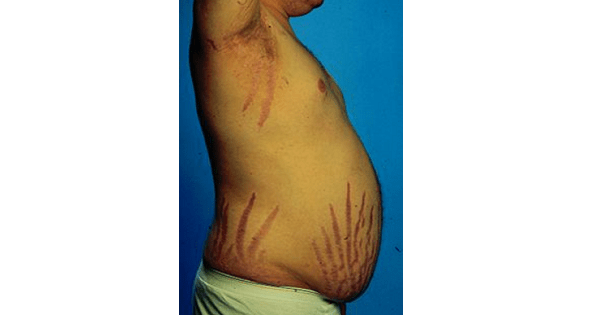
A patient suffering from Pituitary tumor presented with the following features.All the statements about this condition is true except:

A. Hypoglycemia
B. Hypertension
C. Frank psychosis
D. Hypokalemia
Show Answer
|
Correct Answer » A Explanation |
 |

Ans:A. Hypoglycemia.
Image shows:This photograph shows reddish-purple stretch marks on the belly and under the arms in a person with Cushing’s syndrome.
CUSHING’S SYNDROME
- Most common cause is latrogenic (excess steroids/ACTH)
- Most common endogenous cause is ACTH producing pituitary adenoma (Cushing’s disease)
Etiology
↑ Cortisol + ↑ ACTH
- ACTH producing pituitary micro/macroadenoma
- Ectopic ACTH producing tumors: occult carcinoid tumors – mc lung
↑ Cortisol + ↓ACTH:
- Exogenous steroid administration
- Adrenal adenoma
- Adrenal carcinoma
Clinical features:
- Body fat: Weight gain, central obesity, rounded (moon) face, fat pad on back of neck (buffalo hump)
- Skin: Facial plethora, thin skin and visible capillaries, easy bruising, purple striae, acne, hirsuitism
- Bone: Osteoporosis, decreased linear growth in children, exuberant callus with fractures
- Muscle: Weakness, proximal myopathy (prominent atrophy of gluteal and upper leg muscles)
- CVS: Hypertension, hypokalemia, edema, atherosclerosis
- Endocrine: Hyperglycemia (adrenal diabetes), dyslipidemia
- Reproductive system: Decreased libido, in women amenorrhea
- GIT: peptic ulcer
- CNS: insomnia, irritability, emotional lability, depression, in severe cases, paranoid psychosis
- Blood and immune system: Increased susceptibility to infections (bacterial and fungal), increased WBC count, eosinopenia, hypercoagulation with increased risk of deep vein thrombosis and pulmonary embolism
- Others: poor wound healing, Wasting and weakness of proximal thigh muscles.
Diagnosis two steps:
STEP 1: Establishing the presence of Cushing’s syndrome by using the screening tests
- Increased 24-hour urine free cortisol (3 times)
- Failure to suppress serum cortisol with low doses of oral dexamethasone
- Overnight dexamethasone suppression test (ONDST): (easiest of all) 1 mg dexamethasone given at 2300 hrs and measuring serum cortisol at 0900 hrs the following day.
- Low-dose dexamethasone suppression test (LDDST), serum cortisol is measured following administration of 0.5 mg dexamethasone 4 times daily for 48 hours
- Midnight plasma or salivary cortisol level
- Loss of the normal circadian rhythm of cortisol, with inappropriately elevated late-night serum or salivary cortisol.
STEP 2: Determining the underlying cause
- Excess cortisol secretion + undetectable ACTH (below 5 pg/mL) adrenal cause
- Excess cortisol secretion + ACTH levels greater 15 pg/mL pituitary cause or ectopic ACTH.
- High-dose dexamethasone suppression test (HDDST) – serum cortisol is measured before and after administration of 2 mg of dexamethasone 4 times daily for 48 hours.
- In pituitary-dependent Cushing’s disease
- ACTH secretion is suppressed by high dose dexamethasone
- ACTH is stimulated by corticotrophin-releasing hormone (CRH)
Treatment:
- Cushing’s disease: treatment of choice – removal of the pituitary corticotrope tumor, usually via a transsphenoidal approach. If pituitary disease recurs, options include second surgery, radiotherapy, stereotactic radiosurgery, or bilateral adrenalectomy
- Following bilateral adrenalectomy there is a risk of Nelson’s syndrome (aggressive pituitary macroadenoma with very high ACTH levels) – prevented by pituitary irradiation
- Cushing’s syndrome: metyrapone and Ketoconazole
- Adrenocortical carcinoma: mitotane