Question
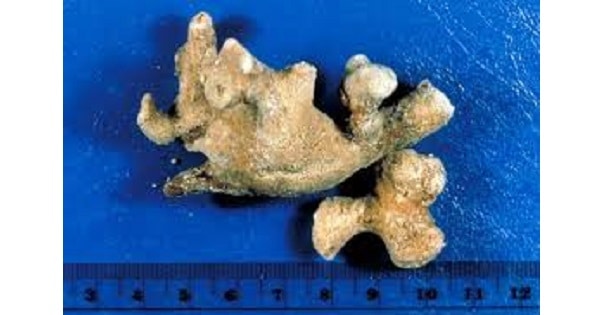
True about the type of renal stones as shown in the image:
A. Present in alkaline urine
B. Most common Kidney disease
C. Composed of Calcium pyrophosphate
D. All of the above
Show Answer
|
Correct Answer » A
Explanation
|
|
Ans:A. Present in alkaline urine
Staghorn/Struvite Renal Calculus
- Upper urinary tract stones that involve the renal pelvis and extend into at least 2 calyces are classified as staghorn calculi .
- Approximately 75% are composed of a struvite-carbonate-apatite matrix. Struvite is magnesium ammonium phosphate.
- Struvite stones are also known as triple-phosphate (3 cations associated with 1 anion), infection (or infection-induced), phosphatic, and urease stones.
- Struvite stones are invariably associated with urinary tract infections. Specifically, the presence of urease-producing bacteria, including Ureaplasma urealyticum and Proteus species (most common), Staphylococcus species, Klebsiella species, Providencia species, and Pseudomonas species, leads to the hydrolysis of urea into ammonium and hydroxyl ions.
- Two conditions must coexist for the formation of struvite calculi. These are (1) alkaline urine (pH >7.2) and (2) the presence of ammonia in the urine. This leads to magnesium ammonium phosphate and carbonate apatite crystallization.
Most kidney stones are made of calcium compounds, especially calcium oxalate.



