
Age Determination- Teeth
Temporary teeth
|
Tooth |
Eruption |
|
Lower central incisor |
6-8months |
|
Upper central incisor |
7-9 months |
|
Upper lateral incisor |
7-9 months |
|
Lower lateral incisor |
10-12months |
|
First molar |
12-14 months |
|
Canine |
17-18 months |
|
Second molar |
20-30 months |
Permanent teeth
|
TOOTH |
ERUPTION |
|
First molar |
6-7 yrs |
|
Central incisor |
6-8 yrs |
|
Lateral incisor |
8-9 yrs |
|
1st premolar |
9-11 yrs |
|
2nd premolar |
10-12 yrs |
|
Canine |
11-12 yrs |
|
2nd molar |
12-14 yrs |
|
3rd molar |
17-25 yrs
|
Gustafson’s Method
- The age estimation of adult over 21 years depends on the physiologic age changes in each of the dental tissues.
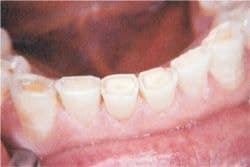
Attrition
- Due to wear and tear from mastication, occlusal (upper) surface of the teeth is destroyed gradually; first involving the enamel, then dentin, and at last, the pulp is exposed in the old age.
- It depends on the functional use of the teeth and also up on the hardness
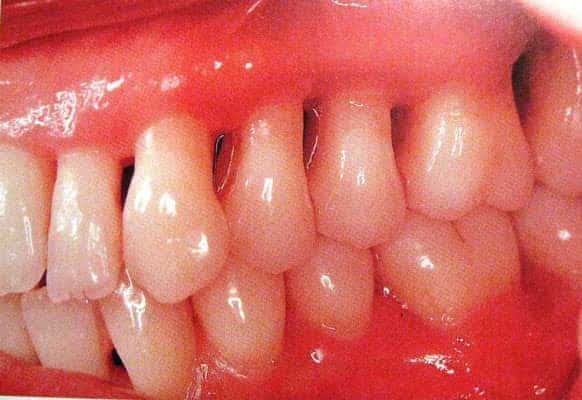
Paradentosis
- Regression of the gums and periodontal tissues surrounding the teeth takes place in the advancing age, gradually exposing the necks and adjacent parts of the roots, due to which the teeth become loose and fall off.
- Poor oral hygiene increases paradentosis.
Secondary Dentin
- It may develop from the walls within the pulp cavity, and decrease the size of the cavity.
- First it is deposited at the pulp chamber and gradually extends downwards to the apex, and may completely fill the pulp cavity.
Cementum Apposition
- The cementum increases in thickness particularly due to changes in the tooth position, especially near the end of the root.
- Secondary cementum is slowly and continuously deposited throughout life and forms incremental lines.
- Incremental lines (devised by Boyde) appear as cross-striations on the enamel of teeth due to cementum apposition and are thought to represent daily increments of growth.
- They can be seen on histological section.
- The age can be calculated by counting the number of lines from the neonatal line onwards.
- This is mainly applicable to infants.
- This is mainly applicable to infants.
Root Resorption
- It involves both cementum and dentin, which show characteristically sharp grooves.
- Absorption of the root starts first at the apex and extends upwards.
- It usually occurs in the late age.
- It may be due to pathological process.
Transparency of the Root
- It is not seen until about 30 years of age.
- The canals in the dentin are at first wide.
- With age they are filled by mineral, so that they become invisible and the dentin becomes transparent.
- It is the most reliable of all criteria
Formula
- Attrition
- Paradentosis
- Secondary dentine
- Root resorption
- Transparency of root
- Cementum apposition
Age = 11.43 + 4.56 (Total score) +/- 3.63
Total score = A+P+S+R+T+C
0 = no change
1 = slight change
2 = obvious change
3 = maximum change
Mile’s method
- Age can be known by changes of root transperancy.
Boyde’s method
- On enamel of the tooth, there is a line at birth (neonatal line). With increase in age, more lines are added, study of which helps in age determination.
Stack’s method
- Age of infant can be known from height and weight of erupting teeth.
Exam Important
The Gustafson’s criteria for age determination includes:
- Attrition
- Periodontosis
- Secondary dentin
- Cementum apposition
- Root resorption
- Root transparency
- Among the criteria transparency of the root is considered to be the single most important one in age determination.
Eruption of temporary teeth will be completed by 2 – 2 n half years
Primary (temporary) dentition begins —> 6 weeks.
Secondary (permanent) dentition begins —> 6 years.
Don’t Forget to Solve all the previous Year Question asked on Age Determination- Teeth
Click Here to Start Quiz
Click Here to Start Quiz

