
BENZODIAZEPINE
CLASSIFICATION:

Long Acting
- Flurazepam 50-100 t1/2(hrs)
- Diazepam 30-60 t1/2(hrs)
- Nitrazepam 30 t1/2(hrs)
- Flunitrazepam 15-25 t1/2(hrs)
Short-Acting
- Temazepam with t1/2 8-12 hrs
- Benzodiazepine without anticonvulsant property.
- Triazolam with t1/2 2-3 hrs
- Midazolam 2 t1/2(hrs)
- Alprazolam
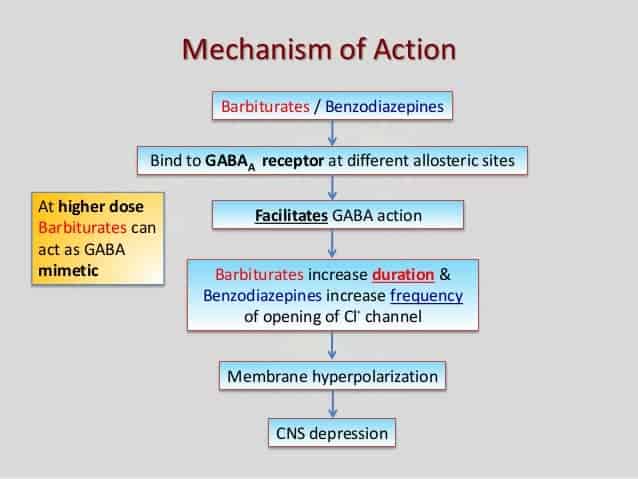
MOA:
PHARMACOKINETICS:
Short-acting BZDs:
- Eg: Midazolam – IV or IM as an induction agent.
- Rapid onset of action.
- Quick drug clearance.
- Causes anterograde amnesia, tachyphylaxis during high dose infusions.
- Decreased cardiovascular effects as compared to propofol
- Temazepam or oxazepam – Revives insomnia.
- At lower doses, relieves acute symptoms of anxiety, such as panic attacks & phobias.
Long-acting BZDs:
- Slower onset of action following oral administration —-> Hence prolonged pharmacological action.
- Sedation.
- Prevents increased muscle tone of tetanus infection.
- Metabolized in liver by dealkylation and hydroxylation.
- Excreted in urine as glucuronide conjugates.
ACTIONS:
- Antianxiety
Sedation:
- Increasing dosage produce sleep & hence considerable as hypnotic.
- I.V administration used extensively to produce conscious sedation during unpleasant procedures.
- Eg: Diazepam & midazolam.
- Cardiovascular stability – IV diazepam
- Midazolam potentiates propofol in co-induction technique.
Anticonvulsants:
- Clonazepam & diazepam – Effective in status epilepticus.
Muscle relaxation:
- Reduce muscle tone.
Amnesia:
- IV benzodiazepines produces antegrade amnesia.
- Midazolam – Very intense for 20-30 minutes
- Lorazepam – Longer amnesia – 6 hr.
DRUGS:
- Inverse agonist of benzodiazepine receptor – Beta carboline.
- Benzodiazepine antagonist – Flumazenil
USES:
- As hypnotic –
- Daytime sedation (Alprazolam)
- As anxiolytic.
- Antidepressant (Alprazolam)
- As anticonvulsants, especially emergency control of status epilepticus
- To avoid future recurrence of seizure attacks Oral Diazepam 6 hourly is given.
- As centrally acting muscle relaxant.
- For anesthetic medication and IV anesthesia
- Alcohol withdrawal in dependent subjects
- Mostly given along with analgesics (NSAIDs|).
- DOC in elderly & with liver disease.
- Lorazepam, Oxazepam & Temazepam
- Spasmolytics.
- Anti-ulcer.
ADVERSE EFFECT:
- Dizziness, lassitude, vertigo, disorientation, amnesia, increased reaction time with motor incoordination, impairment of mental coordination occur.
- Weakness, blurring of vision, dry mouth and urinary incontinence.
BZD poisoning:
- Benzodiazepine antagonist -Flumazenil
- Eg: Diazepam poisoning.
- Paradoxical stimulation, irritability, and sweating may occur with flurazepam.
- Increase in nightmares and behavioral alterations
- Increased psychological effects with usage of short-acting benzodiazepines in insomnia.
- Disturbed REM sleep patterns.
Exam Important
- Diazepam poisoning is treated by Flumazenil
- Benzodiazepine antagonist Flumazenil
- Benzodiazepines of choice in elderly and those with liver disease Lorazepam, Orazepam & Temazepam
- Shortest acting benzodiazepine is Triazolam
- Benzodiazepine without anticonvulsant property is Temazepam
- To avoid future recurrence of seizure attacks Oral Diazepam 6 hourly is given
- Alprazolam is an anxiolytic benzodiazepine with antidepressant action
- IV diazepam shows Coronary dilatation
- Inverse agonist of benzodiazepine receptor is Beta carboline
- Midazolam causes Anterograde amnesia, tachyphylaxis during high dose infusions & Decreased cardiovascular effects as compared to propofol
Don’t Forget to Solve all the previous Year Question asked on BENZODIAZEPINE
Click Here to Start Quiz
Click Here to Start Quiz

