
NEET PG Previous Year Questions with Solution and Complete Explanation
Introducing NEET PG Authentic Previous Year Q Bank App, a compilation of previous year NEET PG exam questions from 2012 to 2025 with complete explanations, image-based and clinical coverage, and offline access.
2012-25
20,000+
1 Year Access
Direct Answer
A concise answer block for users searching for a quick explanation of what Medicoapps offers for NEET PG previous year questions.
What is Medicoapps NEET PG Previous Year Question Bank?
Medicoapps NEET PG Authentic Previous Year Q Bank App is presented as a compilation of previous year NEET PG exam questions from 2012 to 2025 with solutions, complete explanations, image-based and clinical questions, offline access, and support for NEET PG, NeXT PG, INI CET, and FMGE aspirants.
Main Features of NEET PG Authentic Previous Year Q Bank App
These are the main product strengths highlighted in the content you shared.
Authentic NEET Papers
[2018 to 2025]
Real questions, real success.
Small Precise Explanations
Controversial questions explained with references.
Image-Based and Clinical Questions Included
Comprehensive coverage for complete understanding.
Repeated Concept Coverage
The source content emphasizes that 60-75% of questions come from concepts already asked in past NEET PG exams.
Completely Offline
Study anywhere, anytime without the need for an internet connection.
Detailed Explanatory Notes
Each question is accompanied by an explanatory note that helps clarify the concept behind the answer.
Medicoapps is a NEET PG preparation app built for MBBS students appearing in NEET PG, INI-CET, and FMGE examinations. It provides access to authentic previous year question papers from 2012 to 2025, organised subject-wise and year-wise for focused revision. The app includes a PYQ-based question bank of over 14,000 questions with precise explanations and references, clinical and image-based questions, and 14,000+ high-yield one liners for rapid last-minute revision. Medicoapps supports full offline access, a daily quiz of 30 MCQs, and unlimited custom module tests — making it one of the most comprehensive and focused NEET PG apps available in India. A 30-day money-back guarantee is included with all plans.
Here's What You'll Get with Medicoapps
- NEET PG Authentic PYQ Papers 2012–2025 — subject-wise and year-wise for targeted revision
- Grand Test Series based on real NEET PG paper patterns
- PYQ Qbank covering NEET PG, INI-CET and FMGE — 14,000+ questions with detailed explanations
- Clinical and Image-Based Questions (IBQ) — high-yield for exam day
- 14,000+ High-Yield One Liners for rapid last-minute revision
- Daily Short Quiz of 30 MCQs to build exam consistency
- Unlimited Custom Module Tests — create subject and topic-wise mock tests
- Full offline access — study without internet, anywhere
- 30-day money-back guarantee on all plans
Medicoapps vs Competitors
A simple comparison table based on the claims presented in your source content.
Sample NEET PG MCQs with solution and complete explanation
These sample NEET PG-style MCQs are included to show the type of concept-based practice users look for on a PYQ page.
MCQ 1
NEET PG 2018
Question : Galactosemia is due to deficiency of which enzymes:
A . Galactose-1-phosphate uridyltransferase (GALT)
B . Hypoxanthine-guanine phosphoribosyltransferase (HGPRT)
C . Galactokinase
D . UDP-galactose 4′-epimerase
– Classical Galactosemia is an autosomal recessive disorder caused by deficiency of GALT. This enzyme converts galactose-1-phosphate → glucose-1-phosphate.
– Accumulation of toxic galactose-1-phosphate affects liver function and other systems.
Clinical Features:
– Symptoms begin within the first few days of life after consuming lactose in formula or breast milk, including:
– Vomiting & hypoglycemia
– Jaundice, hepatomegaly
– Oil-drop cataracts (galactitol in lens)
– Failure to thrive
– ↑ risk of E. coli neonatal sepsis
Long-term Complications:
– Speech delay & intellectual disability
– Motor dysfunction
– Primary ovarian insufficiency (in females)
Diagnosis:
– Urine reducing substances positive (e.g., Benedict’s test)
– ↑ galactose and galactose-1-phosphate in blood
– Confirm via enzyme assay for GALT activity or genetic testing
Management:
– Lactose- and galactose-free diet
– Early dietary restriction prevents liver damage, sepsis, and developmental delay
Incorrect Options:
– B. HGPRT: Deficient in Lesch-Nyhan syndrome, unrelated to galactose.
– C. Galactokinase: Causes non-classical, milder galactosemia with cataracts.
– D. UDP-galactose 4-epimerase (GALE): Rare cause, variable symptoms with residual enzyme activity.
MCQ 2
NEET PG 2018
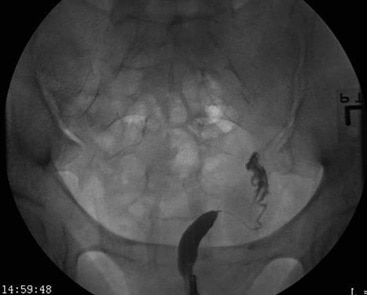
Question : What is the diagnosis based on the given image?
A . Uterus didelphys
B . Bicornuate Uterus
C . Unicornuate Uterus
D . Septate Uterus
This Hysterosalpingogram (HSG) reveals:
– Small, elongated uterine cavity, laterally displaced.
– Only one opacified fallopian tube.
– Opposite side: no filling, suggesting absence/rudimentary development.
These findings are characteristic of a unicornuate uterus, developing from a single Müllerian duct. The uterus is small and laterally displaced, with only one functional fallopian tube. A rudimentary horn might be present but is often not visible on HSG.
Incorrect Options:
A. Uterus didelphys: Shows two separate cavities, each with a cervix.
B. Bicornuate Uterus: Two horns, common cervix, both would fill with contrast.
D. Septate Uterus: A single uterine outline, but two symmetric cavities divided by a septum.
MCQ 3
NEET PG 2019
Question : Identify the infection from the chest X-ray of a patient with low-grade fever.

A . ILD (Interstitial Lung Disease)
C . Miliary TB
D . Consolidation
The chest X-ray shows a diffuse, finely nodular pattern throughout both lungs, characteristic of miliary tuberculosis (TB). The term “miliary” refers to the millet seed-like appearance of the nodules, which occur due to hematogenous spread in disseminated TB.
Incorrect Options:
– ILD: Shows a reticular or honeycombing pattern, not diffuse nodules.
– Bronchopneumonia: Has patchy consolidation, unlike the nodular pattern.
– Consolidation: Results in localized homogeneous opacity, not diffuse nodules.
High-Yield:
– Miliary TB:
– Results from hematogenous spread of *Mycobacterium tuberculosis*.
– Characterized by small nodules (1-5 mm) scattered throughout lungs on X-ray.
– Symptoms: Low-grade fever, weight loss, night sweats, malaise.
– Can affect multiple organs, but lung findings dominate imaging.
MCQ 4
NEET PG 2019
Question : At what age is bidextrous grip (using both hands to hold an object) typically seen?
A . 4 months
B . 5 months
C . 6 months
D . 7 months
Bidextrous grip/reach is the ability to hold objects using both hands simultaneously. This is an early fine motor milestone, indicating developing bilateral coordination.
Motor development sequence:
– At ~4 months, infants begin bidextrous reach.
– By ~6 months, they often use unidextrous reach.
– By ~9 months, they develop an immature pincer grasp, maturing by 12 months.
Fine Motor Milestones:
– 4 months: Bidextrous reach
– 6 months: Unidextrous reach
– 9 months: Immature pincer grasp
– 12 months: Mature pincer grasp
– 15 months: Imitates scribbling, tower of 2 blocks
– 18 months: Scribbles, tower of 3 blocks
– 2 years: Tower of 6 blocks, vertical & circular strokes
– 3 years: Tower of 9 blocks, copies circle
– 4 years: Copies cross, builds bridge
– 5 years: Copies triangle
MCQ 5
NEET PG 2020
Question : Which of the following is the law on child sexual abuse in India?
A . Child Sexual Abuse Prevention Act
B . Protection Of Children from Sexual Offences Act (POCSO)
C . Child Welfare Act
D . Sexual Offences Act
The Protection of Children from Sexual Offences (POCSO) Act, enacted in 2012, protects against sexual abuse, harassment, & pornography.
Definitions:
– Sexual abuse includes Penetrative & Non-Penetrative Assault.
– Covers physical & non-physical abuse, including online exploitation.
– Gender-Neutral: Protects all children under 18, both boys & girls.
Child-Friendly Reporting:
– Mandatory Reporting: Failure to report abuse is punishable.
– Special Courts: Includes in-camera trials to protect the childs identity.
– Recording Statements: Done at a comfortable location for the child.
Punishments:
– Severe penalties, up to life imprisonment or death.
– Minimum punishments range from 3 to 10 years, with fines.
– Aggravated Offenses: Harsher penalties if committed by someone in a position of trust.
Victim Protection:
– Ensures medical & counseling support.
– Childs identity remains confidential.
– Time-Bound Trials: Must be completed within one year for swift justice.
– Preventing Re-Victimization: Protects children from trauma during proceedings.
MCQ 6
NEET PG 2020
Question : A patient with diphtheria (as shown in the image) reports having a 3-year-old sibling at home, who is fully immunized according to the immunization schedule. What is the best measure to prevent diphtheria in the sibling of the diphtheria case?

A . Give diphtheria toxoid booster
B . Give a full course of DPT vaccine
C . Give prophylactic erythromycin
D . Nothing is required to be done
Even though the sibling is fully immunized as per the schedule, there is still a small risk of transmission of Corynebacterium diphtheriae, the bacterium causing diphtheria. Prophylactic antibiotics like erythromycin or penicillin are recommended to prevent diphtheria in close contacts, especially those living in the same household.
Diphtheria Prevention:
- Close contacts of a diphtheria case, including household members, should receive prophylactic antibiotics (e.g., erythromycin or penicillin) to prevent transmission.
- Fully immunized individuals are at lower risk, but protection is not absolute, especially in the presence of close, prolonged contact.
- Diphtheria vaccination is critical in preventing disease, but contacts should still receive antibiotics to limit transmission.
MCQ 7
NEET PG 2021
Question : A man was sitting naked in a balcony overlooking a park for sexual gratification. This behavior is called:
A . Voyeurism
B . Masochism
C . Exhibitionism
D . Fetishism
Exhibitionism is exposing ones genitals to unsuspecting persons in public for sexual arousal. The excitement comes from others shock or attention.
Incorrect Options:
– Voyeurism – Sexual pleasure from secretly watching others.
– Masochism – Gratification from experiencing pain or humiliation.
– Fetishism – Arousal from objects or non-sexual body parts.
MCQ 8
NEET PG 2021
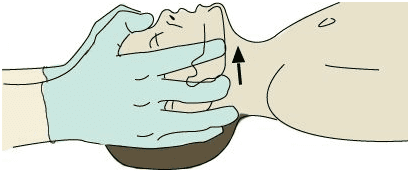
Question : The procedure shown in the image is performed to maintain the airway. Which of the following techniques is being used?
A . Head tilt, chin lift
B . Jaw thrust
C . In line manual stabilization
D . Head stabilization
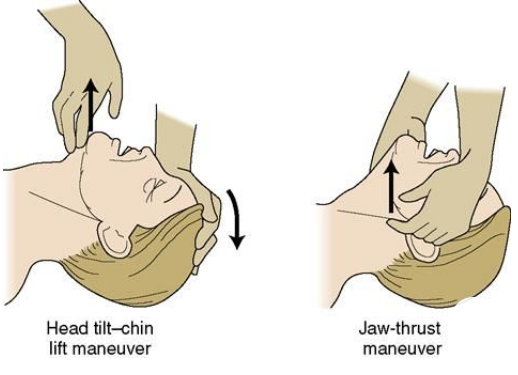
– The jaw thrust maneuver opens the airway, especially in patients with suspected cervical spine injury, by moving the mandible forward to lift the tongue and keep the airway patent without neck movement.
– Preferred over head tilt, chin lift in trauma to prevent cervical spine injury.
Incorrect Options:
– Head tilt, chin lift: Used on unconscious patients without spinal injury suspicion; involves tilting head and lifting chin.
– In-line manual stabilization: Stabilizes cervical spine, keeps neck neutral; not for airway opening.
– Head stabilization: Holds head to prevent movement, mainly for immobilization, not airway maintenance.
MCQ 9
NEET PG 2022
Question : A patient presents with hearing loss specifically affecting high-frequency sounds, attributed to damage of the basilar membrane. Which of the following regions of the cochlea is most likely the site of damage to the hair cells?
A . Modiolus
B . Stria vascularis
C . Helicotrema
D . Oval window
– The cochlea is tonotopically organized; different sound frequencies are detected at various basilar membrane locations.
– High-frequency sounds are detected at the cochleas base near the oval window, where the basilar membrane is narrow & stiff.
– Sound vibrations enter through the oval window via the stapes footplate.
– Basal hair cells convert high-frequency vibrations → electrical signals.
– Damage here → high-frequency hearing loss, matching the clinical case.
Incorrect Options:
A. Modiolus – Central cochlear core; relays signals but doesnt detect frequencies.
B. Stria vascularis – Maintains environment for hair cells; damage → general hearing loss.
C. Helicotrema – Apex of cochlea; sensitive to low frequencies, not high.
MCQ 10
NEET PG 2022
Question : Patient of RA presents with the below ocular finding. What will be the diagnosis

A . Malignant melanoma
B . Scleromalacia perforans
C . Staphyloma
D . Coloboma
– Scleromalacia perforans involves thinning & weakening of the sclera, linked to rheumatoid arthritis (RA). The exposed dark choroid gives a bluish tint, making it relevant to RA.
Incorrect Options:
– Malignant melanoma: Cancer of pigment cells; not typical in RA.
– Staphyloma: Protrusion of eye layers; unrelated to RA.
– Coloboma: Congenital tissue defect; not linked to RA.
MCQ 11
NEET PG 2023
Question : What is the treatment of Aspirin overdose?
A . Naloxone
B . N- Acetylcysteine
C . Glucagon
D . IV NaHCO3
– Aspirin overdose (salicylate toxicity) causes metabolic acidosis.
– IV sodium bicarbonate corrects acidosis & alkalinizes urine → ↑ renal excretion of salicylates. This is a main treatment strategy.
– Additional measures:
– Activated charcoal: Absorbs aspirin in the stomach if given early.
– Intravenous fluids: Maintain hydration & electrolyte balance.
– Hemodialysis: Removes salicylates in severe cases.
– Monitoring & supportive care: Vital signs, oxygen, and urine output.
Incorrect Options:
– Naloxone: For opioid overdose, not aspirin.
– N-acetylcysteine: For acetaminophen overdose, not aspirin.
– Glucagon: For beta-blocker/calcium channel blocker overdoses, not aspirin.
MCQ 12
NEET PG 2023
Question : Which of the statement is correct about the Colombo plan
A . Chemotherapy
B . Cancer units
C . Cobalt supply
D . Human resource development
– Colombo Plan: Established in 1951 for Asia-Pacific economic & social development.
– Not cancer-focused: Its a broad initiative for human resource development (HRD).
Key Objectives:
– Capacity Building & Technical Cooperation: Focuses on education, vocational training, health systems & anti-drug programs.
– Socio-Economic Development: Promotes development through knowledge, skills, & expertise sharing.
Misconceptions:
– It does not supply cobalt machines (radiotherapy).
– It does not establish cancer units or focus on chemotherapy programs.
Incorrect Options:
– A. Chemotherapy: Colombo Plan doesnt supply chemotherapy drugs or programs.
– B. Cancer Units: No establishment of oncology centers or cancer hospitals.
– C. Cobalt Supply: Not involved in procuring medical equipment like cobalt machines.
MCQ 13
NEET PG 2023
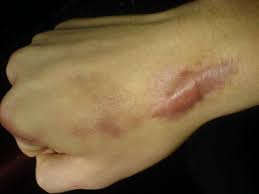
Question : A patient with a history of trauma 5 years back has following feature as given below in image. What is it?
A . Keloid
B . Thrombophlebitis
C . Hemangioma
D . Neurofibroma
Keloid
– Overgrowth of fibrous tissue after skin injury, extending beyond the original defect.
– Develops in predisposed individuals following trauma like surgery, piercings, acne, etc.
– ↑ tension in wounds can contribute to keloid formation.
– Associated with elevated growth factors → ↑ fibrous tissue proliferation.
– Linked to HLA; autosomal dominant with incomplete penetrance.
Common Sites
– Presternal areas, earlobes, upper backs.
– Pinna around piercing site is most common.
MCQ 14
NEET PG 2024
Question : After ovulation, the oocyte is:
B . Primary oocyte arrested in prophase II
C . Secondary oocyte arrested in prophase II
D . Secondary oocyte arrested in metaphase II
– Ovulation releases the oocyte from the ovarian follicle.
– By ovulation, the oocyte completes the first meiotic division.
– This forms a secondary oocyte and a polar body.
– The secondary oocyte enters the second meiotic division, arresting in metaphase II.
MCQ 15
NEET PG 2024
Question : A patient presents with fecal discharge from the umbilicus. What is the most likely diagnosis?
A . Urachal fistula
B . Ileal diverticulum
C . Omphalocele
D . Gastroschisis
– Fecal discharge from the umbilicus indicates a patent ileal diverticulum (Meckels diverticulum).
– This involves a persistent vitelline duct (omphalomesenteric duct) connecting the ileum to the umbilicus.
– Other options involve different pathologies:
– Urachal fistula → urine discharge.
– Omphalocele and gastroschisis do not involve fecal discharge.
MCQ 16
NEET PG 2024
Question : Which of the following statements is false regarding the condition shown in the image?

A . NOSPECS score is used to classify
B . The management corresponds to improvement in thyrotoxic state
C . Seen in More than 10% of patients with hyperthyroidism
D . Can lead to visual loss
The image shows exophthalmos (proptosis), often seen in Graves disease. This autoimmune disorder → hyperthyroidism & thyroid eye disease (TED).
– NOSPECS score is used to classify: True. It assesses thyroid eye disease severity: No signs (N), Only signs (O), Soft tissue (S), Proptosis (P), Extraocular muscles (E), Corneal involvement (C), Sight loss (S).
– Management correlates with thyrotoxic state improvement: False. Eye issues in Graves may not improve with controlled hyperthyroidism. TED can progress despite managing hyperthyroidism, needing specific treatments like corticosteroids, radiation, or surgery.
– Seen in more than 10% with hyperthyroidism: True. TED affects 25-50% of those with Graves.
– Can lead to visual loss: True. Severe TED → compressive optic neuropathy or corneal exposure → visual loss.
MCQ 17
NEET PG 2025
Question : Combined oral contraceptive pills (OCPs) have been shown to provide protection against the development of all of the following cancers except:
A . Breast cancer
B . Ovarian cancer
C . Colorectal cancer
D . Endometrial cancer
– Long-term oral contraceptive pill (OCP) use ↓ risk of ovarian, endometrial, & colorectal cancers.
– Breast cancer risk may ↑ slightly or remain unchanged based on age & duration of use; not protective.
– Risk peaks during active use, especially if started young or used long before first pregnancy.
– Risk returns to baseline ~10 years after stopping OCPs.
High-Yield:
Protective Against:
– Ovarian cancer (40–80% risk ↓ with ≥5 years use)
– Endometrial & Colorectal cancers
No Protection / Possible ↑ Risk:
– Breast cancer
– Cervical cancer (↑ risk with extended use, especially if HPV-positive)
– Hepatic adenoma (benign, not malignant)
MCQ18
NEET PG 2025
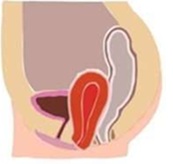
Question : A case of 3rd-degree uterine prolapse is shown. It is most likely due to weakening of which ligament?
A . Cardinal ligament
B . Broad ligament
C . Round ligament
D . Uterosacral ligament
– Third-degree uterine prolapse occurs when the entire uterus descends outside the vaginal introitus.
– The primary supports of the uterus are the cardinal (transverse cervical) and uterosacral ligaments, which anchor the cervix and upper vagina to the pelvic walls.
– Among these, the cardinal ligament plays the major role in providing horizontal support to the cervix and upper uterus.
– Damage or weakening of this ligament (e.g., during childbirth, chronic strain) leads to uterine descent and prolapse.
Incorrect Options:
– B. Broad ligament: Provides minimal support, as its a peritoneal fold.
– C. Round ligament: Maintains anteversion, not structural prolapse support.
– D. Uterosacral ligament: Provides posterior support; not main horizontal support.
MCQ 19
NEET PG 2025
Question : Preferred drug in febrile seizures in children:
A . Valproate
B . Diazepam
C . Phenytoin
D . Ethosuximide
Febrile seizures occur in children aged 6 months to 5 years, associated with fever without intracranial infection or metabolic cause. Most are simple: generalized,
Diazepam is the preferred drug:
– Used acutely to stop seizures
– Administered intravenously (IV) or rectally (preferred in emergencies)
Prophylactic oral diazepam during febrile illness may be useful for recurrent seizures.
Incorrect Options:
– A. Valproate – For generalized epilepsy, not first-line for febrile seizures.
– C. Phenytoin – Used in status epilepticus, not preferred for febrile seizures in children.
– D. Ethosuximide – For absence seizures, not febrile seizures.
MCQ 20
NEET PG 2025
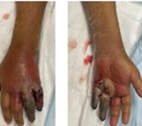
Question : A 65-year-old diabetic patient presents with blackish discoloration, swelling, and foul-smelling discharge from the fingers. On examination, the fingers are cold, edematous, and show signs of tissue liquefaction. What is the most likely diagnosis?
A . Dry gangrene
B . Frostbite
C . Wet gangrene
D . Cellulitis
– Etiology: Wet gangrene is due to bacterial infection on necrotic tissue, often in diabetics or those with vascular issues.
– Clinical Features:
– Blackish discoloration: Indicates necrosis.
– Cold limb: Sign of loss of blood supply.
– Swelling & edema: Suggests infection/inflammation.
– Foul-smelling discharge: Due to bacterial putrefaction.
– Tissue liquefaction: Typical of wet gangrene, unlike dry gangrene which is mummified.
– Common Organisms: Infections usually involve Clostridium, Streptococcus, & Bacteroides.
Incorrect Options:
– Dry gangrene: Dry, shriveled, non-foul-smelling tissue; no significant swelling or discharge.
– Frostbite: Caused by freezing; features pallor, numbness, blistering, and cold exposure history.
– Cellulitis: Skin/soft tissue infection with redness, warmth, tenderness; no necrotic tissue liquefaction.
High-Yield:
– Wet Gangrene Definition: Tissue necrosis with bacterial infection → liquefaction and putrefaction.
– Common Causes: Diabetes, arterial blockage with infection, contaminated wounds.
– Pathophysiology: Poor blood supply → tissue death → bacterial invasion → liquefaction.
– Features: Swelling, black soft tissue with pus, rapid spread, system toxicity (fever, sepsis).
– Management: Urgent surgical debridement, broad-spectrum antibiotics, control underlying conditions, sepsis support.
Frequently Asked Questions
All answers below are based on the content you provided.
Which app has NEET PG PYQs from 2012 to 2025?
MedicoApps provides authentic NEET PG previous year questions from 2012 to 2025 with detailed explanations, clinical coverage, and offline access.
How many questions are included in MedicoApps?
MedicoApps includes over 10,000 meticulously crafted clinical and image-based questions, each with a detailed explanation covering NEET PG, NeXT PG, INI CET, and FMGE exams.
Does the MedicoApps NEET PG app support offline access?
Yes, MedicoApps is fully offline. You can study and practice previous year questions without an internet connection.
Does MedicoApps include clinical and image-based questions?
Yes, MedicoApps includes clinical and image-based questions with complete explanations and references, covering subjects tested in NEET PG.
Does MedicoApps focus on repeated concepts and high-yield topics?
Yes, MedicoApps follows an 80/20 high-yield preparation approach, emphasising repeated concepts since 60-75% of NEET PG questions come from concepts tested in past exams.
Is there an update frequency for new questions in MedicoApps?
The app is regularly updated to align with the latest NEET PG exam patterns and includes new questions as per evolving trends in medical entrance exams.
Do the questions come with detailed explanations?
Yes, each question is accompanied by an explanatory note that clarifies the concept behind the answer and references relevant sources.
Which previous year exams are included in MedicoApps?
MedicoApps includes authentic previous year questions from NEET PG, INI CET, and FMGE exams, spanning from 2012 to 2025.
Is MedicoApps suitable for students at different stages of NEET PG preparation?
Yes, MedicoApps is suitable for both beginners and advanced students. It offers a wide range of questions to support preparation at all stages.
How can I report any errors or request support if needed?
If you encounter any issues or need assistance, you can reach out to the dedicated customer support team through the app or the official website.
What makes this app different from other question bank apps?
The Medicoapps Clinical and Image-Based Question Bank stands out for its exhaustive compilation of image-based and clinical questions, alignment with the latest exam trends, offline accessibility, and well-crafted explanations. It is positioned as an all-in-one solution for students preparing for NEET PG, NeXT PG, INI CET, and FMGE exams.
Is there a money-back guarantee for MedicoApps?
Yes, MedicoApps offers a no-questions-asked 30-day money-back guarantee on all premium plans.
Which is the best QBank for NEET PG?
MedicoApps provides QBank practice, PYQs from 2012-2025, and grand tests for NEET PG preparation.
A good NEET PG QBank should include PYQs, clinical MCQs, image-based questions, and grand tests. MedicoApps provides all these features along with offline access and explanations in one platform.
Where can I practice NEET PG previous year questions?
You can practice NEET PG previous year questions on MedicoApps, which includes 10,000+ questions from 2012 to 2025 with detailed explanations and offline support.
How can I contact MedicoApps support?
You can reach the MedicoApps customer support team through the app or the official website at medicoapps.org.
App Features
7 Years of Authentic PYQs
2018 to 2024
Every authentic previous year question from NEET PG exams fully categorised by subject, topic, and year. Real questions from real papers.
10,000+ Questions
Performance Tracking
Subject-wise accuracy reports and progress charts so you always know where to improve.
Analytics
Complete Explanations
Every answer comes with a thorough expert explanation — not just the right option, but the reasoning behind it.
Expert Written
High-Yield Topics
Smart filters highlight the topics that repeat most across exams, so you study what matters most.
Focus Filter
Offline Mode
Download questions and study without internet — in the library, on the bus, anywhere.
No internet Needed
Timed Mock Tests
Simulate exam-day conditions. Build speed, reduce anxiety, and walk in fully prepared.
Exam Mode
1 year Premium Access Just for ₹ 1,999 ₹ 1,799/- Only
Get the App
Download for Android & iOS
Free to download. Start practising with 20,000+ authentic NEET PG questions today.
Android
Get the full NEET PG Q-Bank experience on your Android phone or tablet. Optimised for all screen sizes with smooth offline support.
- Android 8.0+
- 1L+ Download
- 4.6 ★

iPhone / iPad
Beautifully designed for iOS. Use it on your iPhone or iPad with seamless iCloud sync and offline study support built in.
- iOS 14.0+
- 1L+ Download
- 5.0 ★

NEET PG Authentic Previous Year Q Bank App
Authentic previous year questions, complete explanations, repeated concept coverage, image-based and clinical practice, offline access, and a 30-day money-back guarantee at 1 year premium access pricing of Rs. 1,999 and Rs. 1,799 only.
