
Gastritis
GASTRITIS
- Gastritis is inflammation of the gastric mucosa.
- Gastritis may be of 2 types-
- Acute
- Chronic
1. Acute gastritis-
- It is a transient acute inflammatory involvement of the stomach, mainly mucosa.
Etiology-
- Diet & personal habits- alcohol, smoking, malnutrition.
- Infections- bacterial (H. Pylori), viral infections
- Drugs- NSAIDs, aspirin, cortisone
- Severe stress, trauma, surgery
Classification-
- Acute H. Pylori gastritis
- Acute infective gastritis
- Acute non- infective gastritis
Clinical features-
- Epigastric pain
- Nausea
- Vomiting
- Hypochlorhydria
- Haematemesis or melaena
- Anorexia

2. Chronic gastritis–
- Chronic gastritis has lymphocytes and plasma cells.
- Erosive gastritis involves body and fundus both.
Staging-
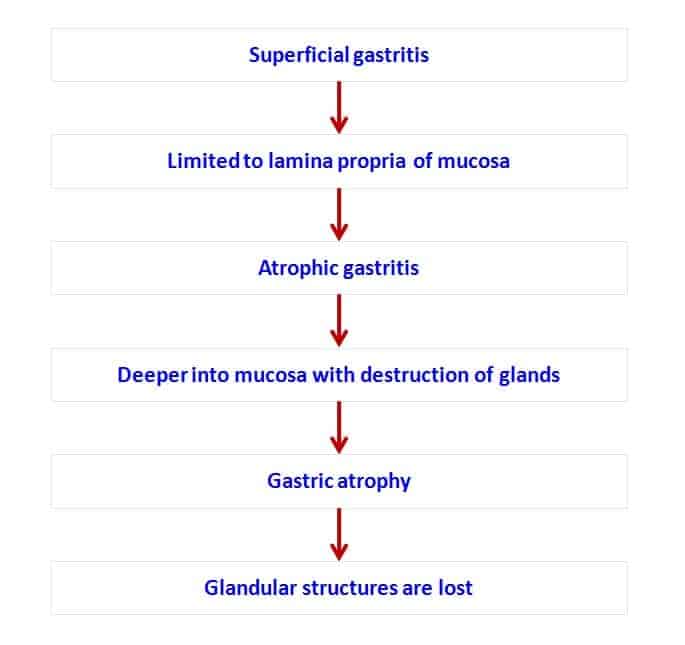
Etiology–
- Reflux of duodenal contents into stomach.
- Infection with H. Pylori
- Disease of stomach & duodenum
- Chronic hypochromic anaemia

Classification-
- According to the predominant site of involvement-
- Type A- autoimmune gastritis (body predominant form)
- Type B- H.pylori related (antral predominant form)
- Type AB (environmental gastritis)
1. Type A- autoimmune gastritis
- It mainly involves fundus & body.
- Associated with pernicious anaemia.
- Destruction of parietal cells.
- Presence of circulating antibodies (anti IF antibodies)
Clinical features-
- Intestinal metaplasia
- Hypoachlorhydria- depletion of gastric acid producing mucosal area.
- Hypergastrinaemia- hyperplasia of G cells.
- Vitamin B12 deficiency

2. Type B (H. Pylori related)
- More common
- H. Pylori is the cause of infection.
- It involves the region of antral mucosa.
- Also called as hypersecretory gastritis
- Associated with peptic ulcer, cell lymphoma, gastric MALT lymphoma.
Treatment–
- Acute gastritis-
- Avoiding the cause
- Antacids
- Acid suppression (PPI or antiemetics)
2. Chronic gastritis
- Patient with pernicious anaemia- parentral Vitamin B12 supplement
- H. Pylori related gastritis- eradication of H. pylori
Exam Important
Acute gastritis-
- It is a transient acute inflammatory involvement of the stomach, mainly mucosa.
- Erosive gastritis involves body and fundus both.
Type A- autoimmune gastritis
- It mainly involves fundus & body.
- Associated with pernicious anaemia.
- Destruction of parietal cells.
- Presence of circulating antibodies (anti IF antibodies)
Clinical features-
- Intestinal metaplasia
- Hypoachlorhydria- depletion of gastric acid producing mucosal area.
- Hypergastrinaemia- hyperplasia of G cells.
- Vitamin B12 deficiency
2. Type B (H. Pylori related)
- More common
- H. Pylori is the cause of infection.
- It involves the region of antral mucosa.
- Also called as hypersecretory gastritis
- Associated with peptic ulcer, cell lymphoma, gastric MALT lymphoma.
Don’t Forget to Solve all the previous Year Question asked on Gastritis
Click Here to Start Quiz
Click Here to Start Quiz

