
Question
| A. |
Ankylosing Spondylitis |
| B. |
Rheumatoid Arthritis |
| C. |
Psoriatic Arthritis |
| D. |
Reiter’s syndrome |

|
Correct Answer � C Explanation |
 |
Ans:C.)Psoriatic Arthritis.
Image shows:
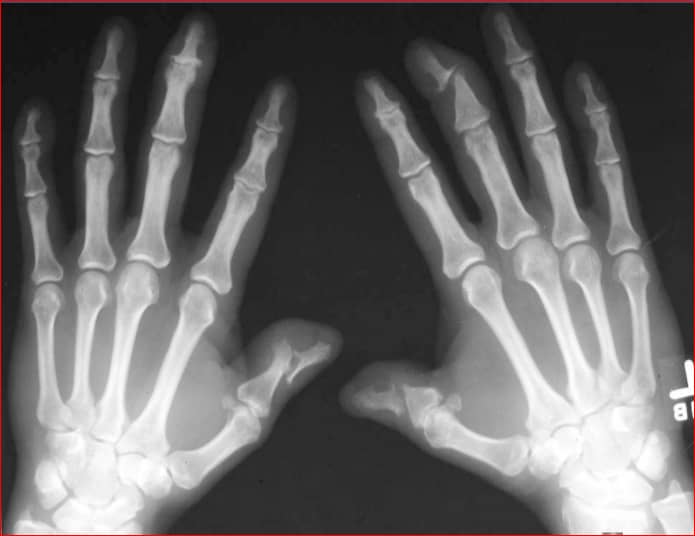
First:Radiograph of both hands demonstrates cup-and-pencil deformities of both thumbs and erosion of DIP joint of left middle finger,
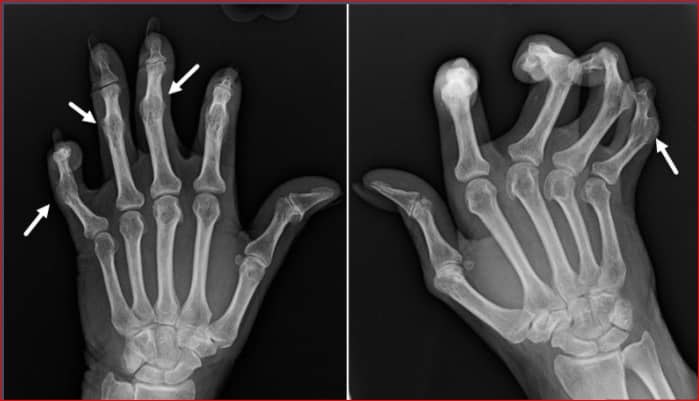
Second:Radiograph of both hands demonstrates ankylosis of numerous proximal and distal interphalangeal joints (white arrows), flexion deformities and lack of significant osteoporosis.
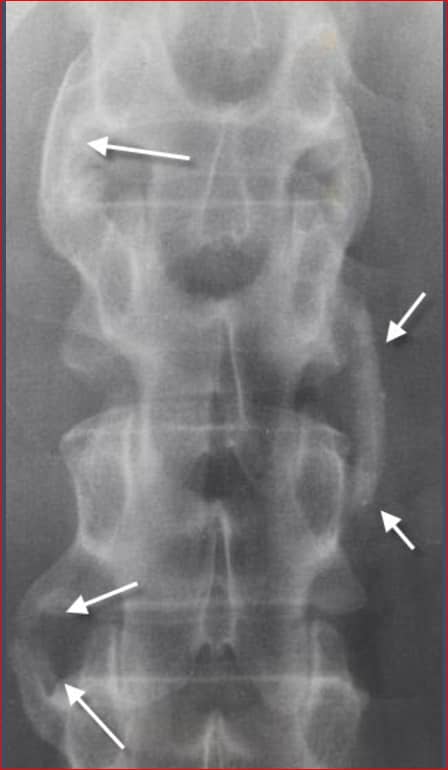
Third: There are large, asymmetric osteophytes (white arrow). They are thicker than the syndesmophytes of ankylosing spondylitis and their asymmetric distribution should raise suspicion of psoriatic disease.
PSORIATIC ARTHRITIS
5 major presentations of Psoriatic Arthropathy (PsA)
- a) Arthritis of DIP joints
- b) Asymmetric oligoarthritis :Most characteristic when a finger or toe is involved leading to sausage digit or dactylitis
- c) Symmetrical polyarthritis :Resembles RA but nodules and extraarticular features are absent
- d) Axial involvement (spine and sacroiliac joints)
- e) Arthritis mutilans – widespread shortening of digits (telescoping)
Clinical features :
- Pustular psoriasis is associated with severe disease.
- Dactylitis, enthesitis and tenosynovitis are common.
- Shortening of digits because of underlying osteolysis is particularly characteristic of PsA.
- Rapid ankylosis of proximal interphalangeal (PIP) joints early in the course of disease is common.
- Nail involvement is seen in almost all patients.
- Uveitis and aortic insufficiency are seen after long standing disease.
- Most are HLA-B27 positive, RA factor negative
Radiological features :
- Characteristics of peripheral PsA include DIP involvement along with
- Classic pencil-in-cup deformity
- Marginal erosions with adjacent bony proliferation (whiskering)
- Small-joint ankylosis
- Osteolysis of phalangeal and metacarpal bone, with telescoping of digits
- Characteristics of axial PsA include asymmetric sacroiliitis (when compared to ankylosing spondylitis)
- Less zygapophyseal joint arthritis
- Fluffy hyperperiostosis on anterior vertebral bodies
- Severe cervical spine involvement, tendency to atlantoaxial subluxation
- Relative sparing of the thoracolumbar spine
- Paravertebral ossification
- Asymmetric sacroileitis
- Atypical syndesmophytes.
Treatment: etanercept, infliximab, adalimumab and golimumab.
