Question
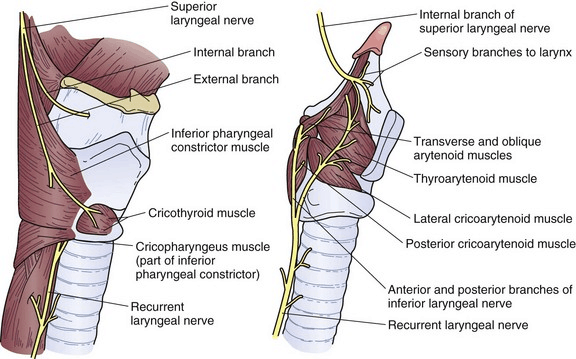
A 78-year-old man comes to the physician because of difficulty swallowing and regurgitation of undigested food for the past several months. The patient reports that his symptoms have gotten progressively worse. Physical examination shows severe halitosis and a gurgling sound after he swallows a small amount of water. Results of fluoroscopic barium esophagography are shown. The nerve responsible for motor innervation of the affected muscle is also responsible for which of the following functions?
| A. |
Parasympathetic innervation of the AV node
|
| B. |
Motor innervation of the ventral tongue
|
| C. |
Sensory innervation of the posterior tongue
|
| D. |
Somatosensory innervation of the semicircular canals
|
Show Answer
|
Correct Answer � A
Explanation
|
|
Answer A) Parasympathetic innervation of the AV node
This patient’s presentation is consistent with a Zenker diverticulum, which is an outpouching of the esophagus between two parts of the inferior pharyngeal constrictor (Killian triangle). The inferior pharyngeal constrictor is innervated by branches from the pharyngeal plexus of the vagus nerve.
Parasympathetic innervation of the AV node
-
The vagus nerve innervates the inferior pharyngeal constrictor, which is the muscle affected in Zenker diverticulum.
-
Parasympathetic fibers that innervate both the SA node (right vagus nerve) and the AV node (left vagus nerve) also originate from the vagus nerve.
-
Additional functions of the vagus nerve include initiation of the cough reflex, innervation of taste receptors of the supraglottis, and innervation of chemo and baroreceptors in the aortic arch.
Sensory innervation of the posterior tongue
Somatosensory innervation of the semicircular canals
Motor innervation of the ventral tongue
- The hypoglossal nerve is responsible for motor innervation of the tongue and its intrinsic muscles. The hypoglossal nerve is not involved in the innervation of the inferior pharyngeal constrictor.