Question
What is the sequence of events after the “P” wave?
- “a” wave
- 1st heart sound
- Rapid filling of ventricles
- “t” wave
| A. |
A >C >B >D
|
| B. |
C >A >D >B
|
| C. |
B >D >A >C
|
| D. |
A >C >D >B
|
Show Answer
|
Correct Answer � A
Explanation
|
|
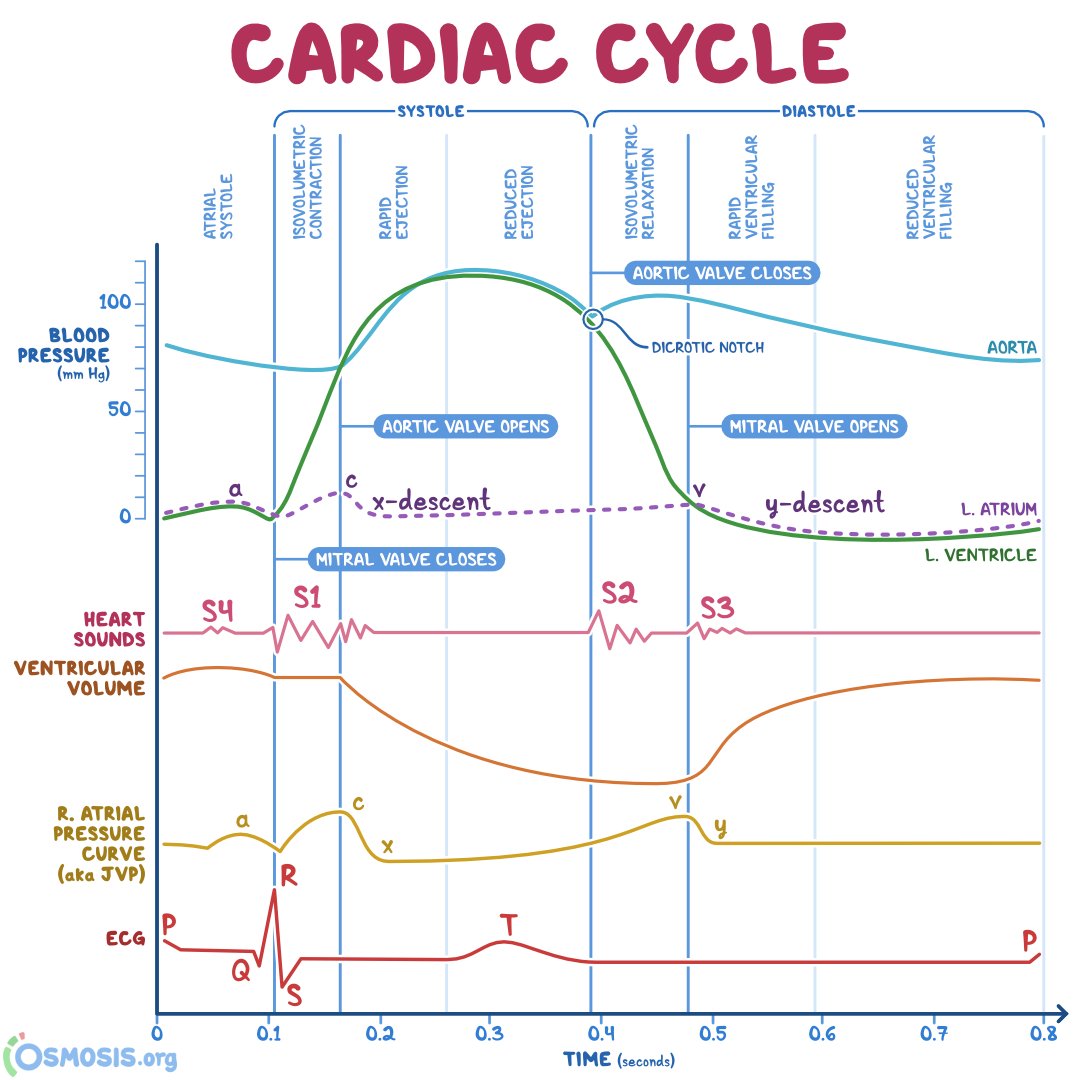
The “P” wave on an ECG represents atrial depolarization, which triggers atrial contraction. After the “P” wave, the following events occur in sequence:
“a” wave: The “a” wave is seen in the jugular venous pulse and represents atrial contraction. This happens immediately after the “P” wave because atrial depolarization causes the atria to contract, producing the “a” wave.
1st heart sound (S1): The first heart sound (S1) occurs with the closure of the mitral and tricuspid valves at the beginning of ventricular systole (which follows atrial contraction). This marks the onset of isovolumetric contraction in the ventricles.
Rapid filling of ventricles: After the initial isovolumetric contraction, blood rapidly flows into the ventricles during the early phase of diastole, especially after the atrioventricular (AV) valves open.
“T” wave: The “T” wave on the ECG represents ventricular repolarization and occurs later in the cardiac cycle, after the ejection of blood from the ventricles.
Hence , the Sequence of waves = A > C > B > D.