
Question
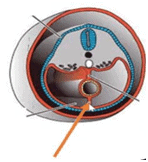
| A. |
Falciform ligament |
| B. |
Lienorenal ligament |
| C. |
Gastrosplenic ligament |
| D. |
Phrenicocolic ligament |

|
Correct Answer � A Explanation |
 |
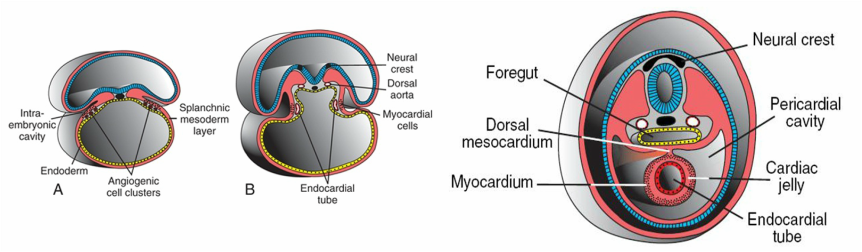
Falciform Ligament
Origin: The falciform ligament is derived from the ventral mesentery during embryonic development.
Location and Structure: It connects the anterior abdominal wall to the liver, extending from the umbilicus to the diaphragm.
Contains: It houses the ligamentum teres (round ligament of the liver), a remnant of the fetal umbilical vein.
Lienorenal Ligament (Splenorenal Ligament)
Origin: The lienorenal ligament arises from the dorsal mesentery during embryogenesis.
Location and Structure: It connects the spleen to the left kidney and the posterior abdominal wall.
Contains: It encloses the splenic artery and vein, and the tail of the pancreas, making it significant in surgeries involving these structures.
Gastrosplenic Ligament
Origin: The gastrosplenic ligament is derived from the dorsal mesogastrium in the embryo.
Location and Structure: It connects the greater curvature of the stomach to the hilum of the spleen.
Contains: It carries the short gastric vessels and left gastroepiploic vessels, which supply the stomach and spleen.
Phrenicocolic Ligament
Origin: The phrenicocolic ligament develops from the fusion of peritoneal layers associated with the diaphragm and transverse colon.
Location and Function: It connects the left colic flexure (splenic flexure) to the diaphragm, supporting the left side of the transverse colon.
Clinical Significance: It helps prevent the spread of fluid in the left paracolic gutter, influencing the distribution of ascitic fluid in the peritoneal cavity.
