
Question
| A. |
Islet of langerhans |
| B. |
Glomerulus |
| C. |
Lymph node |
| D. |
Hassall corpuscles |

|
Correct Answer » D Explanation |
 |
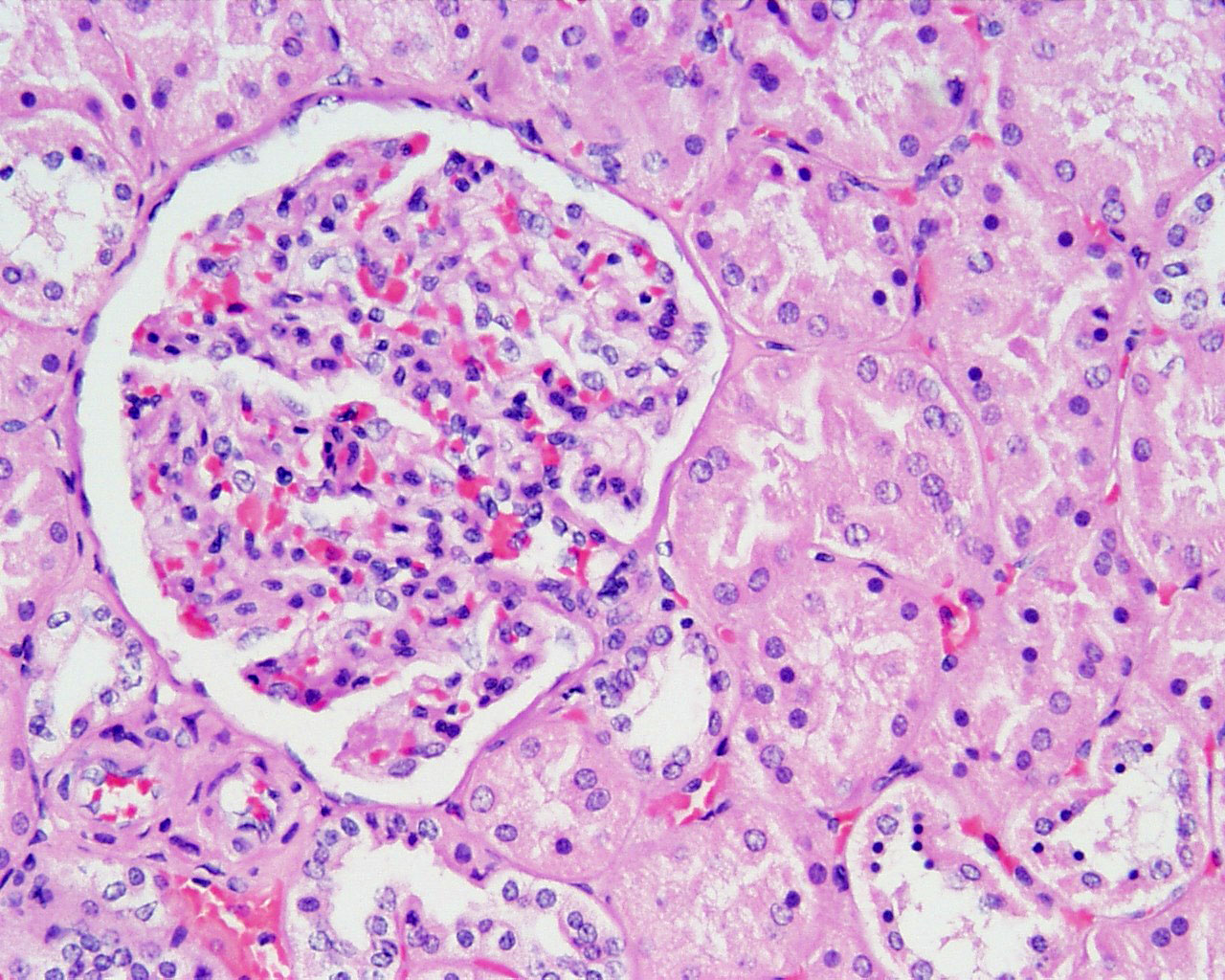
Image interpretation:
– Central, eosinophilic, concentrically arranged structures in medulla of a lobulated organ
– Surrounded by lymphoid tissue typical of the thymic medulla
– Hallmark “onion-skin” appearance in center—most consistent with Hassall corpuscles
Clinical reasoning for the correct answer:
– Hassall corpuscles are found in the medulla of the thymus, composed of concentric layers of epithelial reticular cells
– Eosinophilic and keratinized centers distinguish them from glomeruli, Islets of Langerhans, and lymph node follicles
– These corpuscles are unique to the thymic medulla and help in identifying thymic tissue histologically
Why option A is incorrect:
– Islets of Langerhans found in pancreas, look pale and irregular, lack concentric, keratinized whorls
Why option B is incorrect:
– Glomerulus is a round, tufted capillary network in renal cortex, lacks concentrically arranged epithelial cells
Why option C is incorrect:
– Lymph node shows follicles with germinal centers, never displays concentric corpuscle-like structures with keratinization
– No “onion-skin” arrangement seen in lymph nodes
Why option D is correct:
– Classic “onion-skin” whorled appearance, found only in thymic medulla
—
High‑Yield Synopsis:
Hassall corpuscles (Thymic corpuscles):
– Location:
– Found in medulla of thymus
– Histological appearance:
– Eosinophilic, concentric, “onion-skin” structures
– Composed of epithelial reticular cells, central keratinization common
– Function:
– Involved in T-cell maturation and tolerance induction
– Secrete cytokines that aid dendritic cell maturation
– Differential Diagnoses:
– Islets of Langerhans (pale, pancreatic, not concentric)
– Glomerulus (capillary tuft, renal cortex)
– Lymph node (follicles, cortical and medullary sinuses, no concentric keratinized bodies)
– Clinical relevance:
– Seen only in thymic medulla—key for thymus identification on histology
– No known function in adults; important in childhood immune development
