
Question
A patient presents with symptoms of diarrhea, memory impairment, and a distinctive rash. Which vitamin deficiency is most likely responsible for these symptoms?
| A. |
Thiamine |
| B. | Niacin |
| C. | Cyanocobalamin |
| D. |
Ascorbic acid |

|
Correct Answer � B Explanation |
 |
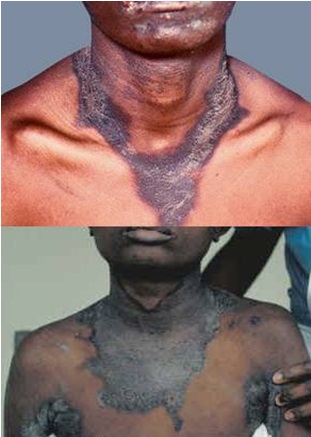
The symptoms described — diarrhea, memory impairment, and a distinctive rash — are characteristic of niacin deficiency, also known as pellagra. Pellagra is specifically associated with a deficiency in niacin (vitamin B3) and is classically defined by the three Ds: Dermatitis, Diarrhea, and Dementia.
The rash associated with pellagra typically occurs in areas exposed to sunlight and is one of the hallmark signs used to diagnose this condition.
Niacin or B3 can be synthesized via metabolic pathways. It is vital for macronutrient metabolism (carbohydrate, protein, and fat) since it is a component of the NAD and NADP coenzymes. Niacin deficiency causes a decrease in NAD and NADP coenzymes.
The oxidation of glucose generates a considerable amount of chemical energy. NAD/NADH transports electrons through a route that collects energy by forming high-energy phosphate bonds.
This adenosine triphosphate (ATP) provides the energy required for subsequent intermediate metabolic steps while also rebuilding NAD from the decreased NADH. A portion of this cofactor is transformed into NADP/NADPH, which serves numerous functions.
Other pathways also contribute to niacin insufficiency. Carcinoid syndrome has altered tryptophan metabolism, Hartnup disease has impaired tryptophan absorption, and long-term use of certain medications may decrease tryptophan production (isoniazid) or inhibit the conversion of tryptophan to niacin (azathioprine, 6-mercaptopurine, or 5-fluorouracil).
Pellagra is a disorder characterized by a lack of niacin or its precursor, tryptophan. Pellagra involves the “three Ds,” dermatitis, dementia, and diarrhea, and can be fatal. Brown discoloration and skin lesions on sun-exposed skin, such as hands, elbows, knees, and feet, are evident, similar to a sunburn.
Reasons for ruling out other options are-
Option A: For thiamine (Vitamin B1) deficiency, common conditions to consider are delirium, depression, folic acid deficiency, hyperthyroidism, cardiomyopathy secondary to other causes such as alcohol or diabetic heart disease, delusional disorder, nerve entrapment syndromes, other psychiatric disorders, or diabetic ketoacidosis.
None of these signs or symptoms are present in this case. Therefore, thiamine deficiency can be ruled out.
Option C: specific skin manifestations, such as hyperpigmentation, cutaneous lesions, vitiligo, angular stomatitis, and hair and nail changes characterize Cobalamine (Vitamin B12) deficiency. The patient here shows no signs or symptoms that can suggest cobalamine deficiency.
Option D: Ascorbic acid (Vitamin C) deficiency leads to skin pigmentation, pale skin, poor wound healing, gingival swelling with loss of teeth, mucocutaneous petechiae, ecchymosis, and hyperkeratosis. None of these signs and symptoms were reported by the patient in this case. Hence, vitamin C deficiency can be ruled out.
