
Methods of Obstetrical Examination
PREGNANCY DIAGNOSIS TESTS:
- Principle: Pregnancy tests depend on detection of the antigen Human chorionic gonadotropin (hCG) secreted during early pregnancy by trophoblastic cells to maintain the corpus luteum that appears in the maternal urine or serum with antibody either polyclonal or monoclonal.
- HCG (doubles every 2 days)reaches peak at approximately 10 weeks.
- Earliest diagnsostic test
| Test | Test Sensitivity | Time Taken | Inference | Positive On |
| Immunological tests (Urine) | ||||
|
Agglutination inhibition test (Latex test) |
0.5–1 (IU/mL) (Urine) |
2 minutes | Absence of agglutination | 2 days after missed period |
|
Direct latex agglutination test |
0.2 (IU/mL) (Urine) |
2 minutes | Presence of agglutination | 2–3 days after missed period |
|
Two-site sandwich immunoassay (membrane ELISA/ card tests) |
30–50 mIU/mL (Urine) |
4–5 minutes |
Color bands in the control as well as in test window |
On the 1rst day of the missed period (28th day of cycle) |
| Various kits in card forms are available |
+ Pregnant (Card test)

|
– Not pregnant (Card test)
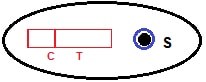
|
||
|
Enzyme-linked Immunosorbent Assay (ELISA) |
1–2 mIU/mL (Serum) |
2–4 hours |
5 days before the ! rst missed period |
|
| Radioimmunoassay(most sensitive) | ||||
| (β subunit) | 0.002 IU/mL | 3-4 hrs | 25th day of cycle | |
|
Immunoradiometric assay (IRMA) |
0.05 mIU/mL (Serum) |
30 min | 8 days after conception | |
ANTINATAL VISITS:
Schedule for antenatal visits in India(12-14) :
- Monthly visits upto 28 weeks.
- Two weekly visit between 28 and 36 weeks.
- Weekly visit from 36 weeks onwards
- As per Indian scenario – minimum 3 visits are essential 20th, 32nd & 36th weeks
WHO recommends atleast 4 visits :
- 16 weeks
- 24-28 weeks
- 32 weeks
- 36 weeks
ABDOMINAL EXAMINATION:
INDICATIONS:
- Diagnose the lie, presentation, position and the attitude of the fetus.
- Used to assess intrauterine growth retardation
POSITION:
- Dorsal position with the thighs slightly flexed.
Inspection:
- Uterine ovoid:longitudinal or transverse or oblique
- Contour of the uterus—fundal notching, convex or flattened anterior wall, cylindrical or spherical shape
- Skin condition of abdomen:ringworm or scabies
- Any incisional scar mark on the abdomen
- Undue enlargement of the uterus
Palpation:
- Height of the uterus
- SFH can be measured
Obstetric grips (Leopold maneuvers):
Fundal grip:
- Whole of the fundal area is palpated
- To find out which pole of the fetus is lying in the fundus
- Breech:broad, soft and irregular mass
- Head: smooth, hard and globular mass
Lateral or umbilical grip:
- To find out the position of the back, limbs and the anterior shoulder
- The position of the anterior shoulder is to be sought for
Pawlik’s grip (Third Leopold):
- Mobility from side to side is tested.
- In transverse lie, Pawlik’s grip is empty.
Pelvic grip (Fourth Leopold):
- To palpate the part occupying the lower pole of the uterus
- If head :precise presenting area,attitude and engagement should be checked
- Most comfortable for the woman and gives most information
Auscultation:
- Fetal heart sounds (FHS)
Usefulness:
- Differnt presentation if fetus
- Live fetus
- Best audible through the back (left scapular region) in vertex and breech presentation
- Heart sounds are heard through the fetal chest in face presentation
Intensity of the FHS:
| Presentation | Location |
| Cephalic | Below umbilicus |
| Breech | Around umbilicus |
| Occipitoanterior position | Middle of spinoumbilical line of same side |
| Occipitolateral position | Laterally |
| Occipitoposterior position | Mother’s flank on the same side |
ESTIMATION OF GESTATIONAL AGE & EDD:
PATIENT’S STATEMENT:
Date of fruitful coitus:
- Accuracy of 50% within 7 days on either side
- 266 days are to be added to the date of the single fruitful coitus to calculate
Naegele’s formula
- Interval of cycles longer: extra days are to be added
- Interval is shorter:Lesser days subtracted to get the EDD.
Date of quickening:
- EDD = 22 weeks primigravidae+ 24 weeks in multiparae+date of quickening
- 40 weeks are between LMP and EDD
OTHER METHODS:
- Size of the uterus12 weeks
- Nine calendar months +7 days
- 280 days or 40 weeks
- 10 lunar months
- Palpation of fetal parts:20th week
- Auscultation of FHR18–20 weeks
- Height of the uterus
- Lightening:3 week before EDD
- Size of the fetus
- Ultrasonographic findings
- Gestation sac — at 5 weeks.
- Hasse’s formula
- If the crown heel length is known then the intrauterine age of fetus is calculated as:
- If CH length is up to 25 cm then IU age = Square root of CH length
- If the CH length is > 25 cm then IU age = 1/5 of CH length
- First trimester : Crown — Rump Length (CRL) is most accurate. (Variation ± 5 days).
- Second trimester : BPD, HC, AC and FL measurement. Most accurate when done between 12 and 20 weeks (variation ± 8 days).
- Third trimester : Less reliable, variation ± 16 days.
- X-ray: Appearance and density of ossification centers in the upper end of the tibia (38–40 weeks) and lower end of femur (36–37 weeks).
Exam Important
- Hasse’s formula used in pregnancy to Estimate fetal age
- Best parameter for estimation of fetal age by ultrasound in 3rd trimester is Femur length
- Radio – immunoassay is the most sensitive method of quantitative measurement of human chorionic gonadotrophin
- The earliest diagnostic test of pregnancy is Beta HCG
- Ideal number of antenatal visits 12-14
- Minimum number of antenatal visits should be 3
- Manual appreciation of fetal parts and fetal movement by examination is earliest possible at 20 weeks of gestation
- Expected date of delivery is calculated by Nine calendar months plus 7 days, 280 days or 40 weeks,10 lunar months
- Head size, Fundal height & Abdominal circumference are used to assess intrauterine growth retardation
- During early pregnancy, the trophoblastic cells secrete Human chorionic gonadotropin (hCG) in order to maintain the corpus luteum
- HCG can be detected in the urine prior to the first missed period
- Leopold maneuver is used for Examination of abdomen
- Minimum hCG level that a urine pregnancy test can detect is 5 m IU/ ml
- Fetal blood, Maternal blood & Amniotic fluid can be used for establishing antenatal diagnosis
- Biparietal diameter, Abdominal circumference of fetus & Femur length are commonly used for estimation of gestational age in mid trimester
- Plasma levels of hCG during pregnancy doubles every 2 days
- hCG is secreted by Syncytiotrophoblast
- HCG can be detected as early as 8-9 days after conception
- In pregnancy, calculation of EDD (expected date of delivery) considers First day of last menstruation
- Exact number of weeks between last menstrual period LMP and expected date of delivery EDD 40 weeks
Don’t Forget to Solve all the previous Year Question asked on Methods of Obstetrical Examination
Click Here to Start Quiz
Click Here to Start Quiz

