
MYCOTIC (FUNGAL) CORNEAL ULCER
MYCOTIC CORNEAL ULCER
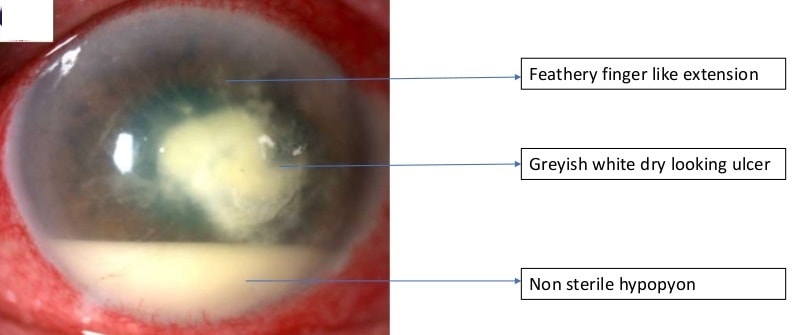


- The incidence of corneal ulceration due to fungi has increased significantly due to long-term unwarranted use of antibiotic & steroid.
- The m/c mode of infection is injury by vegetative material such as crop leaf, thorn, wooden stick.
- The causative fungus are Aspergillus fumigates (most common), Candida albicans & fusarium.
Clinical features
- Symptoms are similar to bacterial corneal ulcer.
- In general they are less marked than the equal sized bacterial ulcer.
- Signs are very prominent i.e signs are more prominent than symptoms.
- Following signs can be seen:
- Grayish-white dry looking ulcer with the elevated rolled out feathery & hyphate margins.
- Feathery finger-like extension into surrounding stroma under intact epithelium.
- A sterile immune ring (yellow line) of Wesseley.
- Multiple small satellite lesions
- Non –sterile (infected) hypopyon (Pseudohypopyon)
- Perforation is rare & corneal vascularisation is conspicuously absent
Diagnosis
- Examination of wet KOH will show:
- Filamentous fungi (branched septate hyphae): Aspergillus fumigates, Fusarium
- Non-filamentous (yeast like fungi): Candida
Treatment
- Treatment of corneal fungal ulcer involves:
1. SPECIFIC (DEFINITIVE): Includes antifungal drugs.
A) Topical antifungals
i) For filamentous fungi (Aspergillus fusarium):
- Natamycin (5%) eye drops (drug of choice)
- Miconazole ointment
- Amphoterecin B drops
ii) For yeast (Candida):
- Amphhoterecin B (Drug of choice)
- Nystatin
B) Systemic antifungals
- May be required in severe cases.
- Fluconazole or ketoconazole may be used
2. ADJUNCTIVE/ CONCURRENT:
- Cycloplegics (1% atropine ointment or drop is the DOC) should be used to:
- Reduce pain from ciliary spasm
- Prevent posterior synaechiae
- Reduce uveal inflammation
- Topical steroids enhance fungal replication & corneal invasion & are contraindicated during early therapy of a fungal corneal ulcer.
Exam Important
- Features of fungal ulcer is Dry ulcer.
- Hypopyon in a fungal corneal ulcer contains Fungal filaments.
- Common fungus causing corneal ulcer is Aspergillus fumigates, Candida albicans & fusarium.
- Immune ring is a feature of Fungal corneal ulcer.
- Satellite lesions in the cornea may be seen in Fungal corneal ulcer.
- Natamycin is the drug of choice for treatment of corneal ulcers caused by filamentous fungi.
- Atropine sulphate eye ointment is the most important adjuvant therapy in a case of fungal corneal ulcer.
- Steroid is contraindicated in Fungal corneal ulcer.
Don’t Forget to Solve all the previous Year Question asked on MYCOTIC (FUNGAL) CORNEAL ULCER
Click Here to Start Quiz
Click Here to Start Quiz

