
PAPANICOLAOU TEST
INTRODUCTION:

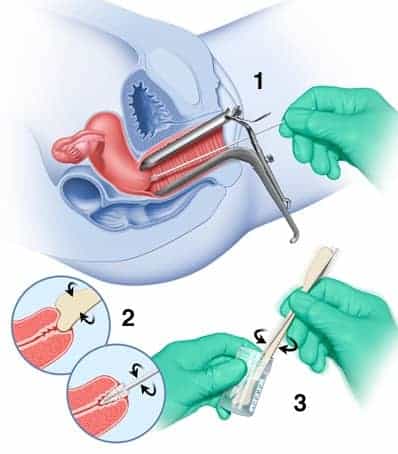
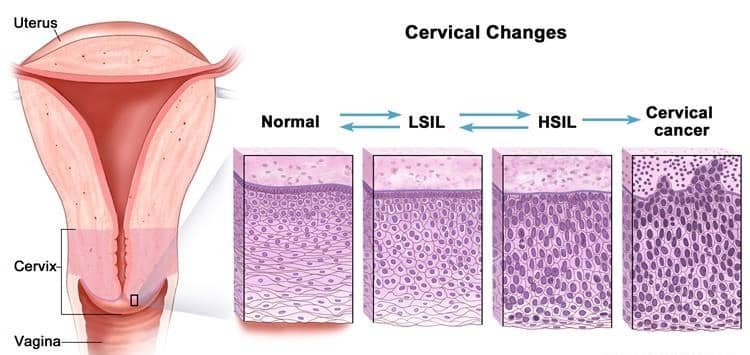
- A Pap smear, also called a Pap test, is a procedure to test for cervical cancer in women.
- A Pap smear involves collecting cells from your cervix — the lower, narrow end of your uterus that’s at the top of your vagina.
- Pap smear is an example of Secondary level of prevention
- Screening of cervical cancer at PHC level is done by PAP smear
USES:
- Papsmear is a screening test for diagnosis of cervical Intraepithelial Neoplasia (CIN) and Carcinoma cervix(Reduce the incidence)
Others:
- Trichomonas vaginalis
- Candidiasis
- Bacterial vaginosis
- Actinomycosis
- Herpes simplex virus infection
- Human papilloma virus
- Inflammatory changes
- Cellular changes associated with radiation
- Cellular changes associated with intrauterine devices.
- Glandular cell status post hysterectomy
- Atrophy (i.e., post surgery)
- Postcoital bleeding (PCB)
INDICATIONS:
- All women > 20 years
- All women 3 years after the onset of sexual activity
- Women with unhealthy cervix
- Pregnancy(Routine, as a part of screening)
- Women with intermenstrual bleeding or discharge
High risk cases like women exposed to:
- Early sexual life
- Multiple sexual partners
- Multipara or women with HIV, HPV or herpes simplex virus infection
- Smokers.
TECHNIQUE:
- A speculum is introduced in the vagina without lubricant and material from cervix is collected using Ayer’s spatula.
- Whole of the squamocolumnar junction has to be scrapped i.e. rotate the spatula through 360° and spread it on a slide (1s1 slide) and material is also collected from posterior wall of vagina (2″ slide) which acts as a control.
- The glass slide is not air rie as it gets damaged.
- The slide is fixed using ethyl alcohol.
- The main problem with conventional pap smears are that they are of variable thickness and may get obscured by mucus, blood and other debris. This results in cell and nuclear overlap, causing problems with detection and interpretation.
- To overcome this problem – Liquid based cytology has been developed.
FINDINGS:
Normal PAP Smear:
3 types of cells:
- Basal and para basal cells:Small, rounded and basophilic with large nuclei
- Cells from the middle layer: Squamous cells, transparent and basophilic with vesicular nuclei
- Cells from the superficial layer: Acidophilic with characteristic pyknotic nuclei
Papanicolaou classification:
- Grade I Normal cells
- Grade II Slightly abnormal, suggestive of inflammatory change; repeat smear after treating the infection
- Grade III A more serious type of abnormality, usually indicative of the need for biopsy
- Grade IV Distinctly abnormal, possibly malignant and definitely requiring biopsy
- Grade V Malignant cells seen
ABNORMAL FINDINGS:
| CYTOLOGY | HISTOLOGY |
|
Atypical squamous cell-
uncertain significance(ASC-US) |
Atypia or metaplasia |
|
Atypical squamous cell can
not rule out high grade (ASC-H) |
Varies |
|
Low grade squamous intraepithelial
lesion(LSIL or LGSIL) |
Cervical intraepithelial neoplasia
CIN-1= Mild dysplasia |
|
High grade squamous intraepithelial
lesion (HSIL or HGSIL) |
CIN2= Moderate dysplaisa
CIN3= Severe dysplasia |
| Atypical glandular cells(AGC) |
Glandular atypia mild/severe
Adenocarcinoma in situ(AIS) |
|
Condition |
Type of cell |
|
Estrogen dominated uterus |
Normal cornified cells |
|
Progesterone dominated uterus |
Intermediate cells |
|
Pregnancy |
Intermediate cells , Navicular cells |
|
Menopausal |
Basal , parabasal |
|
HPV |
Koilocytes, dyskeratocytes, macrocytes with perinuclear halo. |
Exam Important
- Pap smear is useful in the diagnosis of Trichomonas vaginalis, HPV & Inflammatory changes
- Women > 20 years,Pregnant female, Sexually active female are all indicaed for pap smear
- Pap smear in pregnancy is Routine, as a part of screening
- Pap smear can detect CIN
- Pap smear reduces incidences of Ca cervix
- Koilocytes with perinuclear halo on pap smear is pathognomic of HPV infection
- Pap smear most commonly demonstrates protozoal parasites Trichomonas vaginalis in women
- A female presented with post coital bleeding can be managed by Pap smear and colposcopy
- Pap smear is an example of Secondary level of prevention
- Screening of cervical cancer at PHC level is done by PAP smear
- Sensitivity of conventional PAP smear in picking up cervical cancer is 80%
Don’t Forget to Solve all the previous Year Question asked on PAPANICOLAOU TEST
Click Here to Start Quiz
Click Here to Start Quiz

