
Reversible cell injury
REVERSIBLE CELL INJURY


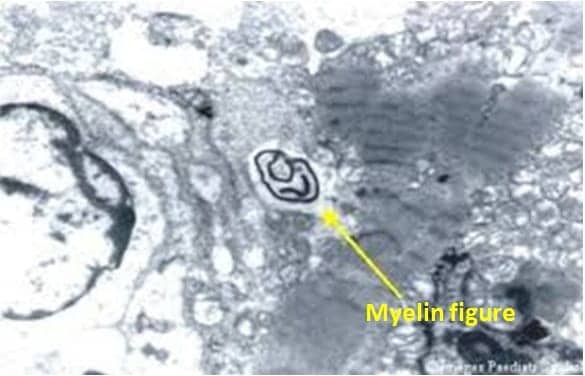
- Reversible cell injury occurs when the stress is mild to moderate and the cell can recover.
- Hypoxia is the most common cause of cell injury which is caused due to ischemia.
Mechanism of Reversible cell injury-
- Following mechanisms are responsible for reversible cell injury-
1. Decreased generation of cellular ATP—
- It occurs in both reversible & irreversible cell injury.
- ATP depletion to 5- 10 % of normal levels will induce cell injury.
- It may occur due to-
- Ischemia interruption in blood supply as well as hypoxia limits oxygen supply to the cell leading to decrease in ATP generation → necrosis.
- Mitochondrial damage leading to decrease oxidative phosphorylation which causes decrease ATP generation → necrosis.
2. Intracellular lactic acidosis results in nuclear clumping due to low oxygen supply → anaerobic pathway → depletion of glycogen → accumulation of lactic acid & decease intracellular pH → nuclear clumping.
3. Damage to plasma membrane may occur due to-
- Failure of sodium- potassium pump (Na+– K+ ATPase) resulting in cell swelling (Hydropic swelling).
- Failure of calcium pump by increased sodium level where excess of calcium will move into the cell resulting in deposition of phospholipase & cell swelling.
4. Reduced protein synthesis–
- Due to hypoxia, ribosomes detach from endoplasmic reticulum & golgi apparatus which degrades into monosomes leading to decrease in protein synthesis.
ULTRASTRUCTURAL CHANGES OF REVERSIBLE CELL INJURY-
- Plasma membrane alterations in the form of blebbing & loss of microvilli.
- Myelin figures derieved from damage of the membranes (whorls of lamellated phospholipid and calcium)
- Mitochondrial swelling & small amorphous densities within mitochondria.
Exam Important
- Hypoxia is the most common cause of cell injury which is caused due to ischemia.
- ATP depletion to 5- 10 % of normal levels will induce cell injury.
- Decreased generation of cellular ATP— it occurs in both reversible & irreversible cell injury.
- Intracellular lactic acidosis results in nuclear clumping as there is decrease intracellular pH and glycogen by anaerobic glycolysis.
- Failure of sodium- potassium pump (Na+– K+ ATPase) resulting in cell swelling (Hydropic swelling).
- Failure of calcium pump by increased sodium level where excess of calcium will move into the cell resulting in deposition of phospholipase & cell swelling.
- Due to hypoxia, ribosomes detach from endoplasmic reticulum & golgi apparatus which degrades into monosomes leading to decrease in protein synthesis.
- Plasma membrane alterations in the form of blebbing & loss of microvilli.
- Myelin figures derived from damage of the membranes (whorls of lamellate phospholipid and calcium)
- Mitochondrial swelling & small amorphous densities within mitochondria.
Don’t Forget to Solve all the previous Year Question asked on Reversible cell injury
Click Here to Start Quiz
Click Here to Start Quiz

