
RUPTURE BLADDER
RUPTURE BLADDER (BLADDER INJURY)
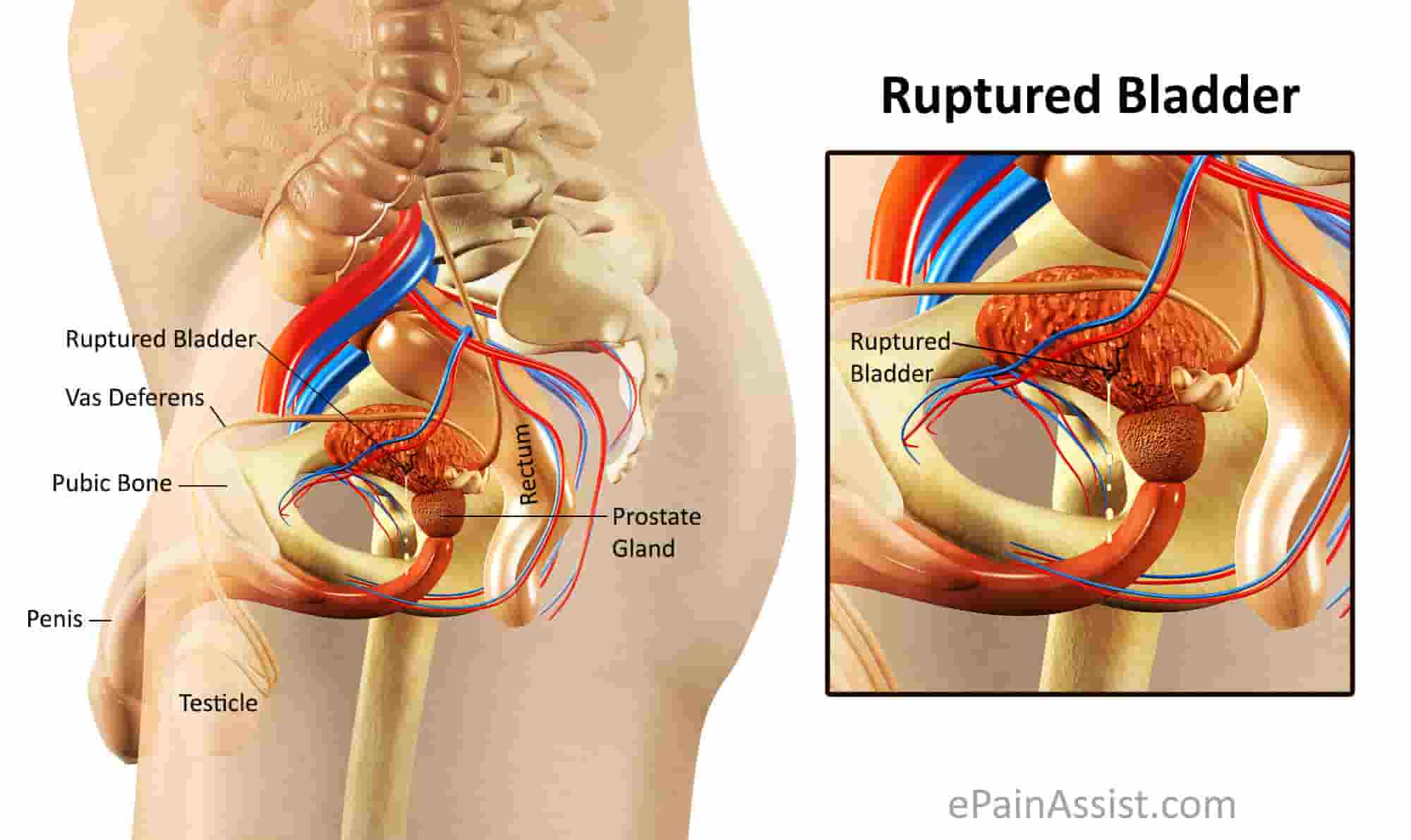
- Bladder injuries occur mostly from external force to full bladder and often associated with pelvic fracture.
- Classical traid- suprapubic pain & tenderness + difficulty in passing urine + haematuria
ETIOLOGY-
- Surgical (iatrogenic)
- Pelvic surgery
- Diathermy
- Instrumentations
- Endoscopic trauma
2. Trauma
- RTA
- Kick or blow on abdomen
- Penetrating injury (gun shot, stab)
TYPES-
- Intraperitoneal rupture (20%)
- When there is surgical trauma or trauma to distended bladder
Etiology-
- Blow, kick or fall or fully distended bladder
Clinical features-
- Sudden pain in suprapubic region
- Syncope and shock
- MC is rent of dome of bladder
- Seen in males mainly
- Diffuse abdominal pain
- Distension of abdomen (urine leakage)
- Later, peritonitis, rigidity, tenderness and rebound tenderness, dull shifting.

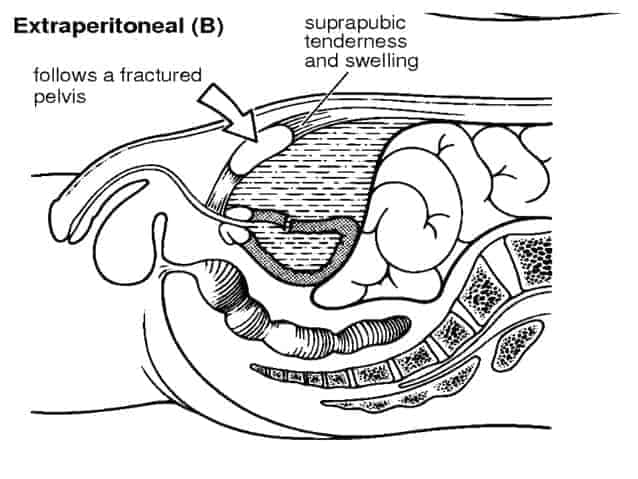
2. Extraperitoneal rupture (80%)
- Trauma due to penetrating or blunt injury with fracture of pubis
- MC- pelvic injury
Clinical feature-
- Diffuse pain and tenderness in lower abdomen due to collection of urine and blood in the extraperitoneal space.
- Swelling in scrotum or labia and abdominal wall
- extravasation limited to perivesical space
- Strangury and inability to pass urine
INVESTIGATIONS-
- Intraperitoneal
- Plain X-ray abdomen – ground glass appearance
- Peritoneal tap confirms urine
- Cystogram- extravasation of dye into peritoneal cavity or extraperitoneally shows flame sign or pear sign.
- CT scan of abdomen
- With Foley catheter drainage, an extra peritoneal bladder injury should close spontaneously. Colostomy and bladder repair is appropriate for intraperitoneal bladder injury. Suprapubic cystostomy may be required if a Foley catheter cannot be passed safely through an injury in the posterior urethra.
2. Extraperitoneal
- Plain X-ray shows fracture pelvis
- Cystogram shows leak from the bladder

TREATMENT-
- Intraperitoneal rupture-
- Surgery- TOC (emergency laprotomy)
- Bladder tear sutured in 2 layers using vicryl
2. Extraperitoneal rupture
- Simple catheter drainage
- Bladder is closed with SPC using Maclecot’s catheter
- Surgical repair is indicated in repeated blockade of catheter due to bleeding, bone fragment, tear extending to the bladder neck
Exam Important
TYPES-
- Intraperitoneal rupture (20%)
- When there is surgical trauma or trauma to distended bladder
Etiology-
- Blow, kick or fall or fully distended bladder
Clinical features-
- Sudden pain in suprapubic region
- Syncope and shock
- MC is rent of dome of bladder
- Seen in males mainly
- Diffuse abdominal pain
- Distension of abdomen (urine leakage)
- Later, peritonitis, rigidity, tenderness and rebound tenderness, dull shifting.
2. Extraperitoneal rupture (80%)
- Trauma due to penetrating or blunt injury with fracture of pubis
- MC- pelvic injury
Clinical feature-
- Diffuse pain and tenderness in lower abdomen due to collection of urine and blood in the extraperitoneal space.
- Swelling in scrotum or labia and abdominal wall
- extravasation limited to perivesical space
- Strangury and inability to pass urine
INVESTIGATIONS-
- Intraperitoneal
- Plain X-ray abdomen – ground glass appearance
- Peritoneal tap confirms urine
- Cystogram- extravasation of dye into peritoneal cavity or extraperitoneally shows flame sign or pear sign.
- CT scan of abdomen
- With Foley catheter drainage, an extra peritoneal bladder injury should close spontaneously. Colostomy and bladder repair is appropriate for intraperitoneal bladder injury. Suprapubic cystostomy may be required if a Foley catheter cannot be passed safely through an injury in the posterior urethra.
2. Extraperitoneal
- Plain X-ray shows fracture pelvis
- Cystogram shows leak from the bladder
TREATMENT-
- Intraperitoneal rupture-
- Surgery- TOC (emergency laprotomy)
- Bladder tear sutured in 2 layers using vicryl
2. Extraperitoneal rupture
- Simple catheter drainage
- Bladder is closed with SPC using Maclecot’s catheter
- Surgical repair is indicated in repeated blockade of catheter due to bleeding, bone fragment, tear extending to the bladder neck
Don’t Forget to Solve all the previous Year Question asked on RUPTURE BLADDER
Click Here to Start Quiz
Click Here to Start Quiz

