
Thiopentone
| A | Fall in intracranial tension | |
| B | Decreases oxygen consumption of brain | |
| C | Decreases metabolic rate of brain | |
| D | Decreases stage 2 of sleep |
| A | Fall in intracranial tension | |
| B | Decreases oxygen consumption of brain | |
| C | Decreases metabolic rate of brain | |
| D | Decreases stage 2 of sleep |
Thiopentone decreases oxygen consumption, metabolic rate and ICT. That is why it is agent of choice for cerebral protection. On sleep it increases stage 2 and decreases stage 3, 4 and REM.
Dose of thiopentone is?
| A | 2.5% | |
| B |
5% |
|
| C | 2% | |
| D |
3% |
2.5% REF: Miller 6′ ed p. 345
Dose of thiopentone is 2.5%
Regarding thiopentone all are true except
| A |
Sodium carbonate is added to improve its solubility |
|
| B |
Cerebro protective |
|
| C |
Contraindicated in porphyria |
|
| D |
Induction agent of choice in shock |
Induction agent of choice in shock [Ref. Morgan’s anaesthesia 4tIVe p 184-187]
- Thiopentone is a short acting barbiturate used in the induction of anaesthesia.
- Anaesthetic barbiturates are derivatives of Barbituric acid with an oxygen or sulfur at 2 position.
- The three barbiturates commonly used for clinical anaesthesia are :
- Sodium thiopental
- Thiamylal
- Methohexital
- Thiopentone is supplied as powder containing the sodium salts with 6% sodium carbonate.
– The addition of sodium carbonate to the powder makes it water soluble.
– It prevents it from precipitating
- Thiopentone is used for the induction of anaesthesia because it has a very rapid onset of action.
- The typical induction dose (3-5 mg/kg) of thiopentone produces unconsciousness in 10-30 seconds with a peak effect in 1 minutes and duration of anaesthesia of 5-8 minutes.
- Action of this drug terminates quickly because of rapid redistribution.
- Thiopentone is highly lipid soluble, therefore its redistribution is very rapid and this accounts for its short duration of action.
- Sulphur is added to increase the lipid solubility of thiopentone.
- Thiopentone is given intravenously.
- It produces little to no pain on injection.
- Venoirritation can be reduced by injection into larger non hand veins and by prior intravenous injectionof lidocaine.
- If sometimes thiopentone inadvertently enter intraarterial circulation it causes severe inflammatory and potentially necrotic reaction.
Effects on system
C.N.S.
- Besides producing a general anaesthesia, barbiturates reduce the cerebral metabolic rate, as measured by cerebral oxygen consumption (CMRO2) in a dose dependent manner.
- As a consequence of the decrease in (CMRO2) cerebral blood flow and intracranial pressure are similarly reduced.
- Because it markedly lowers cerebral metabolism, thiopentone has been used as a protectant against cerebral ischemia.
- Thiopentone also reduces intraocular pressure.
- Presumbaly in part due to their CNS depressant activity barbiturates are effective anticonvulsants.
- Thiopentone in particular is a proven medication in the t/t of status epilepticus.
Respiratory
- Theiopentone is respiratory depressants.
- It causes dose dependent decrease in minute ventilation and tidal volume with a smaller and inconsistent decrease in respiratory rate.
Thiopentone in cardiovascular system
- Thiopentone produces dose dependent decrease in blood pressure.
– The effect is primarily due to vasodilation, particularly venodilation and to a lesser degree to direct decrease in cardiac contractility.
– Hypotension can be severe in patients with impaired ability to compensate for vendilation such as those with hypovolemia, cardiomyopathy, valvular heart disease, coronary artery disease, cardiac tamponade and b adrenergic block.
- Intravenous anaesthesia of choice in shock is ketamine
–Ketamine increases blood pressure, heart rate and cardiac output.
– These effects are mediated due to sympathomimetic activity of ketamine.
– Ketamine causes inhibition of both central and peripheral catecholamine reuptake.
– Ketamine has direct negative inotropic and vasodilatoty activity but these effects usually are overwhelmed by sympathomimetic action.
Adverse effects
- Thiopentone has no clinically significant effect on hepatic, renal or endocrine systems.
- Thiopentone (Barbiturates) can induce fatal attacks of porphyria in patients with acute intennittent porphyria and are contraindicated in such patients.
| A | Acute intermittent porphyria | |
| B | Malignant hyperthermia | |
| C | Raised ICT | |
| D | Raised IOP |
| A |
Thiopentone |
|
| B |
Pethidine |
|
| C |
Phenobarbitone |
|
| D |
Ketamine |
Thiopentone on extravasation or intraarterial injection cause intense pain and even necrosis.
Pentothal (Thiopental Sodium for Injection) is an ultrashort-acting depressant of the central nervous system which
induces hypnosis and anesthesia, but not analgesia.
It produces hypnosis within 30 to 40 seconds of intravenous injection
Too rapid injection may be followed by an alarming fall in blood pressure even to shock levels.
Pentothal is administered by the intravenous route only.
Slow injection is recommended to minimize respiratory depression and the possibility of overdosage.
A case of RTA comes to the emergency. On examination there is evidence of head injury, BP is 90/60 mmHg, and pulse is 150/ min. Which of the following anaesthetic agent should be used for induction?
| A |
Thiopentone |
|
| B |
Ketamine |
|
| C |
Succinyl choline |
|
| D |
Halothane |
Anaesthetic agents which are indicated in a case of head injury are
-Thiopentone (Cerebroprotective)
-Propofol
-Etomidate (Protection against circulatory depression) or Isoflurane.
- Muscle relaxants which are useful includes (Rocuronium/Vecuronium, Pipecuronium/ doxacurium.
- Ketamine, Succinylcholine, Halothane all increases ICT.
| A | Ketamine | |
| B |
Thiopentone |
|
| C |
Halothane |
|
| D |
Ether |
Thiopentone is cerebroprotective because it reduces
cerebral oxygen consumption,
cerebral metabolic rate and intracranial pressure.
Similar agent is propofol.
| A |
Halothane |
|
| B |
Isotlurane |
|
| C |
Suxamethonium |
|
| D |
Thiopentone |
Ans. is ‘d’ i.e., Thiopentone
Drugs causing Malignant hyperthermia
- Succinylcholine
- Enflurane
- Methoxyflurane
- Phenothiazines
- Halothane
- Sevoflurane
- MAO inhibitors
- Lignocaine
- Isoflurane
- Destlurane
- TCA
Succinylcholine is the most common cause of MH.
Amongst anaesthetics, halothane is most common cause.
Combination of Sch and Halothane has a much higher incidence.
Anesthetic agent (s) safe to use in TICP
| A |
Halothane |
|
| B |
Thiopentone |
|
| C |
Ketamine |
|
| D |
Ether |
B i.e. Thiopentone
Anesthetic agents safe to use in raised intracranial pressure (ICP) are thiopentone, propofol & etomidateQ
Sodium Thiopentone is ultra short acting d/t
| A |
Rapid absorption |
|
| B |
Rapid metabolism |
|
| C |
Rapid redistribution |
|
| D |
Rapid excretion |
C i.e. Rapid redistribution
Commonly used in narcoanalysis
| A |
Atropine |
|
| B |
Scopolamine |
|
| C |
Opium |
|
| D |
Thiopentone |
D i.e. Thiopentone
Use of Thiopentone
| A |
Seizure |
|
| B |
Truth spell |
|
| C |
Reduction of ICP |
|
| D |
All |
D i.e. All
Dose of Thiopentone used for induction is
| A |
1 mg/kg |
|
| B |
2 mg/ kg |
|
| C |
5 mg/ kg |
|
| D |
10 mg/kg |
C i.e. 5 mg/kg
All are true about Thiopentone except:
| A |
NaHCO3 is a preservative |
|
| B |
Contraindicated in Porphyria |
|
| C |
Agent of choice in shock |
|
| D |
Has cerebroprotective action |
C i.e. Agent of choice in shock
Thiopentone, a pale yellow powder, is ultrashort acting smooth inducing agent because of rapid redistributionQ. It is used in 2.5% conc. at 2.5 – 4.5 mg/kg mixed with 6% anhydrous Na2CO3 as perservativeQ
Thiopentone is contraindicated in porphyria, status asthmaticus, severe shock, pericardial temponade and uncompensated myocardial diseaseQ
Drugs contraindicated in acute intermittent porphyria‑
| A | Thiopentone | |
| B |
Etomidate |
|
| C |
Ketamine |
|
| D |
a and b |
A, B i.e. Thiopentone, Etomidate
Thiopentone is C/I in:
| A |
Acute intermittent porphyria |
|
| B |
Bronchial Asthma |
|
| C |
Both |
|
| D |
None |
A i.e. Acute intermittent porphyria
– In porphyria (AIP), barbiturates (eg thiopentone, methohexital & thiamylal), etomidate, pentazocine and ropivacaine are avoided/ contraindicatedQ whereas diclofenac, ketorolac, phenacetin, tilidine, chlordiazepoxide, nitrazepam, hydralazine, nifedipine, and phenoxybenzamine are used with extreme caution only.
Barbiturate (Thiopentone) induces aminolevulenic acid synthetase & formation of porphyrin which may precipitate actue intermittent or variegate prophyriaQ. ; so it is contraindicated in porphyria.Q
– Due to cholinergic nerve stimulation, histamine release or direct bronchial smooth muscle stimulation, barbiturates may cause bronchospasm; which would be preventable by pretreatment with atropine, so it is not C/I in asthma.
| A |
Rash |
|
| B |
Pain |
|
| C |
Spasm |
|
| D |
All |
A i.e. Rash; B i.e. Pain; C i.e. Spasm
Intra artireal injection of thiopentone causes:
| A |
Vasospasm |
|
| B |
Vasodialation |
|
| C |
Necrosis of vessel wall |
|
| D |
Hypotension |
A i.e. Vasospasm
Primary mechanism responsible for cerebral protection effect of thiopentone is
| A |
GABA action, calcium channel block and free radicle removal |
|
| B |
Increased cerebral blood flow |
|
| C |
Decreased (lowered) cerebn metabolism |
|
| D |
Reduces cerebral 02 demand by limiting CBF |
C i.e. Decreased (lowered) cerebn metabolism
Barbiturates (thiopental), primarily decreases cerebral metabolismQ resulting in a dose related depression of cevebral metabolic oxygen consumption (CMR02).
Reduced CMRO2 causes progressive slowing of EEG, a reduction in rate of ATP consumption, cerebral vasoconstriction (reducing cerebral blood flow and intracranial tension) and protection from incomplete cerebral ischemiaQ.
Thiopentone Sodium
• Thiopentone is a yellow coloured powder used as 2.5 % solution at 5 mg/kg dose for smooth induction. It is ultrashort actingQ due to rapid redistributionQ. It is contraindicated in porphyria.Q.
A 5 year old boy suffering from Duchenne muscular dystrophy has to undergo tendon lengthening procedure. The most approp-riate anaesthetic would be:
| A |
Induction with intravenous thiopentone and N20; and halothane for maintenance |
|
| B |
Induction with intravenous suxamethonium and N20; and oxygen for maintenance |
|
| C |
Induction with intravenous suxamethonium and N20; and halothane for maintenance |
|
| D |
Inhalation induction with inhalation halothane and N20; oxygen for maintenance |
A i.e. Induction with intravenous thiopentone and N20; and halothane for maintenance
In this boy with duchenne muscular dystrophy, there is high risk of malignant hyperthermia. The earliest signs of malignant hyperthermia are masseter muscle rigidity (MMR), tachycardia, and hypercarbia due to increased CO2 production.
A case of road traffic accident (RTA) came with head injury, BP is 90/60, pulse is 150/min. Which anesthetic agent should be used for induction.
| A |
Thiopentone |
|
| B |
Ketamine |
|
| C |
Halothane |
|
| D |
Succinylcholine |
A i.e. Thiopentone
In head injury, induction is preferably done by thiopental or propofol (both neuroprotective)Q and a rapid onset NMBD (usually rocuronium or mivacurium) following adequate preoxygenation hyperventilation by mask. A barbiturate (thiopentone) – opioid – N20-NMBA technique is commonly used or intraoperative maintenance anesthesia. Ketamine, halothane, succinylcholine can increase ICP and are better avoidedQ, however, Sch can be used in difficult intubation. Glucose containing or hypotonic crystalloid solutions, sedation without airway control and vasodilators (CCB, hydralazine, nitro-glycerine, nitroprusside) and PEEP are also avoided (or used very cautiously) in head injury.
The drug which is not suitable for patients with acute porphyria for intravenous induction is:
| A |
Thiopentone sodium |
|
| B |
Propofol |
|
| C |
Midazolam |
|
| D |
Etomidate |
A i.e. Thiopentone sodium
Barbiturates (eg thiopentone), etomidate, pentazocine are considered unsafe and should be avoided in porphyriaQ (contraindicated).
Which of the following anesthetic agents does not trigger malignant hyperthermia?
| A |
Halothane |
|
| B |
Isoflurane |
|
| C |
Suxamethonium |
|
| D |
Thiopentone |
D i.e. Thiopentone
Which of the following anesthetic agent lacks analgesic effect:
March 2013
| A |
N20 |
|
| B |
Thiopentone |
|
| C |
Ketamine |
|
| D |
Fentanyl |
Ans. B i.e. Thiopentone
Thiopentone
- Ultra short acting barbiturate (because of rapid redistribution),
- Lacks analgesic effect,
- First sign on intra-arterial injection:
– White hands
- I/V injection presents as:
– Pain,
– Hypotension etc.
- C/I in: Porphyria (may precipitate porphyria)
September 2009
| A | Ketamine | |
| B |
Diazepam |
|
| C |
Nitrous oxide |
|
| D |
Thiopentone |
Ans. D: Thiopentone
Thiopental is an ultra-short-acting barbiturate and has been used commonly in the induction phase of general anaesthesia Following intravenous injection the drug rapidly reaches the brain and causes unconsciousness within 15 seconds. At one minute, the drug attains a peak concentration of about 60% of the total dose in the brain.
Thereafter, the drug distributes to the rest of the body and in about 15-20 minutes the concentration is low enough in the brain such that consciousness returns
Thiopental is not used to maintain anaesthesia in surgical procedures because, in infusion, it displays zero-order elimination kinetics, leading to a long period before consciousness is regained.
Instead, anaesthesia is usually maintained with an inhaled anesthetic (gas) agent.
Inhaled anesthetics are eliminated relatively quickly, so that stopping the inhaled anesthetic will allow rapid return of consciousness.
| A |
Digoxin |
|
| B |
Heparin |
|
| C |
Mannitol |
|
| D |
Thiopentone |
Ans. is ‘d’ i.e., Thiopentone
Redistribution of drugs
- Highly lipid soluble drugs get initially distributed to organs with high blood flow i. e. brain, heart, kidney etc.
- Later, less vascular but more bulky tissues take up the drug- plasma concentration falls and the drug is withdrawn from the highly perfused sites.
- If the site of action was in the highly perfused tissues, redistribution results in termination of the action of drug.
- Greater the lipid solubility of the drug faster is its redistribution.
- The drugs with high lipid solubility and faster redistribution are – thiopentone and diazepam.
| A | Rapidly renal excretion | |
| B |
Oxidation |
|
| C |
Redistribution |
|
| D |
Conjugation |
Ans. is ‘c’ i.e., Redistribution
Three proceeses are involved in the termination of action of barbiturates: the relative importance of each varies with the compound.
Redistribution: it is important in the case of highly lipid soluble thiopentone. After iv injection the action of thiopentone is terminated in 6-10 mins by redistribution while the ultimate disposal occurs by metabolism (tl/ 2 of elimination is 9 hours).
Metabolism: drugs with intermediate lipid solubility (short acting barbiturates) are primarily metabolized in liver by oxidation, dealkylation and conjugation. Their plasma t1/2 ranges from 12 – 40 hours.
Excretion: barbiturates with low lipid solubility (long acting agents) are significantly excreted unchanged in urine. The t1/2 of phenobarbitone is 80-120 hours. Alkalinization of urine increases ionization and excretion.
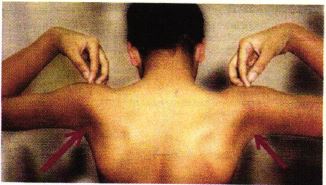
| A |
Induction with intravenous thiopentone and N20; and halothane for maintenance. |
|
| B |
Induction with intravenous suxamethonim and N20; and oxygen for maintenance. |
|
| C | Induction with intravenous suxamethonium and N20; and halothane for maintenance. | |
| D |
Inhalation induction with inhalation halothane and N20; oxygen for maintenance. |
Induction with intravenous thiopentone and N20; and halothane for maintenance.
In this boy with duchene muscular dystrophy, there is high risk of malignant hyperthermia. The earliest signs of malignant hyperthermia are masseter muscle rigidity (MMR), tachycardia, and hypercarbia due to increased CO2 production.
