
Question
A patient presented with Arthritis ,abdominal pain and following skin lesions .What will be the most probable cause?
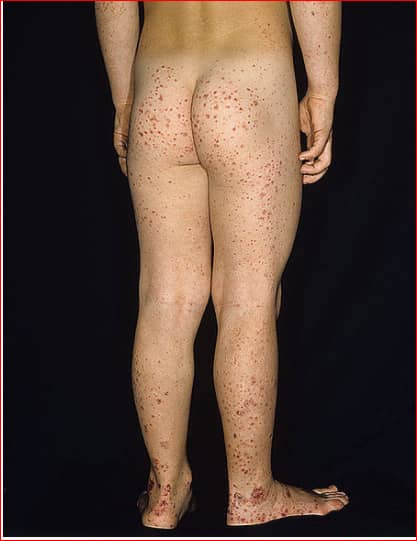
A. H S Purpurea
B. Pemphigus
C. Lichen Planus
D. None of the above.

|
Correct Answer » A Explanation |
 |
The given image shows H S Purpurea.
Purpura, arthritis and abdominal pain are known as the “classic triad” of Henoch–Schönlein purpura
Henoch-Schönlein purpura (HSP) is an acute immunoglobulin A (IgA)–mediated disorder characterized by a generalized vasculitis involving the small vessels of the skin, the gastrointestinal (GI) tract, the kidneys, the joints, and, rarely, the lungs and the central nervous system (CNS).
Physical findings in HSP may include the following:
-
Skin findings (usually the first sign of HSP) – Erythematous macular or urticarial lesions, progressing to blanching papules and later to palpable purpura; typically symmetrical and tend distributed in dependent body areas, such as the ankles and lower legs in older children and adults and the back, buttocks, upper extremities, and upper thighs in young children; hives, angioedema, and target lesions can also occur
-
Renal findings – Acute glomerular lesions, including mesangial hypercellularity, endocapillary proliferation, necrosis, cellular crescents, and leukocyte infiltration
-
Gastrointestinal (GI) findings – Abdominal pain, melena, bloody diarrhea, hematemesis, duodenal ulcers, and massive GI hemorrhage
-
Joint findings – Arthralgia and swelling
-
Arthralgia is the presenting feature in as many as 25% of cases. Joints may be swollen, tender, and painful. Warmth, erythema, and effusions are not typically associated with HSP. The knees and ankles are most commonly affected. On rare occasions, symptoms involve the fingers and wrists. Findings are transient but can occur again during active disease. The joints are not permanently deformed.
-
Other findings – Vasculitis involving the myocardium or lungs; stenosing ureteritis, priapism, penile edema, or orchitis; vasculitis involving the central nervous system (CNS) and intracranial hemorrhage; bilateral subperiosteal orbital hematomas; adrenal hematomas; acute pancreatitis as the sole presenting feature (rare); cystic changes of the ovaries.
No specific diagnostic laboratory test is available to assess for markers of H S Purpurea.
