Question
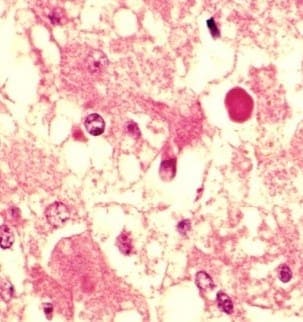
A 45-year-old male presents with pulmonary emphysema and repeated bouts of hepatitis. On liver biopsy, there are numerous eosinophilic, globular inclusions, such as the one at the center of the field. What do these inclusions contain?
A. Mallory hyalin.
B. Alpha-1-antitrypsin.
C. Lipofucsin.
D. Hemosiderin.
Show Answer
|
Correct Answer » B
Explanation
|
|
The biopsy as represented by a photomicrograph above is from a patient with hereditary alpha-1-antitrypsin deficiency. Alpha-1-antitrypsin is normally present in serum, tissue fluids and macrophages. It’s a big-time inhibitor of proteases (which are destructive enzymes secreted by neutrophils during inflammation). Good thing to have around.
Patients who are deficient in alpha-1-antitrypsin, then, are less able to counter the effects of proteases, and the elastic tissue in the lung is eventually destroyed, producing emphysema (irreversible enlargement of the airspaces distal to the terminal bronchiole).In addition to emphysema, patients with alpha-1-antitrypsin deficiency may develop hepatitis and even cirrhosis from accumulation of abnormally-folded alpha-1-antitrypsin within hepatocytes. These proteins are visible as brightly eosinophilic inclusions with regular hematoxylin and eosin staining. The disease varies in its presentation; some cases are severe at birth, and others are asymptomatic until later life. In patients with severe liver disease, liver transplantation is the treatment of choice.