Question
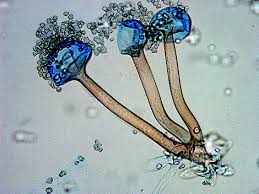
In the image is shown a fungus,which is found on organic substrates, including “mature fruits and vegetables”,jellies, syrups, leather, bread, peanuts, and tobacco,etc;one of its species known as Black bread mold,and few of its species can cause life-treatening oppurtunistic infection in human. Identify this fungus variety.
A. Histoplasma.
B. Penicillium.
C. Candida.
D. Rhizopus.
Show Answer
|
Correct Answer » D
Explanation
|
|
Ans: D. Rhizopus.
Rhizopus.
- It is a genus of some 10 species of filamentous fungi in the family Rhizopodaceae (formerly Mucoraceae), in the order Mucorales.
- Rhizopus species grow as filamentous, branching hyphae that generally lack cross-walls (i.e., they are coenocytic). They reproduce by forming asexual and sexual spores. In asexual reproduction, sporangiospores are produced inside a spherical structure, the sporangium,which is situated the tips of the sporangiophores .The black sporangia are rounded and produce numerous nonmotile multinucleate spores for asexual reproduction. In sexual reproduction, a dark zygospore is produced at the point where two compatible mycelia fuse. The rapidly growing colonies fade from white to dark as they produce spores and are similar to cotton candy in texture.
- Rhizopus is a genus of common saprophytic fungi on plants and specialized parasites on animals.
- They are found on a wide variety of organic substrates, including “mature fruits and vegetables”,jellies, syrups, leather, bread, peanuts, and tobacco.
- Some Rhizopus species are opportunistic agents of human zygomycosis (fungal infection) and can be fatal.
- A number of postharvest plant diseases, collectively known as storage rot like Rhizopus stolonifer (black bread mold) causes fruit rot on strawberry, tomato, and sweet potato.Preventive fungicides are often sprayed postharvest to avoid crop losses from these diseases.