


Question
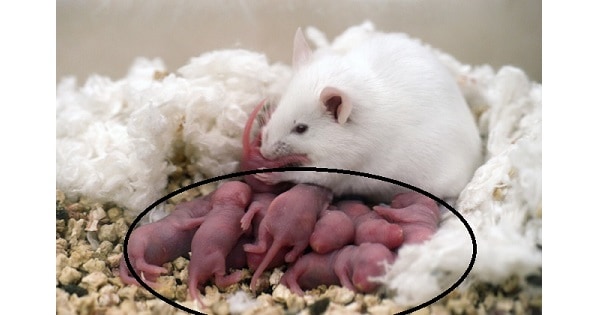
Animals (Encircled) shown in image are used for isolation of which virus which are transmitted by the fecal-oral route ?

A. Poxvirus
B. Adenovirus
C. Herpes virus
D. Coxsachie virus
Show Answer


|
Correct Answer » D Explanation |
 |

Ans:D. Coxsackie virus
Animal is suckling mice
Coxsackievirus
- It is a virus that belongs to a family of nonenveloped, linear, positive-sense single-stranded RNA viruses, Picornaviridae and the genus Enterovirus, which also includes poliovirus and echovirus. Enteroviruses are transmitted by the fecal-oral route.
- The coxsackieviruses were subdivided into groups A and B based on their pathology in newborn mice.
- Both group A and group B coxsackieviruses can cause nonspecific febrile illnesses, rashes, upper respiratory tract disease, and aseptic meningitis.
- Group A coxsackieviruses tend to infect the skin and mucous membranes, causing herpangina, acute hemorrhagic conjunctivitis, and hand, foot, and mouth (HFM) disease.
- Group B coxsackieviruses tend to infect the heart, pleura, pancreas, and liver, causing pleurodynia, myocarditis, pericarditis, and hepatitis
- It is necessary to employ suckling mice for the isolation of coxsackie viruses.
- Inoculation is usually made by intracerebral, subcutaneous and intraperitoneal route.
- Adult mice are not susceptible.