

Question
The following type of Visual Defect is seen in :

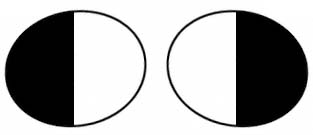
A. Optic neuritis
B. Trauma
C. Chiasmal lesion
D. Bilateral cavernous lesion


|
Correct Answer » C Explanation |
 |

Ans:C. Chiasmal Lesion
This condition is Bitemporal hemianopia
Bitemporal hemianopia
- It is usually due to chiasmatic disease (Central lesions of chiasma).
- The most common cause is a pituitary adenoma.
- Other causes are Parasellar or suprasellar lesions such as craniopharyngioma, meningioma, suprasellar aneurysms, glioma of optic chiasma and third ventricular dilatation.
Lesions of visual pathway
| No | Site of lesion | Causes | Features |
| 1 |
– |
– |
Normal |
| 2 | Optic nerve | Optic neuritis
Optic atrophy Sarcoidosis LHON Traumatic avulsion |
Complete blindness in affected eye
Loss of light reflex on the affected side and consensual reflex loss on the other side Near reflex present Central/paracentral scotoma |
| 3 | Central chiasma | Pituitary tumors (MCC)
Suprasellar aneurysm, Craniopharyngioma, Glioma of III ventricle |
Bitemporal hemianopia
Bitemporal hemianopic paralysis of pupillary reflexes |
| 3a | Lateral chiasma | Distension of 3rd ventricle,
Atheroma of post. communicating A |
Binasal hemianopia
Binasal hemianopic paralysis of pupillary reflexes |
| 4 | Optic tract
Geniculate body |
Syphilitic meningitis, gumma, tuberculosis, tumors of optic thalamus | Incongruous (contralateral) homonymous
hemianopia Contralateral Wernicke’s pupil (optic tract) |
| 5 | Optic radiations in
temporal lobe (inferior fibres) |
Superior quadrantic hemianopia (pie in the sky)
Normal pupillary reactions |
|
| 5a | Optic radiations in
parietal lobe (Superior fibres) |
Inferior quadrantic hemianopia (pie on the floor)
Normal pupillary reactions |
|
| 6 | Optic radiations | Homonymous hemianopia | |
| 7 | Anterior occipital
(visual) cortex |
Occlusion of posterior
cerebral artery |
Congruous homonymous hemianopia sparing macula |
| 8 | Tip of occipital cortex | Congruous homonymous macular defect |