
Question
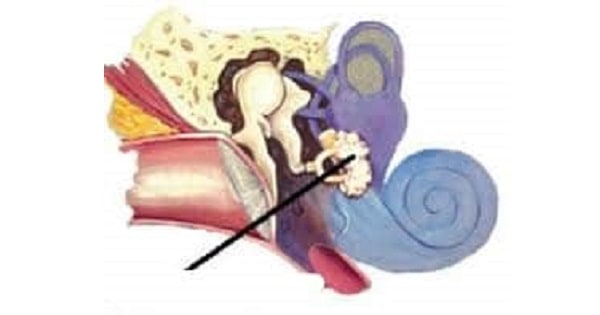
A 26 year old woman presents with a complain of reduced hearing in both ear,associated with tinnitus.It started 8 months ago when she was pregnant with her second child.The condition of her ear is shown in this image.The type of tympanogram seen in this condition is ?
A. Type As
B. Type B
C. Type A
D. Type C
Show Answer

|
Correct Answer » A Explanation |
 |
Ans;A. Type As
The patient is suffering from Otosclerosis.
TYPES OF TYMPANOGRAM
- Type A – normal middle ear function.
- Type As – (Low compliance) otosclerosis, malleus fixation
- Type Ad (High compliance) ossicular discontinuity or thin and lax tympanic membrane
- Type B – (No change in compliance with pressure changes) middle ear fluid as in Secretory Otits Media, thick tympanic membrane
- Most common cause of Type B tympanogram in an old aged patient with neck nodes is Nasopharyngeal Carcinoma.
- Type C – (Maximum compliance occurs with negative pressure in excess of 100 mm of H20) retracted tympanic membrane.indicates a malfunctioning eustachian tube
OTOSCLEROSIS
- It is characterized by abnormal removal of mature dense otic capsule bone by osteoclasts, and replacement with the woven bone of greater thickness, cellularity, and vascularity.
- Mainly affects Stapes.
- Begins in ‘fossula antefenestrum.’
- Autosomal dominant
- Common in females.
- 50% of patients of otosclerosis have positive family history.
- Age = most common between 20-30 years and is rare before 10 and after 40 years.
- Deafness is increased by pregnancy, menopause, trauma and major operations.
Audiometry in otosclerosis
1. Pure tone audiometry
- Shows loss of air conduction, more for lower frequencies with characteristic rising pattern.
- Bone conduction is normal. However in some cases, there is a dip in bone conduction curve which is maximum at 2000 Hz (2 KHz) and is called the Carhart’s notch.
2. Impedance audiometry
i. Tympanometry
- Patient with early disease may show type A tympanogram (because middle ear areation is not affected) Progressive stapes fixation results in classical As type tympanogram.
ii. Acoustic (stapedial reflex)
- It is one of the earliest sign of otosclerosis and precedes the development of airbone gap. In early stage, diphasic on-off pattern is seen in which there is a brief increase in compliance at the onset and at the termination, stimulus occurs.
- This is pathognomonic of otosclerosis. In later stage the reflex is absent.
