
Question
Diagnosis of congenital uterine anomaly, as shown in the picture below is done by ?
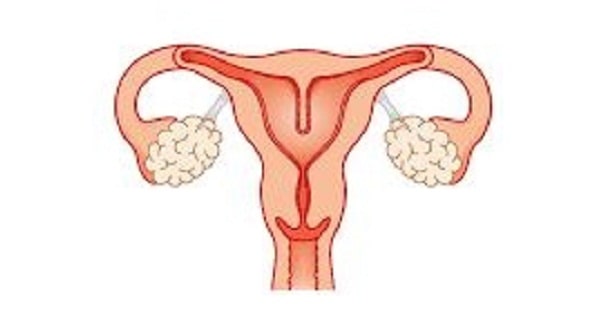
A. USG.
B. Uterine sound and Hysterosalpingography both.
C. Hysteroscopy and Laparoscopy both.
D. All are correct.

|
Correct Answer » D Explanation |
 |
A septate uterus is a common type of congenital uterine anomaly, and it may lead to an increased rate of pregnancy loss.
In septate uterus after lateral fusion of mullerian ducts their is failure of their medial segments to regress which creates a permanent septum within the uteruine cavity. The septum passes down from the uterine fundus. The fundus is normal in appearance.
In Bicornuate uterus the two halves of mullerian duct do not fuse and there is defect in fusion of fundus as well.
So, both these conditions are different.
Septate uterus can be distinguished :Clinically by : PN examination – Septate vagina and 2 cervix may be feltI I.By passing a sound.
Investigations :
- HSG : HSG is the initial step in evaluation of a septate uterus but it cannot distinguish between a septate and Bicornuate uterus. This is be cause in order to distinguish between the two, uterine fundus should be visible
- Trans vaginal USG : It is the best method to distinguish between a septate and bicornuate uterus. As it reveals the shape of the fundal contour. The septate uterus presents a single unified fundus that is after broader than normal while bicornuate uterus has two entirely separate fundi divided by a distinct midline cleft of varying depth. The diagnostic accuracy of sonography may be improved when coupled with HSG.
- Hysteroscopy : It is both diagnostic and curative.
- MR1 : Expensive technique but provides the most accurate diagnosis.
- Sonohysterography (involves transvaginal ultrasound during or after introduction of sterile saline). It can also distinguish between a septate and bicornuate uterus by revealing both the double uterine cavity and the shape of fundal contour.
