|
Correct Answer » D
Explanation
|
|
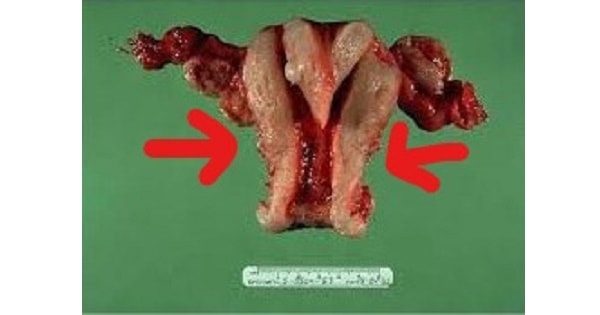
The uterine anomaly shown in the photograph above represents Uterus didelphus.
Uterus didelphus is a type of mullerian duct anomaly (class III) where there is a complete duplication of uterine horns as well as duplication of the cervix, with no communication between them. Didelphic uteri account for approximately ~8% (range 5-11%) of Müllerian duct anomalies.
It results from failed ductal fusion that occurs between the 12th and 16th week of pregnancy and is characterised by two symmetric, widely divergent uterine horns and two cervices. The uterine volume in each duplicated segment is reduced. As with most uterine anatomical anomalies, there is an increased incidence of fertility issues, and Müllerian abnormalities, in general, are over-represented in infertile women.
The chance of seeing a pregnancy to term is significantly reduced, down to only 20%, with a third of pregnancies ending in abortion and over half in premature deliveries. Only 40% of pregnancies resulted in living children.