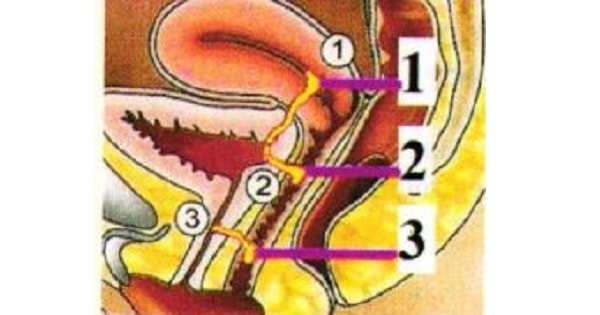
A. Vesicovaginal fistula.
B. Vesicouterine fistula.
C. Urethrovaginal fistula.
D. None of the above.
|
Correct Answer » B
Explanation
|
|
The type of fistula ‘1’ as shown in the photograph above represents Vesicouterine fistula.
Vesicouterine fistula. which are classified among genitourinary fistulas are not encountered very frequently. They occur mostly due to iatrogenic causes. Uterovesical fistulas developing after caesarean section not accompanied by urinary incontinence, but cause amenorrhea, and cyclic hematuria comprise Youssef’s syndrome.
Uterovesical fistulas are rarely seen fistulas which generally develop between uterus, and bladder following cesarean sections.Increasing rates of cesarean sections in recent years have also led to an increase in postoperative complications as genitourinary fistulas