
Question
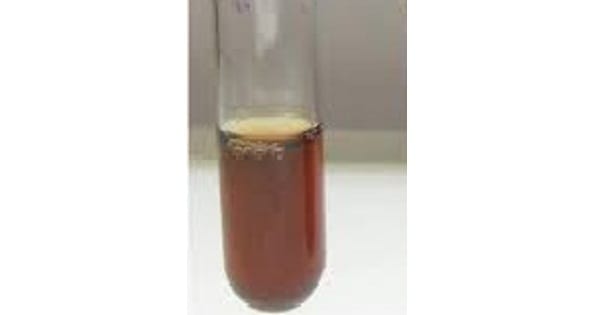
A 60 years old patient with dizziness & Shortness of breath since 1 week. Blood sample withdrawn (shown in the image) suggests?
A. Sickle cell anemia
B. Hemolytic anemia
C. Meth-hemoglobinemia
D. G6PD deficienry
Show Answer

|
Correct Answer » C Explanation |
 |
Ans:C. Methhemoglobinemia
Blood sample shown: Chocolate brown Colour
Methemoglobinemia
- It is a condition caused by elevated levels of methemoglobin in the blood.
- Methemoglobin is a form of hemoglobin that contains the ferric [Fe3+] form of iron.
- The affinity for oxygen of ferric iron is impaired.
- The binding of oxygen to methemoglobin results in an increased affinity for oxygen in the remaining heme sites that are in ferrous state within the same tetrameric hemoglobin unit.
- This leads to an overall reduced ability of the red blood cell to release oxygen to tissues, with the associated oxygen–hemoglobin dissociation curve therefore shifted to the left.
- When methemoglobin concentration is elevated in red blood cells, tissue hypoxia may occur.
Signs and symptoms of methemoglobinemia (methemoglobin level above 1%) :
- Shortness of breath, cyanosis, mental status changes (~50%), headache, fatigue, exercise intolerance, dizziness and loss of hairlines.
Diagnosis:
- Arterial blood with elevated methemoglobin levels has a characteristic chocolate-brown color as compared to normal bright red oxygen-containing arterial blood.
- If methemoglobinemia is suspected, an arterial blood gas and co-oximetry panel should be obtained.
Drugs causing methemoglobinemia are:
- Nitrous gases, chloroquine and primaquine, phenazopyridine, sulfonamides, sulfones, aniline dye derivatives, phenacetin, dapsone, local anesthetics, and nitrobenzenes.
