Question
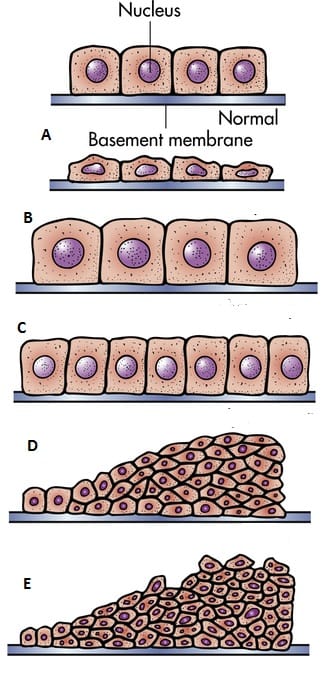
All the following statements are true about the cell modification marked by “D” in the image except:

A. Divided into epithelial and mesenchymal types.
B. Mature cellular development
C. Irreversible on withdrawal of stimulus
D. May occur in healing of fractures
Show Answer


|
Correct Answer » C Explanation |
 |

Ans:C. Irreversible on withdrawal of stimulus.
Metaplasia is shown in the image.
METAPLASIA
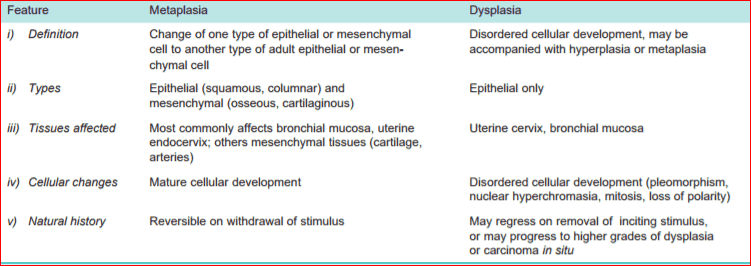
- Metaplasia is defined as a reversible change of one type of epithelial or mesenchymal adult cells to another type of adult epithelial or mesenchymal cells, usually in response to abnormal stimuli, and often reverts back to normal on removal of stimulus.
Metaplasia is broadly divided into 2 types: epithelial and mesenchymal.
A. EPITHELIAL METAPLASIA. :
1. Squamous metaplasia ,e.g:
- In bronchus (normally lined by pseudostratified columnar ciliated epithelium) in chronic smokers.
- In uterine endocervix (normally lined by simple columnar epithelium) in prolapse of the uterus and in old age
- In gallbladder (normally lined by simple columnar epithelium) in chronic cholecystitis with cholelithiasis.
- In prostate (ducts normally lined by simple columnar epithelium) in chronic prostatitis and oestrogen therapy.
- In renal pelvis and urinary bladder (normally lined by transitional epithelium) in chronic infection and stones.
- In vitamin A deficiency, apart from xerophthalmia, there is squamous metaplasia in the nose, bronchi, urinary tract, lacrimal and salivary glands.
2. Columnar metaplasia. For example:
- Intestinal metaplasia in healed chronic gastric ulcer.
- Columnar metaplasia in Barrett’s oesophagus, in which there is change of normal squamous epithelium to columnar epithelium.
- Conversion of pseudostratified ciliated columnar epithelium in chronic bronchitis and bronchiectasis to columnar type.
- In cervical erosion (congenital and adult type), there is variable area of endocervical glandular mucosa everted into the vagina.
B. MESENCHYMAL METAPLASIA. :
1. Osseous metaplasia. e.g:
- In arterial wall in old age (Mönckeberg’s medial calcific sclerosis)
- In soft tissues in myositis ossificans
- In cartilage of larynx and bronchi in elderly people
- In scar of chronic inflammation of prolonged duration
- In the fibrous stroma of tumour.
2. Cartilaginous metaplasia. In healing of fractures, cartilaginous metaplasia may occur where there is undue mobility.