


Question
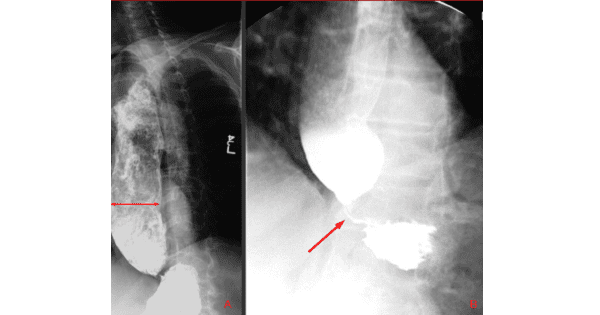
A patient presented with dysphagia to solids and liquids.Barium swallow examination is shown in the image.Regarding this condition,which of the following statements is true?

A. Esophageal Manometry is the key test in establishing the diagnosis
B. This condition predisposes to squamous cell carcinoma.
C. Laparoscopic Heller’s myotomy and partial fundoplication is the procedure of choice
D. All of the above


|
Correct Answer » D Explanation |
 |

Ans:D. All of the above.
Image shows:
Image “A” depicts a lateral view of the esophagus showing a massively dilated esophagus with retention of contrast in the distal portions of the esophagus. Image “B” shows the “bird’s beak” appearance of the dysfunctional lower esophageal sphincter.
Achalasia Cardia (Primary esophageal motility disorder)
Physiological Characteristic
- Absence of esophageal peristalsis
- Increased pressure of LES
- Failure of LES to relax in response to swallowing
- Degeneration of Myenteric plexus of Aurerbach’s with loss of postganglionic inhibitory neurons is noted (These neurons contain NO and VIP which mediate LEs relaxation)
- Sparing of postganglionic cholinergic fibres (Increased Les resting pressure and insufficient relaxation)
Presentation
- Dysphagia is the most common symptom
- Dysphagia is present for both solids and liquids and is progressive
- Regurgitation is the second most common symptom
- Chest pain may also occur
Investigations
- Esophageal Manometry is the key test in establishing the diagnosis
- Barium swallow should be the initial test performed
Diagnosis suggested by:
- Dilated sigmoid oesophagus
- Persistant beak like narrowing of distal oesophagus
Complications
- Achalasia is a risk factor for Esophageal carcinomas
- Achalasia predisposes to squamous cell carcinomas
Treatment
- Laparoscopic Heller’s myotomy and partial fundoplication is the procedure of choice .
- Non surgical treatment includes medications that reduces LES pressure
- Intrasphinteric injection of botulinum toxin and/or
- Pneumatic dilatation