


Question
A patient presented with low backache. X ray shows the following features.The most likely diagnosis is:


A. Lumbar Spondylosis
B. Spondylolisthesis
C. Disc prolapse
D. Meningocele
Show Answer


|
Correct Answer » D Explanation |
 |

Ans:C. Disc prolapse.
DISC PROLAPSE
- The term ‘prolapsed disc’ means the protrusion or extrusion of the nucleus pulposus through a rent in the annulus fibrosus.
- The site of exit of the nucleus is usually posterolateral on one or the other side.
- Occasionally, it can be central (posterior-midline) disc prolapse.
- The commonest level of disc prolapse is between L4-L5 in the lumbar spine and C5-C6 in the cervical spine. In the lumbar spine, it is uncommon above L3.
- MRI Scan: This is the investigation of choice. It shows the prolapsed disc, theca, nerve roots etc. very clearly.
Neurological Deficit in Disc Prolapse:
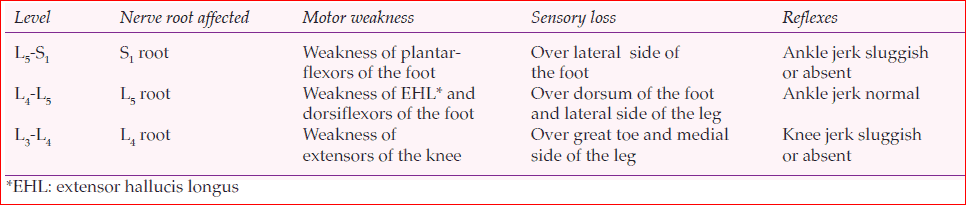

CONSERVATIVE TREATMENT
- This consists of the following:
- Rest
- Drugs: These consist mainly of analgesics and muscle relaxants.
- Physiotherapy: This consists of hot fomentation, gentle arching exercises, etc.
- Others: These consist of lumbar traction, transcutaneous electrical nerve stimulation (TENS) etc.
OPERATIVE TREATMENT
- Indications for operative treatment are: (i) failure of conservative treatment; (ii) cauda equina syndrome; and (iii) severe sciatic tilt. The disc is removed by the following techniques :
- Fenestration: The ligamentum flavum bridging the two adjacent laminae is excised and the spinal canal at the affected level exposed.
- Laminotomy: In addition to fenestration, a hole is made in the lamina for wider exposure.
- Hemi-laminectomy: The whole of the lamina on one side is removed.
- Laminectomy: The laminae on both sides, with the spinous process, are removed. Such a wide exposure is required for a big, central disc producing cauda equina syndrome.