
Altitude Physiology
ALTITUDE PHYSIOLOGY
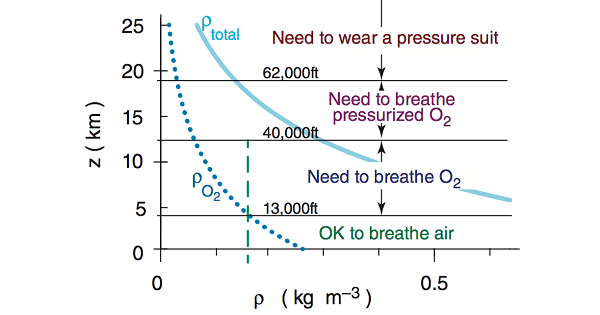
- High altitude has “Low atmospheric pressure”.
- Air composition unchanged with altitude.
- PO2 forms about 21% of atmospheric pressure at any altitude.
- Hence, PO2 is low at high altitudes.
- PO2 of inspired air (PiO2) is low.
- Adequate oxygen delivery to tissues happens only at pressure close to sea level pressure.
- If PO2 falls much below sea level,
- PO2 tissue oxygenation suffers (hypoxic hypoxia)
- Consequently, physiological functions are deranged.
EFFECTS OF HIGH ALTITUDE:
- Earliest response to fall in PO2 –
- Hyperventilation – At altitude 3000 meters above sea level.
- Hypoxic symptoms – At altitude of 4000 meters.
- Becomes severe – at 5000 meters.
- Loss of consciousness – At 6000 meters.
TYPES OF RESPONSE:
- Acute response/Acute Transient Response/Acute Mountain Sickness.
- Acclimatization.
- Chronic Mountain Sickness.
I. ACUTE RESPONSE:
- Earliest response – Hyperventilation.
- Followed by increased cardiac output.
- Responses include – Breathlessness & palpitation
- Hence, referred “Acute Transient Response”/”Transient Mountain Sickness”.
- “Acute Mountain Sickness” –
- Develop after a lag of 6 hours to 4 days
1. ACUTE MOUNTAIN SICKNESS:
- Usually develops within a day & lasts for a week.
- Characterized by hypoxic symptoms –
- Breathlessness.
- Weakness.
- Headache
- Dizziness
- Palpitation
- Tachycardia.
- Sweating
- Dimness of vision
- Partial sleeplessness.
- Nausea.
May cause syndromes –
- High Altitude Pulmonary Edema (HAPE).
- High Altitude Cerebral Edema (HACE).
1a. HIGH ALTITUDE PULMONARY EDEMA (HAPE):
- Hypoxia causes pulmonary capillaries vasoconstriction causing,
- Pulmonary hypertension → In turn, raises pulmonary capillary hydrostatic pressure.
- Results in,
- Distrupion of weaker capillaries walls.
- Exudation of protein-rich fluid in lung tissues.
1b. HIGH ALTITUDE CEREBRAL EDEMA (HACE):
- Low PO2 causes arteriolar dilation.
- If cerebral autoregulation does not compensate,
- Results in increased cerebral capillary pressure → Favoring increased fluid transudation into brain tissue.
II. ACCLIMATIZATION:
- “Development of compensatory mechanisms to ward off ill-effects of low barometric pressure”.
- Due to continued stay at high altitude.
EFFECTS:
- Hyperventilation – Most fundamental response to hypoxia.
- Low arterial PO2 (hypoxemia) stimulates carotid body peripheral chemoreceptors.
- Causing hyperventilation.
But, hyperventilation washes out CO2,
- Leading to,
- Arterial PCO2 fall.
- Fall in PCO depresses respiration.
- Via central chemoreceptor mechanism.
- Respiratory alkalosis (increased pH).
- Compensated by increased renal excretion of bicarbonate.
- Thus blood carbonic acid/bicarbonate ratio & pH maintained at normal level.
- Peripheral chemoreceptors are not affected by pH.
- An acclimatized person maintain slight acidic CSF pH.
- Because HCO3– pump is located at blood-brain barrier
- Pumping out HCO3-.
- Consequently, CSF pH is restored to normal.
- Since central chemoreceptors are affected primarily by CSF pH
- No longer inhibit respiration despite CO2 washout.
- Increased respiratory chemoreceptor sensitivity causing hypoxia & CO2.
- Eventual effect is “Increased minute volume”, primarily a result of increased tidal volume.
3. RISE OF 2,3 – DIPHOSPHOGLYCERATE (DPG) CONCENTRATION OF RBCs:
- Increases DPG.
- Causing “Rightward” shift of oxygen-Hb dissociation curve.
- Resulting in increased tissue O2 delivery.
4. POLYCYTHEMIA:
- Hypoxia stimulates “Erythropoietin” release.
- Stimulating erythropoiesis → Increased RBC count & hemoglobin concentration.
- Hence, absolute polycythemia with increased red cell mass.
5. OTHER COMPENSATORY MECHANISM:
- Increases renal alkali (HCO3–) excretion.
- Increased cardiac output immediately.
- Returns normal within few weeks.
- Due to increased blood hematocrit.
- Increased lung diffusion capacity.
- Increased vascularity of tissues.
- Increased capillary density.
- Enhancement of oxidative metabolism.Increased myoglobin.
- By increased mitochondrial count & cytochrome oxidase content.
6. RELATIONSHIP Bt. WORK CAPACITY & ACCLIMATIZATION:
- Work capacity of skeletal & cardiac muscle –
- Decreased in unacclimatized person
- Acclimatization improves work capacity gradually.
- Exercise performed at high altitude hastens acclimatization process.
- Exercise increases oxygen requirement despite low avaialability.
- Thus, increasing duration of exercise increases work capacity.
- Work capacity at high altitude can be increased by,
- Increasing duration of exercise.
- Also by reducing/maintaining workload at an optimum level corresponding to maximum oxygen uptake rate.
- Thus all available oxygen utilized.
III. CHRONIC MOUNTAIN SICKNESS/ MONGE’S DISEASE:
- Due to insensitive peripheral chemoreceptors to hypoxia.
- Causes severe hypoxic symptoms.
EFFECTS:
- Causes widespread pulmonary vasoconstriction → Eventually right ventricular failure (cor pulmonale).
Exam Question
ALTITUDE PHYSIOLOGY
- PO2 is low at high altitudes.
- PO2 of inspired air (PiO2) is low.
- Earliest response to fall in PO2 – Hyperventilation
- Acute mountain sickness is characterized by hypoxia-like symptoms Tachycardia.
- High altitude pulmonary edema causes raise pulmonary capillary hydrostatic pressure.
- During acclimatization, Hyperventilation is most fundamental response to hypoxia.
- Low arterial PO2 (hypoxemia) stimulates carotid body peripheral chemoreceptors → Causing hyperventilation.
- Leading to “Arterial PCO2 fall” & “Respiratory alkalosis (increased pH).
- Respiratory alkalosis compensated by increased renal excretion of bicarbonate.
- Thus blood carbonic acid/bicarbonate ratio & pH maintained at normal level.
- Peripheral chemoreceptors are not affected by pH.
- “Increase in sensitivity of respiratory chemoreceptor mechanisms to hypoxia & CO2.
- Eventual effect is “Increased minute volume”, as a result of increased tidal volume.
- Acclimatization increases DPG.
- Causing “Rightward” shift of oxygen-Hb dissociation curve.
- Resulting in increased tissue O2 delivery.
- Hypoxia stimulating erythropoiesis → Increased RBC count & hemoglobin concentration.
- Hence, absolute polycythemia with increased red cell mass.
- Other compensatory mechanisms – Increases renal alkali (HCO3-) excretion.
- Exercise performed at high altitude hastens acclimatization process.
- Increasing duration of exercise increases work capacity.
- Work capacity at high altitude can be increased by,
- Increasing duration of exercise.
- Also by reducing/maintaining workload at an optimum level corresponding to maximum rate of oxygen uptake.
- All available oxygen can be utilized.
- Chronic mountain sickness/Monge’s disease can lead to right ventricular failure (cor pulmonale).
Don’t Forget to Solve all the previous Year Question asked on Altitude Physiology
