


ANTI-OBESITY DRUGS
ANTI-OBESITY DRUGS
Basics of Obesity:
- Definition: Obesity is a complex metabolic disorder due to abnormality between energy intake & energy expenditure.
- Associated with insulin resistance, dyslipidemia & cardiovascular disease.
Control center:
- Arcuate nucleus in mediobasal hypothalamus – Main integrating center for feeding & regulation of body weight.
Substances stimulating food intake & influencing obesity:
- Orexin & Ghrelin
- Neuropeptide Y (NP-Y)
- Agouti-related peptide (AgRP)
- Melanocyte-stimulating hormone (MSH)
- CART (cocaine and amphetamine-related transcript)
- 5-HT2C (serotonin receptors)
- Insulin
- Leptin
- Endocannabinoids
THERAPIES FOR OBESITY MANAGEMENT:
- Basis: Mainly targets the above-discussed substances or mechanisms.
I) DIET:
- Four recommended diet types for weight loss.
- Atkins – Very low carbohydrate
- Traditional – Lifestyle, exercise, attitudes, relationships, nutrition [LEARN]
- Ornish – Very high carbohydrate
- Zone – Low carbohydrates.
II) PHARMACOLOGICAL THERAPIES:
- Criteria for Anti-obesity drug therapy initiation:
- BMI > 30 kg/m2 or BMI > 27 with obesity-related risk-factors.
DRUGS INVOLVED:
1. Drugs targeting 5-HT2 receptor:
- 5-HT2 activation causes weight loss.
- MOA:
- Increases serotonin level (reuptake inhibitors).
- Drugs:
- Lorcaserin
- Selective 5HT2c agonist decreases appetite.
- Adverse effect –
- Headache (Most common).
- Increased valvular heart disease & psychiatric effects.
2. Gastrointestinal lipases inhibitors:
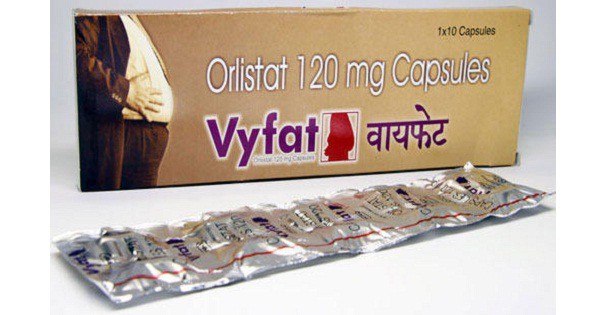
- Orlistat
- MOA:
- Gastrointestinal lipases necessary for fat absorption from diet.
- inhibiting lipases, decreases upto 30% fat absorption –> weight loss.
- Adverse effects:
- Loose stools, increased defecation & oily discharge.
- Management:
- Simultaneous natural fiber use.
3. Appetite suppressant:
- Sibutramine
- MOA –
- Blocks pre-synaptic uptake of both nor-epinephrine & serotonin –-> Potentiation of anorexic effects of both these neurotransmitters in CNS.
- Side effects –
- Mild BP elevation, headache, insomnia, dry mouth & constipation.
4. Cannabinoid receptor antagonist:
- Rimonabant –
- Acts on Cannabinoid (CB1) receptor → Increased serotonin & dopamine levels.
- MOA –
- Blocks orexigenic action of ghrelin → Causes appetite reduction.
- Also causes lipolysis & increases BMR.
- Adverse effects –
- Decrease BP
- Nausea
- Vomiting
- Depression (leading to suicidal tendencies)
- Anxiety.
5. Combination drugs:
- Phentermine + Topiramate.
- Side effects –
- (Common) Mood changes, fatigue, insomnia & tachycardia.
- Teratogenic & contra-indicated in pregnancy.
6. Newer drugs:
- Naltrexone + bupropion:
- Recently approved for chronic weight management.
- Adverse effects –
- Potentially cause suicidal thoughts.
- Neuropsychiatric reactions.
- Tolerance development to anorexic effect, on long duration.
7. Newer targets:
- NPY & AgRP antagonists –
- Neuropeptide Y (NP-Y) & Agouti-related peptide (AgRP) antagonists.
- MSH & CART agonists –
- Melanocyte stimulating hormone (MSH) & CART (cocaine and amphetamine related transcript) agonists.
SHORT FLOWCHART ON PHYSIOLOGICAL & PHARMACOLOGICAL FOOD INTAKE REGULATION


III) SURGICAL APPROACH:
- Bariatric surgery:
- Indication:
- BMI > 40kg/m2 or BMI > 35 with obesity related co-morbidities.
IV) OBSOLETE THERAPIES:
- Amphetamines, fenfluramine & dexfenfluramine – Used previously for obesity treatment.
- Fenfluramine & dexfenfluramine – Banned due to cardiotoxicity risk.
Exam Important
ANTI-OBESITY DRUGS
- Arcuate nucleus in mediobasal hypothalamus is the main integrating center for feeding & regulation of body weight.
- 5-HT2 activation causes weight loss.
- Drugs targeting 5-HT2 receptor includes mainly Lorcaserin, which is a selective 5HT2c agonist which decreases appetite.
- Orlistat is used as an anti-obesity drug, which mainly acts by inhibiting gastrointestinal lipases.
- Sibutramine is an appetite suppressant, acts by blocking pre-synaptic uptake of both nor-epinephrine & serotonin.
- Rimonabant is used as an anti-obesity drug, which mainly acts by antagonizing cannabinoid (CB1) receptor.
- Rimonabant mainly blocks orexigenic action of ghrelin, increases serotonin & dopamine levels, ultimately resulting in appetite reduction.
- Rimonabant is an anti-obesity drug, which decreases BP.
- Combination of Phentermine + Topiramate is used for anti-obesity regime.
- Phentermine + Topiramate are teratogenic & contraindicated in pregnancy.
- Naltrexone + bupropion combination is recently approved for chronic weight management.
- Recently anti-obesity regime involves Neuropeptide Y (NP-Y) & Agouti-related peptide (AgRP) antagonists, and Melanocyte-stimulating hormone (MSH) & CART (cocaine and amphetamine-related transcript) agonists.
- Fenfluramine & dexfenfluramine were used as an anti-obesity drug but, banned due to cardiotoxicity risk.
Don’t Forget to Solve all the previous Year Question asked on ANTI-OBESITY DRUGS

