
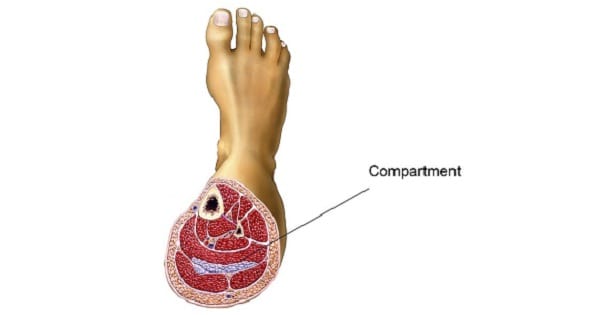
Compartment Syndrome
- Indication for surgical compartment release in compartment Syndrome in any compartment is absolute pressure greater than 30 mm Hg
- Dorsiflexion of foot causes pain in deep posterior compartment syndrome
- Fasciotomy, Splitting of tight pop cast & Reexploration are relevant in compartment syndrome
- Fractures is the commonest cause of anterior compartment syndrome
- Foot inversion causes weakness in deep posterior compartment syndrome
- Pain on passive stretch is reliable sign of compartment syndrome
- Fasciotomy is earliest management in compartment syndrome
- Interstitial pressure > capillary pressure in compartment syndrome
- Hyperesthesia is seen in compartment syndrome
- If A patient develops compartment syndrome (Swelling, pain and numbness) following manipulation & plaster for fracture of both bones of leg the best treatment is operative decompression of fascial compartment
- Characteristic features of the acute compartment syndrome in the lower leg includeAcute pain on employing the stretch test, Normal pulses & Venous occlusion
- In posterior compartment syndrome Toe dorsiflexion can cause pain
- Intra abdominal pressure > 15 cm H2O in intra abdominal compartment syndrome
- Abdominal compartment syndrome is characterized by Oliguria due to ureter obstruction
- Most common cause of acute compartment syndrome in children is Fracture supracondylar humerus
- Hyperbaric oxygen is useful in compartment syndrome
Exam Question
- Indication for surgical compartment release in compartment Syndrome in any compartment is absolute pressure greater than 30 mm Hg
- Dorsiflexion of foot causes pain in deep posterior compartment syndrome
- Fasciotomy, Splitting of tight pop cast & Reexploration are relevant in compartment syndrome
- Fractures is the commonest cause of anterior compartment syndrome
- Foot inversion causes weakness in deep posterior compartment syndrome
- Pain on passive stretch is reliable sign of compartment syndrome
- Fasciotomy is earliest management in compartment syndrome
- Interstitial pressure > capillary pressure in compartment syndrome
- Hyperesthesia is seen in compartment syndrome
- If A patient develops compartment syndrome (Swelling, pain and numbness) following manipulation & plaster for fracture of both bones of leg the best treatment is operative decompression of fascial compartment
- Characteristic features of the acute compartment syndrome in the lower leg includeAcute pain on employing the stretch test, Normal pulses & Venous occlusion
- In posterior compartment syndrome Toe dorsiflexion can cause pain
- Intra abdominal pressure > 15 cm H2O in intra abdominal compartment syndrome
- Abdominal compartment syndrome is characterized by Oliguria due to ureter obstruction
- Most common cause of acute compartment syndrome in children is Fracture supracondylar humerus
- Hyperbaric oxygen is useful in compartment syndrome
Don’t Forget to Solve all the previous Year Question asked on Compartment Syndrome
