

Gastritis
GASTRITIS
- Gastritis is inflammation of the gastric mucosa.
Gastritis may be of 2 types-
- Acute
- Chronic
1. Acute gastritis-
- It is a transient acute inflammatory involvement of the stomach, mainly mucosa.
Etiology-
- Diet & personal habits- alcohol, smoking, malnutrition.
- Infections- bacterial (H. Pylori), viral infections
- Drugs- NSAIDs, aspirin, cortisone
- Severe stress, trauma, surgery
Classification-
- Acute H. Pylori gastritis
- Acute infective gastritis
- Acute non- infective gastritis
Clinical features-
- Epigastric pain
- Nausea
- Vomiting
- Hypochlorhydria
- Haematemesis or melaena
- Anorexia

2. Chronic gastritis–
- Chronic gastritis has lymphocytes and plasma cells.
- Erosive gastritis involves body and fundus both.
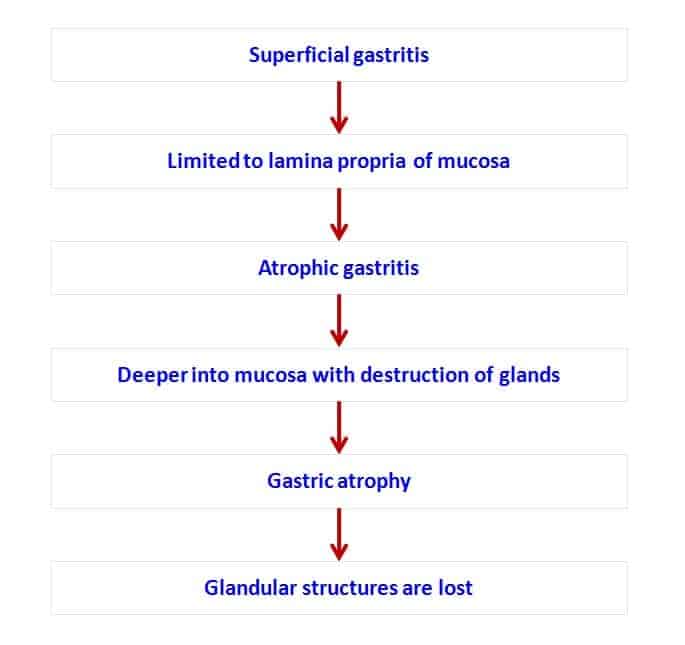
Staging-
Etiology–
- Reflux of duodenal contents into stomach.
- Infection with H. Pylori
- Disease of stomach & duodenum
- Chronic hypochromic anaemia

Classification-
- According to the predominant site of involvement-
- Type A- autoimmune gastritis (body predominant form)
- Type B- H.pylori related (antral predominant form)
- Type AB (environmental gastritis)
1. Type A- autoimmune gastritis
- It mainly involves fundus & body.
- Associated with pernicious anaemia.
- Destruction of parietal cells.
- Presence of circulating antibodies (anti IF antibodies)
Clinical features-
- Intestinal metaplasia
- Hypoachlorhydria- depletion of gastric acid producing mucosal area.
- Hypergastrinaemia- hyperplasia of G cells.
- Vitamin B12 deficiency

2. Type B (H. Pylori related)
- More common
- H. Pylori is the cause of infection.
- It involves the region of antral mucosa.
- Also called as hypersecretory gastritis
- Associated with peptic ulcer, cell lymphoma, gastric MALT lymphoma.
Treatment–
- Acute gastritis-
- Avoiding the cause
- Antacids
- Acid suppression (PPI or antiemetics)
2. Chronic gastritis
- Patient with pernicious anaemia- parentral Vitamin B12 supplement
- H. Pylori related gastritis- eradication of H. pylori
Exam Important
Acute gastritis-
- It is a transient acute inflammatory involvement of the stomach, mainly mucosa.
- Erosive gastritis involves body and fundus both.
Type A- autoimmune gastritis
- It mainly involves fundus & body.
- Associated with pernicious anaemia.
- Destruction of parietal cells.
- Presence of circulating antibodies (anti IF antibodies)
Clinical features-
- Intestinal metaplasia
- Hypoachlorhydria- depletion of gastric acid producing mucosal area.
- Hypergastrinaemia- hyperplasia of G cells.
- Vitamin B12 deficiency
2. Type B (H. Pylori related)
- More common
- H. Pylori is the cause of infection.
- It involves the region of antral mucosa.
- Also called as hypersecretory gastritis
- Associated with peptic ulcer, cell lymphoma, gastric MALT lymphoma.
Don’t Forget to Solve all the previous Year Question asked on Gastritis

