


H. aegyptius and H. ducreyi
H. aegyptius and H. ducreyi
H. ducreyi
Morphology
- Short, Gram-negative, nonmotile rods
- Saftey pin appreance
Culture
- Difficult to culture and require special mediums.
Clinical Manifestations
Chancroid
- Causes ulcus molle (soft chancre) a tropical venereal disease .
- Painful, soft ulcers with ragged undermined margins develop 1–2 weeks after inoculation (usually seen in prepuce and frenulum in men and vulva, cervix, and perianal area in women)


- The infection locus presents as a painful, readily bleeding ulcer occurring mainly in the genital area.
- Regional lymph nodes are quite swollen.
- Suppurating buboes seen
Diagnosis
- Identification of the pathogen by means of microscopy and culturing are needed to confirm the diagnosis.
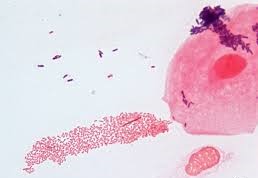
- School of fish appearance or rail road track appearance

- Sulfonamides, streptomycin, and tetracyclines.
- H. aegyptius (possibly identical with biovar III of Haemophilus influenzae)
- Causes a purulent conjunctivitis occurring mainly in northern Africa, in particular Egypt.
- A raised incidence of Brazilian purpuric fever, a systemic infection with this organism, has been observed in Brazil in recent years.
Exam Important
H. ducreyi
Morphology
- Saftey pin appreance
Clinical Manifestations
Chancroid
- Causes ulcus molle (soft chancre) a tropical venereal disease .
- Painful, soft ulcers with ragged undermined margins develop 1–2 weeks after inoculation (usually seen in prepuce and frenulum in men and vulva, cervix, and perianal area in women)
- The infection locus presents as a painful, readily bleeding ulcer occurring mainly in the genital area.
- Regional lymph nodes are quite swollen.
- Suppurating buboes seen
Diagnosis
- Identification of the pathogen by means of microscopy and culturing are needed to confirm the diagnosis.
- School of fish appearance or rail road track appearance
H. aegyptius (possibly identical with biovar III of Haemophilus influenzae)
- Causes a purulent conjunctivitis occurring mainly in northern Africa, in particular Egypt.
Don’t Forget to Solve all the previous Year Question asked on H. aegyptius and H. ducreyi

