


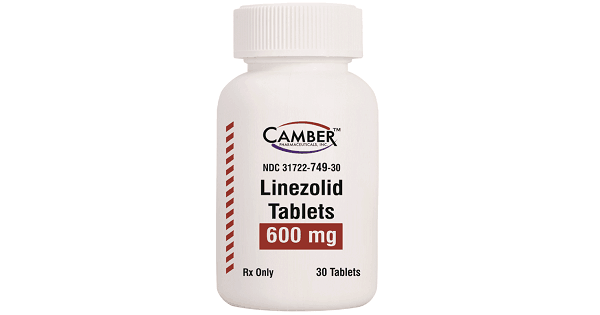
Linezolid
LINEZOLID
- Synthetic antibiotic agent of oxazolidinone class of antibiotics.
- Acts by inhibiting protein synthesis.
- Used for treatment of serious infections due to multi-resistant Gram-positive bacteria.
- Includes Methicillin-resistant Staphylococcus aureus (MRSA).
- Vancomycin-resistant enterococci (VRE).
- Also categorized under reversible, nonselective monoamine oxidase inhibitor.
- Hence, has potential for interaction with adrenergic & serotonergic agents.
MICROBIOLOGY:
- In-vitro activity against aerobic gram-positive bacteria, certain gram-negative bacteria & anaerobic microorganisms.
- Effective against all clinically important gram-positive bacteria.
- Enterococcus faecium & Enterococcus faecalis (including vancomycin-resistant enterococci).
- Staphylococcus aureus (including MRSA).
- Streptococcus agalactiae, Streptococcus pneumoniae, & Streptococcus pyogenes
- No effect on Gram-negative bacteria.
- Bacteriostatic – Against enterococci and staphylococci.
- Bactericidal – For streptococci for majority of strains.
MECHANISM OF ACTION:
Protein synthesis inhibitor:
- Acts on first step of protein synthesis, Ie. ‘initiation’.
- Unlike other protein synthesis inhibitors inhibiting elongation.
- Binds to 23S portion of 50S subunit (center of peptidyl transferase activity).
- Prevents formation of functional 70S-initiation complex.
- Linezolid resistance due to mutation of 23S ribosomal RNA has been detected among enterococci.
PHARMACOKINETICS:
- Rapidly & completely absorbed orally.
- Partly metabolized nonenzymatically.
- Excreted in urine.
- Plasma t½ – 5 hrs.
DOSAGE:
- 600 mg BD, oral/ i.v..
- Dose modification has not been necessary for renal insufficiency.
INDICATION:
- Bacterial infections caused by susceptible strains of vancomycin-resistant Enterococcus faecium, Staphylococcal aureus (methicillin resistant and susceptible strains), Streptococcus pneumonia, Streptococcus pyogenes & Streptococcus agalactiae.
- Community-Acquired Pneumonia (CAP)
- Bacterial infections.
- Skin & subcutaneous tissue bacterial infections
- Uncomplicated skin & skin structure infections
- Hospital-acquired bacterial pneumonia
ADVERSE EFFECT:
- Principal toxicity – Hematologic.
- Is reversible & generally mild.
- Thrombocytopenia – Most common manifestation.
- Seen in approx. 3% of treatment courses.
- Particularly when administered for longer than 2 weeks.
- Platelet count should be monitored.
- Anaemia.
- Neutropenia
- May underly bone marrow suppression.
- Causes optic & peripheral neuropathy and lactic acidosis on prolonged use.
- Due to linezolid-induced inhibition of mitochondrial protein synthesis.
DRUG INTERACTION:
- Interactions seen with,
- Adrenergic/Serotonergic drugs (SSRIs, etc.).
- Excess dietary tyramine.
- Because linezolid is MAO inhibitor.
Exam Question
- Platelet count should be monitored in patient receiving linezolid therapy.
- Optic neuropathy, Pancytopenia & Lactic acidosis are side effects of Linezolid.
- In Methicillin-resistant Staphylococcus – aureus (MRSA) linezolid can be given.
Don’t Forget to Solve all the previous Year Question asked on Linezolid