
Lumbar plexus
LUMBAR PLEXUS
- The lumbar plexus is a web of nerves (a nervous plexus) in the lumbar region of the body which forms part of the larger lumbosacral plexus.
- It is formed by the divisions of the first four lumbar nerves (L1-L4) and from contributions of the subcostal nerve (T12), which is the last thoracic nerve.
- Lumbar plexus (L1-L4) – forms within psoas major anterior to lumbar transverse process.
- The nerves of the lumbar plexus pass in front of the hip joint and mainly support the anterior part of the thigh.
Course:
- The nerves of the lumbar plexus exit the spine just anterior to the quadratus lumborum muscle and travel without and within the psoas muscle.

BRANCHES:
2 nerves with single root value: L1
1. Iliohypogastric nerve: Pierces the internal oblique muscle and runs between the internal and external oblique.
Runs posterior to the psoas major on its proximal lateral border to run laterally and obliquely b/w posterior surface of kidney & quadratus lumborum.
- Lateral cutaneous branches: pierces internal and external oblique 5 cm behind ASIS anterior superior iliac spine and just above the iliac crest – supplies skin on the anterior part of gluteal region.
- Anterior cutaneous branches: pierces aponeurosis of external oblique, 2 cm medial to ASIS – supplies skin over pubic bone (mons pubis).
2. Ilioinguinal nerve: Runs just inferior to iliohypogastric nerve, between transverse abdominis and internal oblique muscles.
- Pierces internal oblique 2 cm just below and medial to ASIS, runs below external oblique and inguinal canal with the spermatic cord and ends 2 cm lateral to pubic tubercle.
- Supplies mons pubis and and anterior aspect of labia majora; skin of anteromedial thigh and surrounding musculature.
- Ilioinguinal nerve serve as an afferent nerve while eliciting cremasteric reflex.
2 nerves with double root values
L1, L2: Genitofemoral nerve
- Branches differs in males and females.
- Enters the inguinal canal through deep inguinal ring
- In males it runs in the spermatic cord and in females in the inguinal canal together with the teres uteri ligament.
Genital branch –Femoral branch – Skin on the antero-middle aspect of upper thigh
- Sensory: Skin of scrotum and labia majora
- Motor: Cremaster muscle
L2,L3: Lateral femoral cutaneous nerve
- Exits through lacuna musculorum (lateral compartment of thigh just below the inguinal ligament) along with iliopsoas muscle and femoral nerve.
- Supplies skin of anterolateral thigh.
2 nerves with triple root values: L2, L3, L4
1. Anterior division: Obturator nerve
- Emerges from the medial border of psoas major and enters obturator canal with obturator artery and vein.Sensory: Medial aspect of thigh
- Anterior branch: descends between adductor longus and adductor brevis
- Posterior branch: descends between adductor brevis and adductor magnus.
- Motor: Hip adductors, Obturator externus
2. Posterior division: Femoral nerve
- Largest and longest of the plexus nerves.
- Courses through psoas muscle, then iliopsoas groove and underneath the midpoint of inguinal ligament into the lacuna musculorum just medial to iliopsoas and lateral to femoral vessels.
- Divides into muscular and cutaneous branches in femoral triangle.
- Sensory: Anterior part of thigh and anteromedial part of leg.
- Motor: Hip flexors (Iliopsoas, Pectineus, Sartorius and Quadriceps femoris)
- Runs down as saphenous nerve.
| Nerve | Segment | Innervated muscles | Cutaneous branches |
|---|---|---|---|
| Iliohypogastric | T12-L1 |
|
|
| Ilioinguinal | L1 |
|
|
| Genitofemoral | L1, L2 |
|
|
| Lateral femoral cutaneous | L2, L3 |
|
|
| Obturator | L2-L4 |
|
|
| Femoral | L2-L4 |
|
|
| Short, direct muscular branches | T12-L4 |
|
- Urinary bladder is supplied by L1 & L 2 branches of lumbar plexus
Exam Question
- Genital branch of the genitofemoral nerve is the content of spermatic cord.
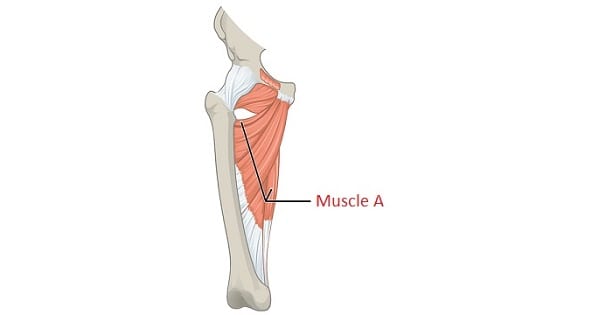
- Obturator nerve innervates Obturator externus , Adductor longus , Adductor brevis , Gracilis , Pectineus ,Adductor magnus
- Ilioinguinal nerve serve as an afferent nerve while eliciting cremasteric reflex
- Iliohypogastric and the ilioinguinal nerves passes b/w posterior surface of kidney & quadratus lumborum
- Urinary bladder is supplied by L1 & L 2 branches of lumbar plexus
- Femoral branch of genitofemoral nerve passes behind the inguinal ligament
- Cremasteric muscle is supplied by Genital branch of genitofemoral nerve
- Tibial part of sciatic nerve, Obturator nerve supply of adductor magnus .
- Saphenous nerve is a branch of femoral nerve
- Ilioinguinal nerve lies in inguinal canal
- Femoral nerve supplies Iliopsoas ,Pectineus , Sartorius , Quadriceps femoris ,Anterior cutaneous branches ,Saphenous.
- Genital branch of genitofemoral nerve enters the inguinal canal through deep inguinal ring
- Iliohypogastric,Ilioinguinal,Genitofemoral,Lateral femoral cutaneous,Obturator,Femoral,Short, direct muscular branches branch off from lumbar plexus.
Don’t Forget to Solve all the previous Year Question asked on Lumbar plexus
