
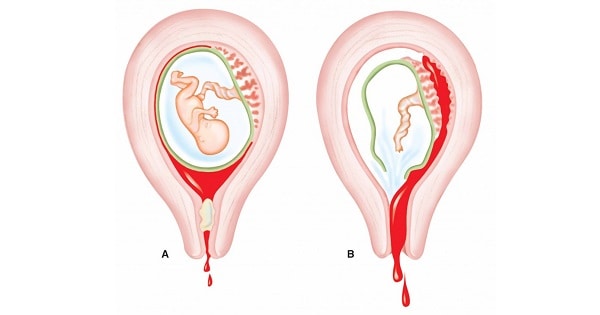
Miscarriage(abortion)
DEFINITION:
- Abortion is the expulsion or extraction from its mother of an embryo or fetus weighing 500 g or less when it is not capable of independent survival (WHO).
- This 500 g of fetal development is attained approximately at 22 weeks (154 days) of gestation.
- The expelled embryo or fetus is called abortus.

TYPES:
| TYPES | SYMPTOMS | UTERINE SIZE | CERVIX(EXT.OS) | ULTRASONOGRAPHY |
| Threatened |
|
Gestational age | Closed |
|
| Inevitable |
|
Same or | Open with
palpable conceptus |
|
| Incomplete | Vaginal bleeding(may be heavy) | Open | Products of conception partly retained | |
| Complete | Vaginal bleeding(trace or absent) | Closed | Uterine cavity empty | |
| Missed | Vaginal bleeding(trace or brownish in color) | Closed | Blighted ovum or fetus | |
| Septic | Vaginal discharge:purulent,
foul smelling with features of sepsis |
Variable, may be larger | Open |
|
INCIDENCE:
- 75% miscarriages occur before the 16th week
- 80% occur before the 12th week of pregnancy
ETIOLOGY:
GENETIC FACTORS:
- Autosomal trisomy(50%)→trisomy 16 (30%).
- Polyploidy22%
- Monosomy X (45, X)(20%).
- Structural chromosomal rearrangements2–4%
- Mosaic, double trisomy4%
ENDOCRINE AND METABOLIC FACTORS(10-15%):
- Luteal Phase Defect (LPD)
- Deficient progesterone
- Thyroid abnormalities: Overt hypothyroidism, or hyperthyroidism
- Diabetes mellitus
ANATOMICAL ABNORMALITIES (3–38%):
Cervico–uterine factors:
- Cervical incompetence
- Congenital malformation of the uterus
Causes of fetal loss are:
- Reduced intra-uterine volume
- Reduced expansion uterus
- Reduced placental vascularity when implanted on the septum
- Increased uterine irritability and contractility.
INFECTIONS (5%):
- Viral: Rubella,cytomegalovirus, variola, vaccinia or HIV.
- Parasitic: Toxoplasma, malaria
- Bacterial: Ureaplasma, chlamydia,Syphilis ,brucella.
IMMUNOLOGICAL DISORDERS (5-10%):
- Antiphospholipid antibody syndrome (APAS)
- Immune factors:T-helper 1(Th1):Recurrent miscarriage have more Th1 response
- Autoimmunity
MATERNAL MEDICAL ILLNESS:
- Cyanotic heart disease
- Hemoglobinopathies
PREMATURE RUPTURE OF THE MEMBRANES:
- Paternal factors
Thrombophilias:
- Inherited thrombophilia
- Protein C resistance (factor V Leiden mutation)
- Protein C deficiency
- Hyperhomocysteinemia
ENVIRONMENTAL FACTORS:
- Cigarette smoking
- Contraceptive agents
- Drugs, chemicals, noxious agents(anesthetic gases, arsenic, aniline, lead, formaldehyde)
Miscellaneous:
- Electromagnetic radiation
- Hair dyes, watch television and fly in airlines
UNEXPLAINED (40–60%):
- Increased maternal age
COMMON CAUSES OF MISCARRIAGE:
First trimester:
- Genetic factors (50%)
- Endocrine disorders (LPD, thyroid abnormalities, diabetes)
- Immunological disorders (autoimmune and alloimmune)
- Infection
- Unexplained.
Second trimester:
- Anatomic abnormalities
- Cervical incompetence (congenital or acquired)
- Müllerian fusion defects (bicornuate uterus, septate uterus)
- Uterine synechiae.
- Uterine fibroid
- Maternal medical illness
- Unexplained
MECHANISM OF MISCARRIAGE:
In the early weeks:Death ovum occurs→expulsion
Before 8 weeks:Cervical miscarriage
- The ovum, surrounded by the villi with the decidual coverings, is expelled out intact.
- External os fails to dilate so that the entire mass is accommodated in the dilated cervical canal
Between 8 weeks and 14 weeks:
- Expulsion of the fetus leaving behind the placenta & membranes.
Beyond 14th week:
- Fetus is expelled 1st followed by expulsion of the placenta after a varying interval
Exam Important
- Most common cause of abortion in first trimester is, defect in Embryo
- Commonest chromosomal anomaly leading to spontaneous abortions is Trisomy 16
- Causes of 1st trimester abortion are Rubella, Syphilis & Defective Germplasm
- Abortions in the second trimester is mostly due to Incompetent cervix
- Most common cause of Abortion Ovofetal factor
- Internationally accepted definition of abortion is the expulsion of the products of conception Before 20th week of gestation or 500 gms (weight of foetus)
- Spontaneous abortions commonly occur during First & Second month
- Abortion is defined as expulsion of fetus Before full-term
Don’t Forget to Solve all the previous Year Question asked on Miscarriage(abortion)

